It will produce almost unknown energy – This energy hub will have 25 million solar panels and 3,000 turbines

· · 3 min read
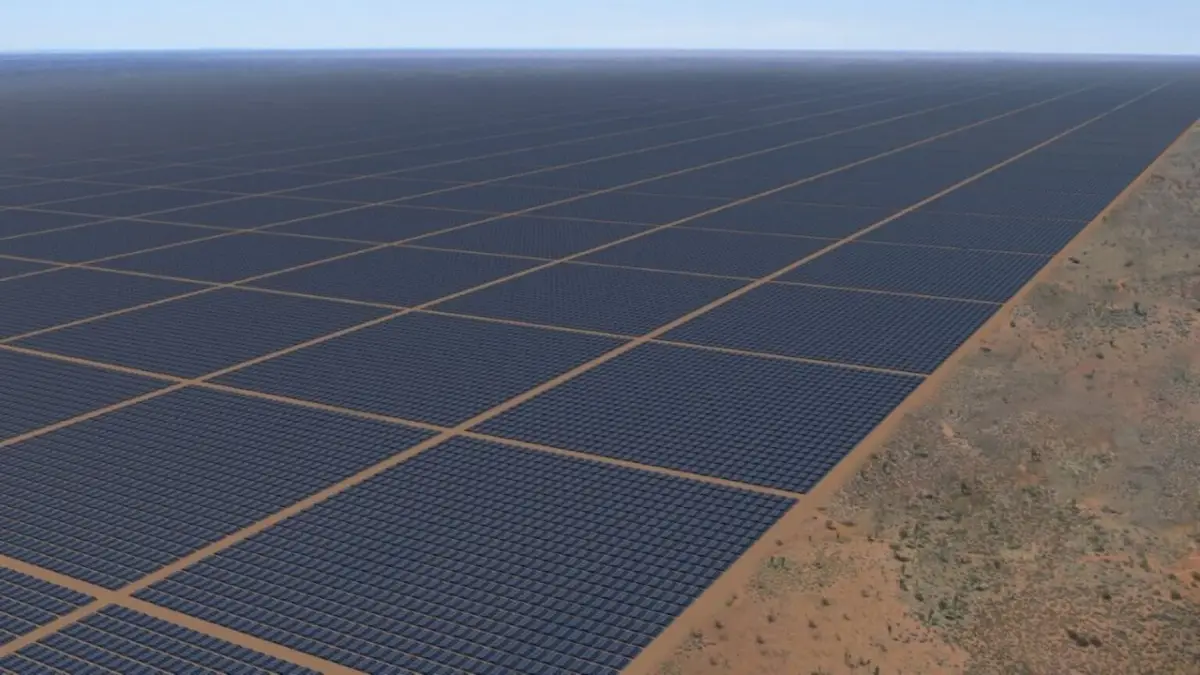
The Western Green Energy Hub (WGEH) in Western Australia is planned to be one of the planet’s most significant green energy projects. Spanning 15,000 km² of Mirning territory, this 75-quadrillion project will comprise 25 million solar panels and 3000 wind turbines to generate a new level of green hydrogen.
Accordingly, WGEH is a technological and environmentally innovative development. As the demand for sustainable energy grows, it has the potential to revolutionize global energy markets and regional economies.
The WGEH’s Vision: Transforming Renewable Energy and Reducing Global Emissions
Currently, the WGEH project is not just another renewable energy plant but a highly ambitious project concerned with establishing an enormous green hydrogen center. With InterContinental Energy, CWP Global, and Mirning Green Energy as its partners, WGEH is planned to deliver 50 GW of integrated wind and solar electricity generation.
This renewable energy will be converted into up to 3.5 million tonnes of green hydrogen every year, and this is expected to displace fossil fuels in numerous sectors, including maritime, steel, and other industries. This project puts Australia at the frontier of a new renewable energy economy and makes it a global exporter of green hydrogen.
At 25 million solar panels and 3000 turbines, the WGEH will outcompete the most current renewable energy facilities in size and power generation. These panels and turbines are anticipated to provide a constant flow of power to produce green hydrogen, which doesn’t release greenhouse gases during utilization.
The development plan involves building innovative hydrogen conversion and ammonia storage complexes to achieve the project’s production targets. This hub will provide energy that can light up industries and reduce carbon emissions, setting new standards for renewable energy production.
Indigenous Involvement and Economic Impact: How Local Communities Benefit from WGEH
Another exciting feature of WGEH is Indigenous engagement in the development process. This way, the Mirning Traditional Lands Aboriginal Corporation, representing the Mirning people, has a 10% interest in the project. Any economic benefits generated by the project can be shared with communities.
Given that the project will impact such a vast population, it will create thousands of employment opportunities and long-term income prospects in the targeted community. Furthermore, the project’s precaution is to honor Indigenous Australians’ cultural heritage and make sure FPIC is equal to a responsible attitude towards development that does not harm the natural environment and Indigenous people.
Green hydrogen is thus becoming a force to reckon with for industries planning to decarbonize. The WGEH project aims to deliver green hydrogen to global markets with increasing demand, such as South Korea and other Asian countries.
The energy generated by WGEH will be used in industries that are difficult to decarbonize, such as industrial, aviation, and maritime. In this way, by occupying this growing market, WGEH contributes to making Australia one of the leaders in renewable energy and helps the world gradually switch to clean types of energy.
The Road Ahead: When Will WGEH Start and What Will It Mean for the Future of Renewable Energy?
The WGEH project is planned to start its first production by 2025 and reach its maximum capacity by 2032. The WGEH project is an essential step towards a sustainable future. With the optimal output level, WGEH will generate energy that may revolutionize the energy market as it provides an option other than regular fossil fuel.
This project could create more mega-projects for renewable energy globally, challenging industries and governments to achieve higher decarbonization targets. Finally, the WGEH stands for a new generation of large-scale renewable energy that can successfully address the needs of the global economy and, at the same time, preserve the Earth.
Glossary for this story
- Green hydrogen
- Hydrogen made by splitting water with electricity from renewable sources, without releasing CO₂ in the process.
- Wind power
- Electricity generated by the wind, which turns the blades of wind turbines.
- Solar power
- Electricity made from sunlight, usually with panels whose cells turn light directly into current.
- Renewable energy
- Energy from sources that are naturally replenished, such as sunlight, wind, water and biomass.
- Gigawatt
- One billion watts, roughly the output of a large power plant.
- Fossil fuels
- Coal, oil and natural gas. They formed over millions of years from the remains of living things and release CO₂ when burned.
- Greenhouse gases
- Gases that trap part of the heat the Earth gives off, such as carbon dioxide, methane and nitrous oxide. More of them in the air warms the planet.
- Decarbonization
- Steadily cutting the carbon emissions of a country, sector or company toward zero.
ECOnews Newsroom
Writer at ECOnewsA team of journalists specializing in socio-environmental news, sustainability, climate change, the environment, responsible consumption, and innovation. At EcoNews, we provide clear, reliable, and relevant coverage of the environmental and social challenges shaping our era.
More from ECOnews NewsroomComments · 0
Rules ›No comments yet. Be the first to share your view.