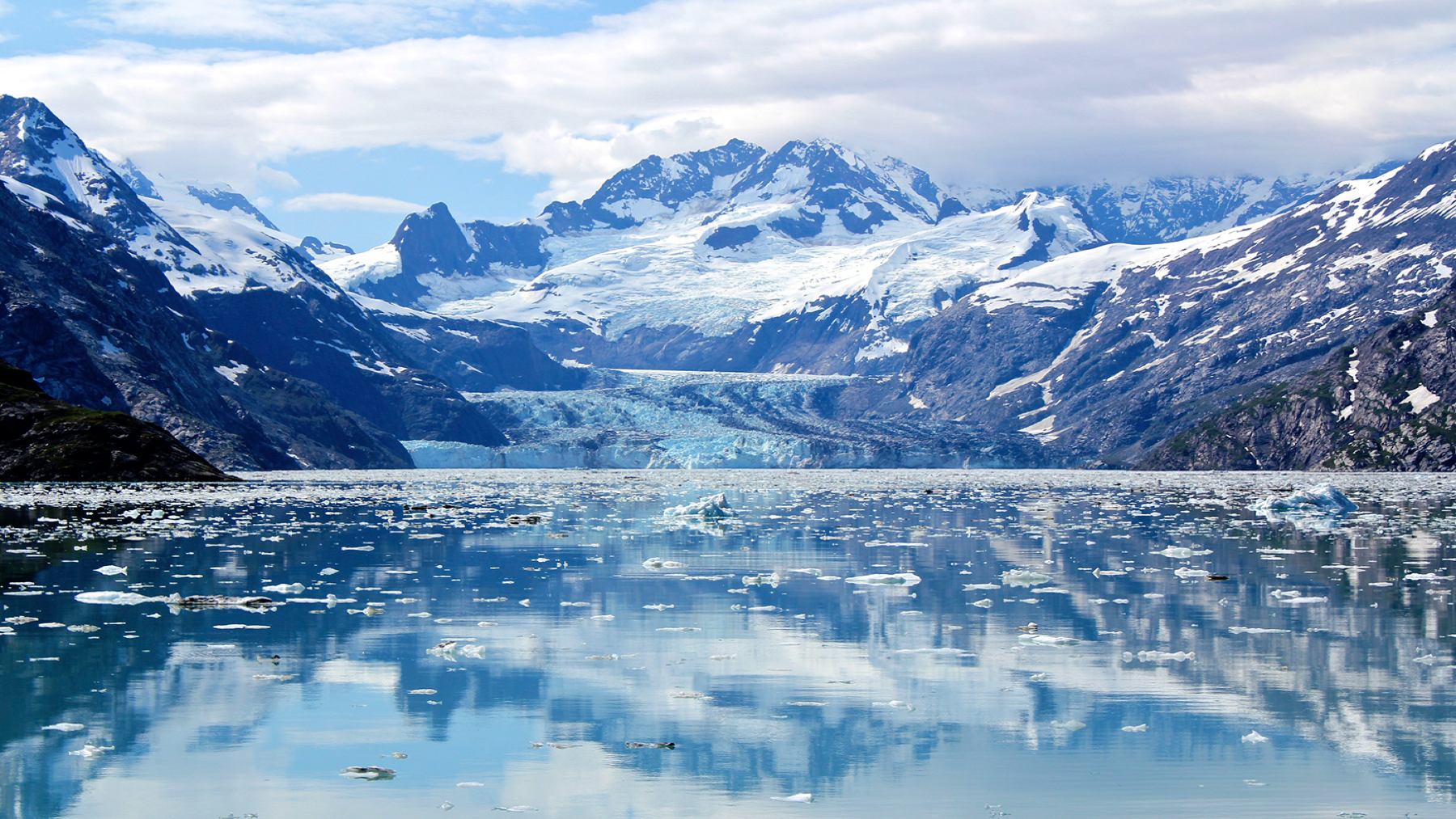
The Juneau Icefield, located in Alaska, has suffered extensive ice loss owing to alarming melting rates throughout millennia. The icefield loses 50,000 gallons of ice per second, which scientists classify as extremely worrying. This article delves into the details of this environmental crisis.
How fast is the melting? Scientists reveal the staggering numbers.
Over 1,000 glaciers cover almost 1,500 square miles of northwest British Columbia and southeast Alaska, making up the Juneau Icefield. Studies show that the snow cover area on the ice field has diminished by 4.6 times from the 1980s to the present day. Between 2010 and 2020, the icefield lost about 1.4 cubic miles of ice annually. Because of fast ice melting processes, Earth currently experiences rapid climate change effects.
Meltwater from the icefield produces a flow that reaches 50,000 gallons per second in speed. The quickening rate of ice meltdown increases ocean elevation and modifies surrounding natural habitats. Effectively destroying glaciers endangers the survival of native species and human settlements in the region. The disappearing ice supports both environmental and landscape instability in this particular region.
Multiple secret factors cause the rapid dissolution of these glaciers.
Human-induced climate change remains the principal cause of the rapid transition in the melting rate of the Juneau Icefield. Scientific records indicate that the Arctic region, alongside Alaska, experiences temperature increases at a rate that exceeds four times the global average rates. A rise of 2.6 degrees Fahrenheit in temperature occurred across Alaska in 1980. The hasty temperature increase stems mostly from CO2 emissions from burning fossil fuels.
Glaciologist Bethan Davies from Newcastle University and her team led the study and underlined the need for lower carbon emissions to protect icy structures. Research leader Bethan Davies told the New York Times that reducing carbon emissions would bring hope. Increased carbon emissions result in greater chances of total glacier destruction. The need for immediate protection measures becomes urgent to decelerate the melting process of essential ice formations.
The documented climate records demonstrate the issue continues to deteriorate amidst ongoing human-made climate alterations
The Juneau Icefield began its backtracking phase at the end of the Little Ice Age, which occurred in the late 18th century. During that period, the Earth experienced a worldwide cooling trend and expanding glaciers worldwide. Research shows that the icefield lost a quarter of its total volume throughout that period. The glacier melting rate has reached unprecedented levels during the past 15 years because 64 glaciers vanished completely between 2005 and 2019.
Positive feedback mechanisms create additional melting effects, speeding up melting. Warming thinning ice surfaces becomes more efficient because dark-colored glacial rocks that emerge from melting absorb greater heat sources than white snow, thus quickening the melting process. Such feedback processes probably stop glacier recovery, driving glaciers toward an inevitable permanent shrinking state. As this pattern persists, it will result in an irreversible modification of the regional landscape.
World scientists expect dire circumstances for glacial systems across the planet
A study of Juneau Icefield modifications involved multiple data sources, including aerial mapping from present-day and historical records alongside glacier archives, satellite images, and surface topography measurements. A combined methodology enabled scientists to build a historical elevation map of the icefield two months before point satellite imaging began. Research results indicate the icefield has experienced immense transformation throughout the last few decades.
Environmental scientist Mauri Pelto from Nichols College, the study co-author, has personally experienced these glacier changes. The Associated Press reported Pelto explaining that glacier access was simple when he visited them in 1981. Today, lakes exist alongside the melting edges of glaciers as snow melts, and dangerous new crevasses become hazards for skiers in those areas. According to research, all glaciers throughout the icefield were withdrawn from their positions from 1770 until 2019, creating at least 50 new lakes.
Future projections are grim. An increase below 1.5 degrees Celsius worldwide would lead to the full loss of about 104,000 glaciers, which make up half of all pre-2100 glacial extent. It becomes clear that urgent worldwide intervention must happen to reduce climate change risks while protecting essential ice deposits. A rapid reduction in the Juneau Icefield is an alarm signal for Earth.