Unprecedented human discovery in the rainforest region of Côte d’Ivoire confirms the existence of early human settlement 150,000 years ago, which rejects conventional theories about early human habitat choices. Archaeological research demonstrates that human ancestors successfully survived in areas with limited resources and dense vegetation as much as the more spacious savannas. This finding reshapes our understanding of human adaptability and migration, proving early humans could survive in extreme conditions. It opens new avenues for studying evolution and forces scientists to reconsider how our ancestors spread across diverse ecological zones.
Archaeologists uncover ancient tools that rewrite human history.
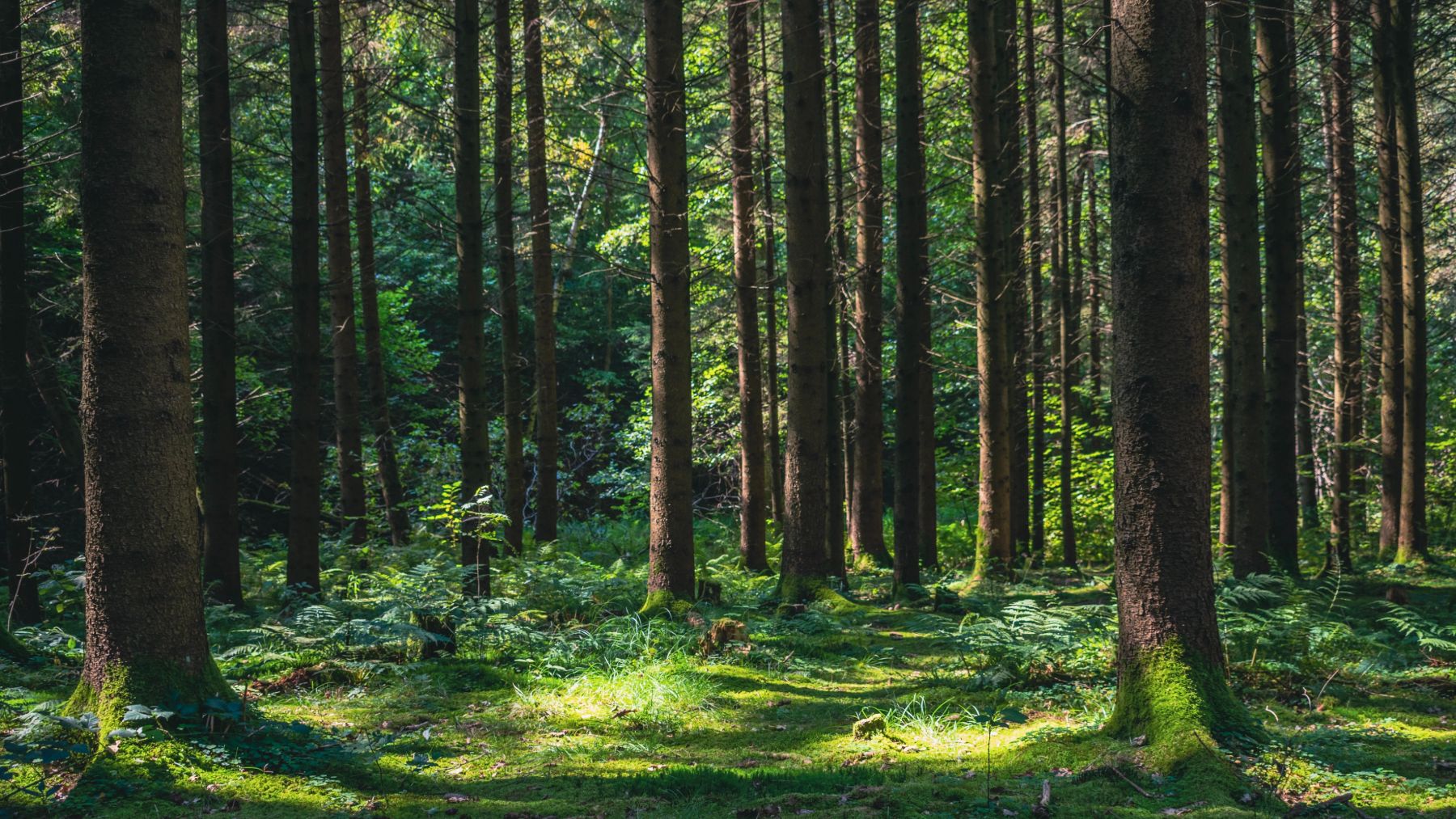
Scientists have long believed that rainforests were a barrier to early human existence. The dense jungle, lethal animals, and limited resources were more than our ancestors could handle. But now, according to new research, humans lived in African rainforests at least 150,000 years ago, well over twice the previous estimate of rainforest residence by our species.
A study in Nature this week revealed that humans occupied the rainforests of present-day Côte d’Ivoire much earlier than previously believed. An international team of researchers re-dated an archaeological site known as Bété I, where stone tools of unknown age were discovered. Using new techniques, they discovered that the tools were deposited approximately 150,000 years ago.
These tools give us absolute evidence that early humans not only inhabited rainforests but also developed specialized survival techniques. The tools exhibited here show that they hunted, foraged, and even possibly engaged in early forest-based resource management. This groundbreaking evidence proves that rainforests were not only occasional refuges but also permanent homes for our ancestors.
The location was first excavated (this excavation will surprise you) in the 1980s by an Ivorian-Soviet joint team. However, it was not possible to date the tools or determine the ecology of the region at that time. New climate models suggested that the region may have been a rainforest haven even at times of forest fragmentation when the climate was arid. This led scientists to re-examine the location, and the location was eventually excavated, to the astonishment of scientists.
Cutting-edge scientific techniques confirm the unimaginable.
Professor Eleanor Scerri, along with her Human Palaeosystems research team at Max Planck Institute of Geoanthropology, employed different dating methods, including Optically Stimulated Luminescence and Electron-Spin Resonance, to establish that this discovery dated back approximately 150,000 years. The analysts extracted pollen from the sediment together with phytoliths of silicified plant remains and leaf waxes. The analyses revealed that the site existed as a thick forest landscape where West African tropical elements of pollen and leaf waxes confirmed a humid environment.
The low number of grass pollen at this site is evidence of a woodland environment instead of a narrow forest border. The long-term existence of human populations in this rainforest area dismisses its status as a transitional camp during migration periods. The findings show that early humans mastered the challenging demands of humid, dense forests, which included food limitations and possible predator threats.
This is just the beginning. There are still other Ivorian sites to be uncovered, and they might be able to tell us more about human activity in rainforests. One of the participants in the original and ongoing excavations, Professor Yodé Guédé, talked about his expectation of more such finds in the future.
This discovery is only the beginning—more secrets are waiting
The scientific breakthrough carries essential consequences. Our species finds its essential ecological diversity and shows proof of complex historical population separations. Each human population existed in distinct geographical positions with separate habitat types that led to habitat-specific adaptations. The common scientific interpretation of human origins in grasslands presents an opposing view because humans apparently dispersed to various environments from the start.
The discovery motivates the examination of both the rainforest environment’s effects on our ancestors’ lives and ancestral effects on the rainforest ecosystem. This discovery(here’s another shocking discovery) sparks fresh possibilities for scientific exploration because it makes researchers consider early human niche expansion effects on vegetation and fauna using human resource areas.
Other researchers believe that early human settlement of rainforests may have influenced the evolution of the forest itself. The way humans planted crops, hunted, and even managed forest fires may have had long-term effects on rainforest diversity. Such discoveries could guide contemporary conservationists about the way human activity has modified landscapes for millennia.