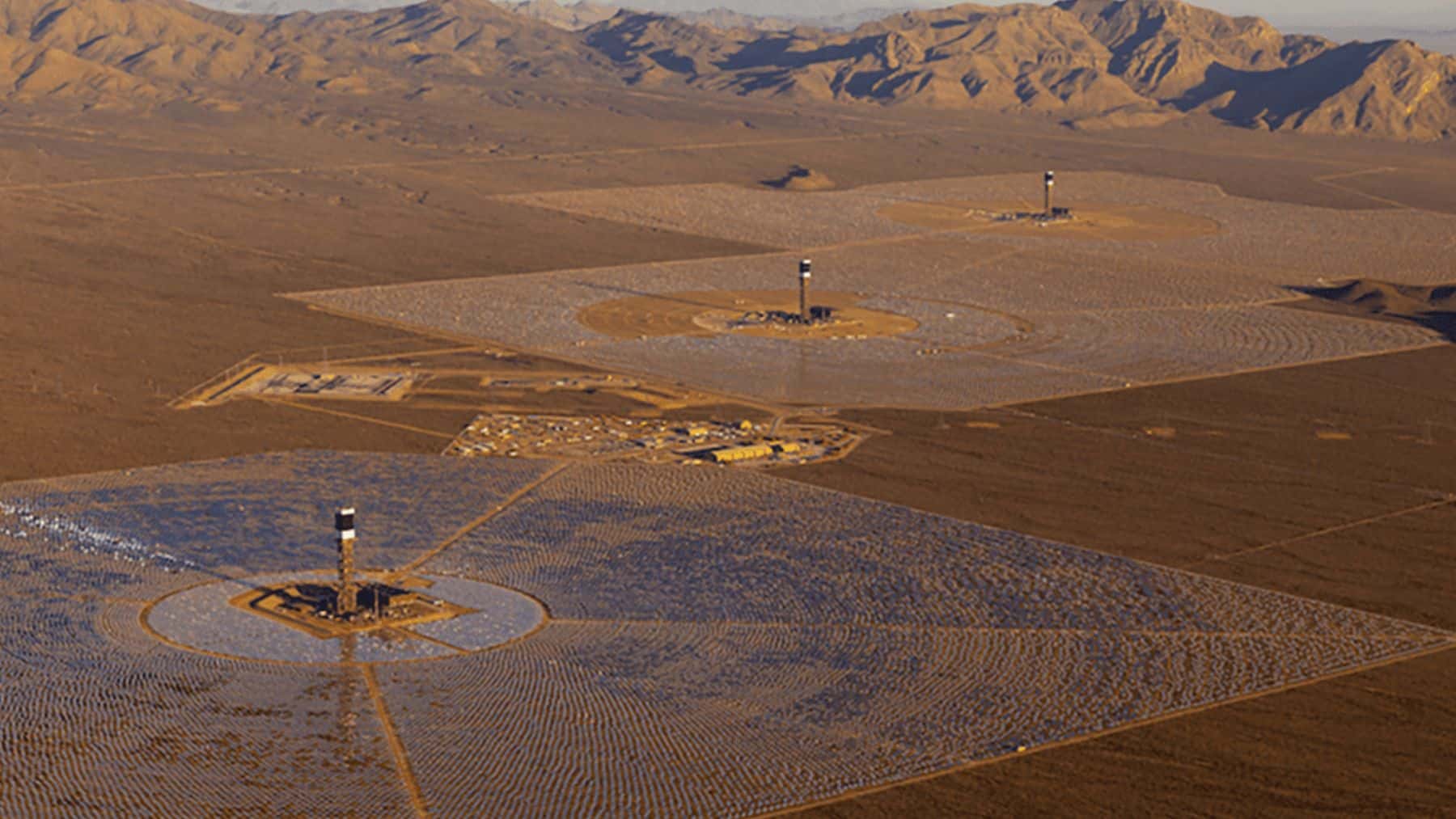
Three perfect rings that were once rewriting the power script in California’s Mojave Desert will no longer be part of the clean energy game. Previously, we gave thanks to the 173,500 heliostats that seemed to be surrounding three solar towers and that projected an image of perfect rings drawn across the Earth. This creation, which was known as the Ivanpah Solar Electric Generating System (ISEGS), remained at the center of the U.S.A.’s sustainable energy initiatives for some time.
The reason behind the Ivanpah Solar Electric Generating System shutdown
However, this vision is slowly coming to a close. With the final sunset in sight, the Ivanpah mirrors, or heliostats, as they are called, will no longer track the sun or direct rays onto a receiver at the top of each of the three towers.
Starting operations in 2014, Ivanpah was seen as a 459-foot tower that had the capacity of producing 386 megawatts and signified one of the boldest steps in solar thermal power deployment. Being hailed as one of the largest solar thermal facilities on Earth, it comprised heliostats geared to track the sun and beam rays onto a receiver atop each tower.
However, the California Energy Commission has confirmed the plans for Ivanpah’s scheduled shutdown in 2026. The $2,2 billion investment may be ending too soon, but only due to technological, economic, and environmental failures. Ivanpah’s initial backers, such as NRG Energy, BrightSource, and Google, were funded by $1,6 billion in federal loan guarantees; however, the project revealed insightful shortcomings as the years progressed.
The main flaw was that Ivanpah could not deliver on its energy production promises. It underperformed in terms of its rivals and needed support from gas auxiliary boilers to ensure that operations could continue. With rooftop solar installations and solar farms providing cheaper and more reliable alternatives, Ivanpah’s high operational costs no longer seem worth it, more so since energy prices have dropped considerably as well.
Ivanpah is affecting wildlife and having a drastic environmental impact
Ivanpah is also criticised for the drastic environmental impact that it has been causing. Mostly birds are affected since the highly intense beams of reflected sunlight between the mirrors and towers are set to reach 1,000 degrees Fahrenheit, resulting in “solar flux zones” that are said to incinerate birds mid-flight.
Shockingly enough, Ivanpah was said to have resulted in more or less 6,000 bird deaths as per the Association of Avian Veterinarians. While Ivanpah’s initial vision was pure genius, the execution of the project was severely flawed.
Ivanpah indicates a warning and signifies a shift in energy strategy
Las Vegas, which is covered with solar panels, has caused a catastrophe for America, and many citizens view Ivanpah as quite the catastrophe. However, the plant’s closure is not to be seen as a catastrophe. The closure of the power plant merely signifies that when it comes to sustainable energy, strategy can change at the drop of a hat, rendering some iconic projects as obsolete.
The power plant’s three units were equipped with heliostats set to capture sunlight; however, this groundbreaking innovation enjoyed the light of day back in 2010 when it received approval from the California Energy Commission. Nearly two decades later, the power plant is said to be archaic, with solar photovoltaic solutions outpacing the Ivanpah power plant. Ivanpah has surely lived up to its true potential and has set the tone for future investment priorities.
The final sun rays for Ivanpah’s light
By 2026, Ivanpah’s purpose will fade like the setting sun, and the three tall towers surrounded by heliostats will no longer remain. What once was a clean energy dream has now faded into the desert sand. Ivanpah does serve as a cautionary tale, that when it comes to sustainability efforts, a mere vision is not enough. As the heliostats eventually fade, so too will Ivanpah’s role in the clean energy game. While some will thank Ivanpah for the lessons, others will view Ivanpah as America’s shame, with one million solar panels off and lost in the desert.
Disclaimer: Our coverage of events affecting companies is purely informative and descriptive. Under no circumstances does it seek to promote an opinion or create a trend, nor can it be taken as investment advice or a recommendation of any kind.