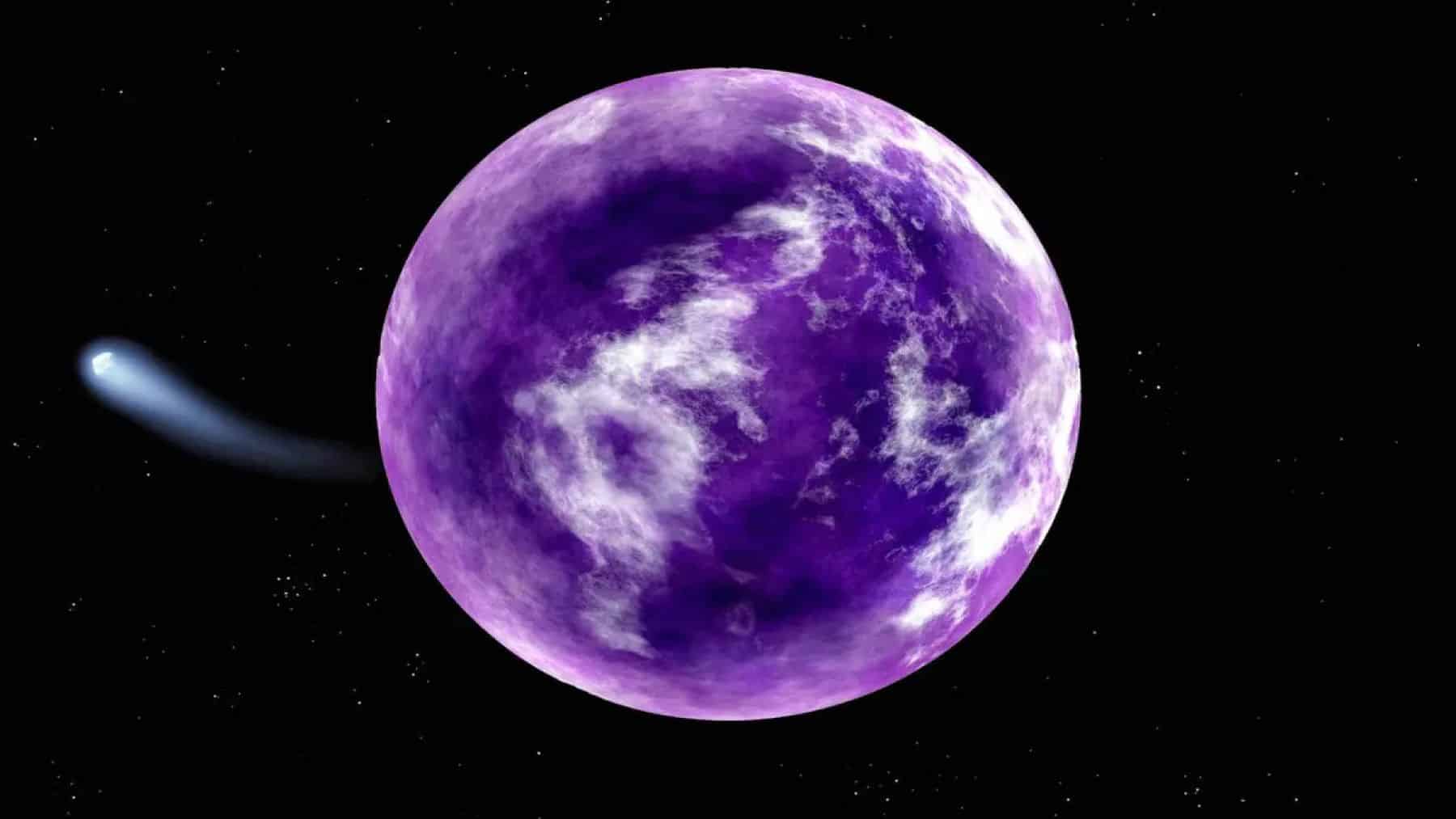
The idea of the Earth once being a purple world has the “Purple Earth” hypothesis behind it, a speculation that the earliest forms of life on Earth had a different molecule instead of chlorophyll within the sunlight-trapping system. This retinal molecule will tint the organisms a bright purple and potentially the Earth of yore purples and violets.
Early life on Earth: This is the surprising reason it may have been purple
The retina absorbs green, reflects red and blue, and has a purplish hue. Modern halophiles use retinal during photosynthesis, which tells us that an old rival of chlorophyll has been utilized. The Earth’s earliest environment may not be the green world, but we know if this speculation is valid. Evolutionary competition may be the reason that the Earth’s system of photosynthesis has evolved from the use of retinal to that of chlorophyll because chlorophyll captures sunbeams better.
The Purple Earth Hypothesis argues that the earliest organisms that had life on Earth, the individual cells, used retinal instead of chlorophyll during photosynthesis. The simpler retinal molecule would be found on Earth at an oxygen-poor period of the Earth. The green-colored absorbing and red and blue-colored reflecting molecules gave a purple color. The purple color that the organisms sported with this retinal photosynthesis contradict the green color resulting from chlorophyll use. The scientists say that this was a critical milestone that the development of the use of photosynthesis had reached before the use of chlorophyll that ruled the Earth.
These ancient microbes may have turned the planet purple before plants took over.
During the earliest days of the Earth’s life cycle, the air had minimal oxygen and a foggy environment. Yet the sun shone so strongly that it supported retinal-type photosynthesis. Archaea microorganisms dominated the first life on Earth since they prefer living in harsh environmental conditions. Scientific researchers discovered the ancient purple-colored organism called halobacterium through saltwater investigations (another news here) in locations such as the Great Salt Lake. Such life confirms that the earliest Earth potentially displayed colorful purple light across wide areas.
Over time, the application of the superior pigment of chlorophyll arose in other organisms. Chlorophyll absorbs the red and blue spectrum of lights and reflects green, which is the reason that the color of the plants is green. Chlorophyll-based photosynthesis emerged gradually in place of applying the retinal approach. It contributed to the Great Oxygenation Event and an instant increase in the oxygen of the Earth’s environment. Applying the superior pigment of chlorophyll allowed the emergence of complex life forms, altered the Earth’s atmospheric composition, and set the ground for the emergence of complex ecosystems.
Could Earth turn purple again? Scientists think it’s possible on other planets.
While Earth has turned green nowadays, patches of retinal life persist in harsh environments. The colorful patches show how purple life might be supported in similar environments on other planets. The possibilities of retinal life existing on exoplanets fascinate astrobiologists because it might yield the keys to how life started in the earliest times of the world beyond Earth. The Dead Sea hosts halobacterium that survives in salty environments and has a purple color. Scientists seek color cues that might reveal life’s existence based on the retina on other planets because finding such biological cues might be a turning point in the quest for life beyond Earth.
The Purple Earth scenario encourages us to be visionary concerning the Earth’s past and the life prospects beyond Earth throughout the cosmos. We will find this color everywhere that organisms utilize the retinal pigment system of sun squeezing if Earth’s earliest photosynthesizers did glow purple. This visionary insight (also, read this related news) underscores life’s tenacity and adaptation prospects. It encourages us to look at the evidence we might not be examining if we stay with the conventional expectation of green photosynthesis as the exclusive energy acquisition strategy. Purple-colored biospheres may be among the exoplanets that stand in plain sight.