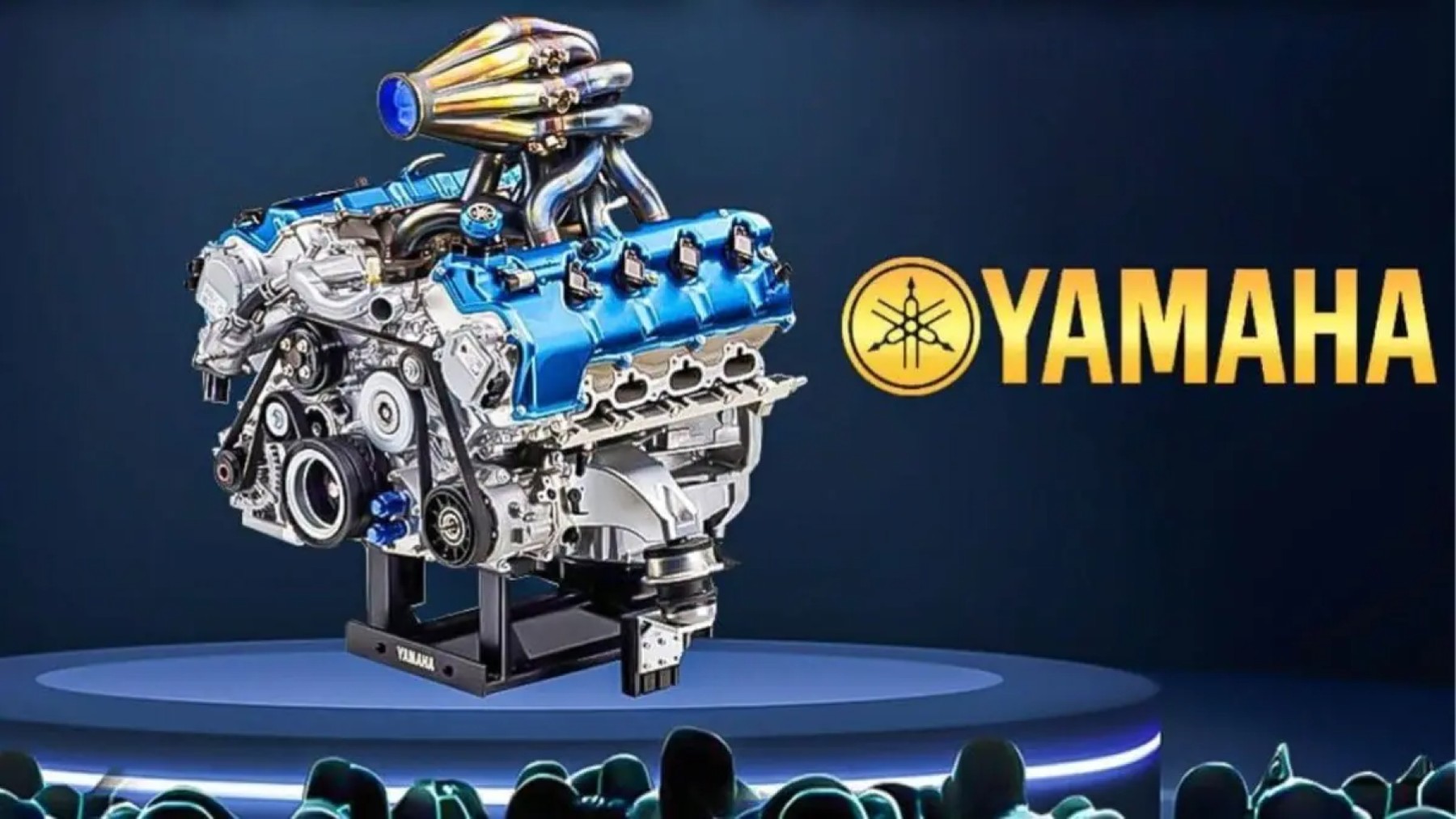
Therefore, Toyota and Yamaha have embarked on a social innovation process of transforming mobility through hydrogen fuel as a way of countering the current popular innovations of electric and gasoline engines. Toyota’s work with hydrogen fits into its environmental objectives, but Yamaha recently introduced a hydrogen-powered V8 engine that boosts the promise of hydrogen to a new level.
Yamaha’s investment is redefining future car engines, exploring the future of hydrogen in marine and recreational vehicle industries, and making us think about the future of mobility.
Introducing Yamaha’s revolutionary hydrogen-powered V8 engine for a sustainable future
Yamaha and Toyota’s hydrogen-powered 5.0-litre V8 racing engine is not just a powerful engine but has the potential of carbon-neutral engines in a metal billet. The engine is developed from the Lexus RC F model and designed to produce a great power of 450 horsepower and torque of 540N/m.
Unlike electrical motors, this hydrogen engine retains the feel and sound of standard internal combustion engines. It is important to stress that the concept of future mobility can be carbon neutral and still be fun to drive, as evident from the sound and performance of the concept car.
Exploring hydrogen combustion technology for marine applications and beyond
Moving to an even more spectacular application area, Yamaha has applied hydrogen combustion to marine applications, launching a hydrogen-powered outboard model. This prototype explicitly addresses the challenges of marine applications, where there are relatively few battery-electric equivalents.
While using hydrogen combustion engines, no CO2 emissions are realized, while performance and durability remain high—both of which are important for boating. Through the development of hydrogen technology in marine engines, Yamaha encourages the adoption of hydrogen as a green fuel across mobility sectors. Thus, it can be applied to cars, boats, and motorcycles in the future.
As people have started switching to electric vehicles, Yamaha’s hydrogen plan might find a place in segments where battery constraints present themselves as a problem. For instance, long-haul transport and marine vehicles require better power density and range, which hydrogen can offer compared to current electric solutions.
Yamaha’s approach also encompasses the carbon impact throughout the product lifecycle – in addition to the direct emissions from using machines (Scope 1), emissions from manufacturing and procuring components (Scope 2), and emissions from delivering the final product to the consumer (Scope 3).
Using these advantages of hydrogen, Yamaha is recasting green mobility to offer a different option that can complement or even supplant electric cars in some ways.
Yamaha’s ambitious strategy: Pioneering a multi-faceted approach to clean energy solutions
Yamaha’s focus on hydrogen is not a standalone thing but a part of a much bigger picture with synthetic fuels, Fuel Cells, or electric solutions. Being aware that different markets require different amounts of energy, the strategy is highly flexible and designed to fit the conditions of each particular industry.
This approach helps Yamaha strive for sustainability while keeping possibilities open for the different needs of the future. Yamaha’s target is to reduce its Scope 1 and 2 emissions to zero by 2035, and the company is still experimenting with addressing Scope 3 emissions that include customer usage.
This balanced, multi-dimensional strategy may contain the blueprint for other manufacturers looking for an integrated approach to green power.
Yamaha’s experiments with hydrogen engines are a complete game changer for the mobility industry. As electric vehicles have taken center stage in recent innovations, Yamaha’s hydrogen-powered V8 engine proves that other possibilities can deliver high performance and environmental responsibility.
The fact that H2 can be used in automobiles, boats, and possibly other vehicles underscores a new paradigm of mobility – one in which carbon neutrality and high power are not mutually exclusive.
The world waits to see how this clean fuel advancement from Yamaha will change transportation as Yamaha keeps challenging the limits. Indeed, this might be the beginning of the end for conventional mobility as we know it.