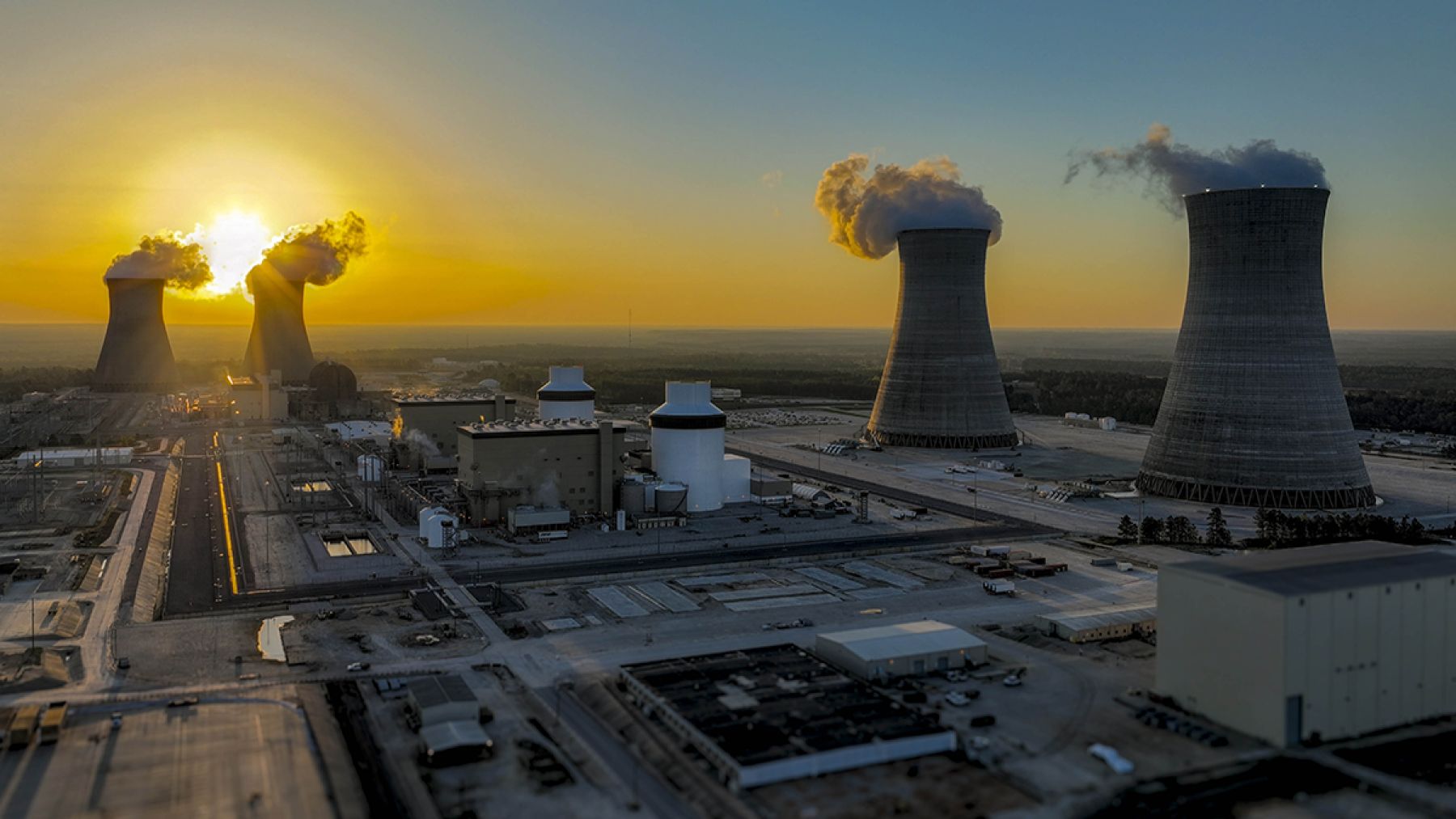
The United States is now gearing up for an aggressive plan to increase the number of nuclear power plants many folds. As a result, the Biden administration has proposed a plan to improve the nation’s nuclear energy capacity three-fold by 2050 to meet increasing energy needs and develop a carbon-free power source.
It is a very ambitious plan to build new reactors, bring back offline reactors, and modernize current reactors, making the American energy revolution possible.
The Biden administration plans to add 3GW of nuclear energy capacity by 2050. This plan calls for 200 GW of fresh capacity from new reactor construction, the start of economically decommissioned reactors, and the power uprate of currently operating reactors.
The target is to have 35 GW of new nuclear capacity operating or under construction by 2035 to achieve a steady deployment rate of 15 GW annually by 2040. It is one of a series of measures to eliminate the country’s carbon emissions and realize a net-zero economy by the middle of the century.
The plan also outlines major issues like scarcity of skilled human resources, local supply of fuel, and bureaucracy, among others. According to the administration, eliminating these barriers will build a solid framework for the fast growth of nuclear energy.
The drive to expand nuclear energy has bi-partisan support, a revolution that America feared, thanks to an understanding that nuclear energy can deliver clean and consistent power. The recent passage of the laws that provided the Nuclear Regulatory Commission with new authorities to govern advanced reactors and license new fuels shows this commitment.
However, This legislative support is essential in expanding the use of diverse and efficient nuclear technologies. Cooperation with the private sector and power customers is also discussed as one of the components of the roadmap.
For instance, top tech firms such as Microsoft, Google, and Amazon are exploring nuclear energy because of the increasing energy demands of data centers, among other power-intensive activities. This private sector involvement is assumed to foster significant investment in nuclear technology and nuclear power plants.
However, environmental groups have criticized the expansion of nuclear power, citing its associated risks. Opponents claim that nuclear energy has risks like lethal radioactive reactions, pollution of the natural environment, and higher costs than green sources, including sun and wind.
It also costs far less than renewable energy sources like wind and solar power. Critics Clerk to the view that nuclear energy is dangerous and fatal through. The generation of fatal radioactive reactions pollutes the natural environment and is much more expensive than renewable energy sources like solar and wind.
These issues are characteristic of the necessity to provide enhanced security measures and aim to disclose the advantages and disadvantages of using nuclear power. The administration’s roadmap simplifies licensing and permitting, creates a skilled workforce, and a supply chain for nuclear fuels and reactor components.
Also, the plan provides a clear roadmap for the safe and efficient disposal of spent nuclear fuel (the roadmap aims to correct the mistakes that America made in exploiting the energy), one of the thorniest questions in the nuclear discussion. The United States strategy to increase nuclear power capacity threefold in the next three decades is a breakthrough toward a sustainable and low-carbon energy system.
However, this roadmap also shows that the environmental and safety issues should be addressed with great attention. With support from both parties and the active participation of private actors, ambitious targets proposed by Biden’s administration might bring about systemic changes to the American energy sector and act as a best practice for the rest of the world.