A team working in Brazil’s Amazon National Park has detected DNA from a previously undescribed Bartonella bacterium in local sand flies. The signal clusters genetically near species tied to Andean bartonellosis, a serious infection that can cause high fever or wart-like skin lesions in people.
The finding does not confirm human disease, and the researchers are clear about that. It does sharpen attention on bartonellosis, an infection caused by several Bartonella species that can live in blood and blood vessel linings for long periods.
What the team found
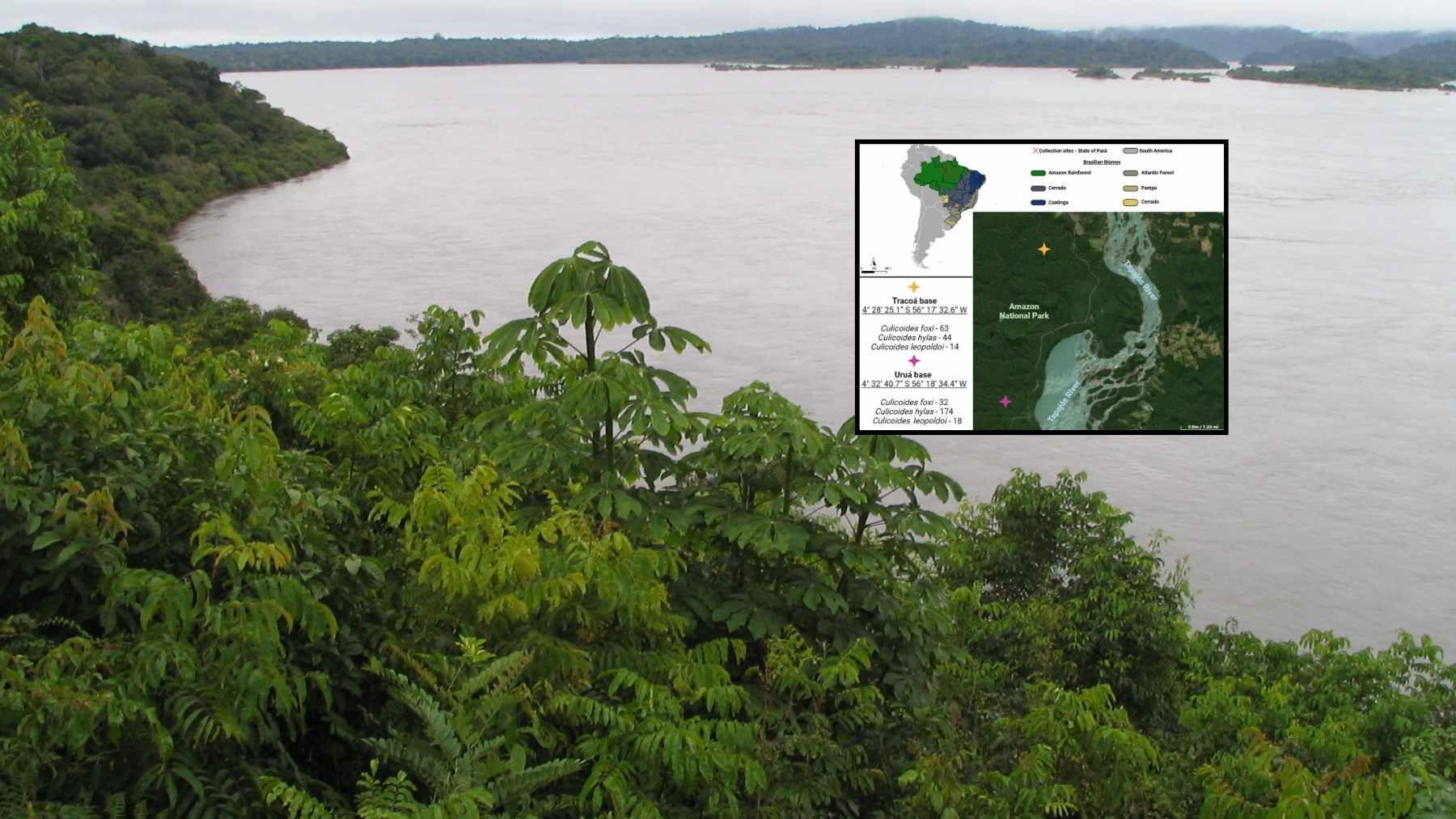
Marcos Rogério André of the Faculty of Agricultural and Veterinary Sciences at São Paulo State University (FCAV) led the work in collaboration with Brazilian colleagues. In a peer reviewed study, the group screened 297 female sand flies collected along two forest trails between February 2022 and February 2023 and detected Bartonella DNA in 12.6 percent of tested insects.
They used a genetic test to look for Bartonella DNA in the insects and then confirmed targets with additional markers to place the sequences on the bacterial family tree. Two sequences grouped in a clade alongside Bartonella bacilliformis and Bartonella ancashensis, both linked to human illness in the Andes.
Why this matters
“Bartonellosis is a neglected disease. The disease best known to health professionals is cat scratch disease, caused by Bartonella henselae,” explained Rogério André.
The CDC’s overview notes that different Bartonella species spread through fleas, body lice, or sand flies, and that bartonellosis is an umbrella term for several related infections.
A connection to Andean fever
Carrion’s disease, caused by Bartonella bacilliformis, is a two stage illness with an acute blood infection called Oroya fever and a later skin condition called Peruvian wart.
Another Andean species, Bartonella ancashensis, has been genomically characterized as a human pathogen that can produce verruga like disease.
How the Brazilian signal fits
The Amazon sequences did not match Peruvian strains exactly, yet they sat close to the B. bacilliformis and B. ancashensis branch on phylogenetic trees. That pattern raises questions about whether related Bartonella circulate in lowland forests that have not historically reported Andean bartonellosis.
The work also expands the list of sand fly species that may carry Bartonella DNA. Several of the positive insects were from lineages not previously reported with these bacteria in Brazil.
What doctors should watch
Clinicians in tropical regions often see patients with fever of unknown origin. Bartonella infections can run under the radar, especially in people with other health problems that make symptoms vague or prolonged.
If future field studies connect a local Bartonella strain in Brazil with human infection, doctors may need to consider targeted testing in patients who have compatible symptoms and a history of sand fly exposure.
How the field has been moving
Peru based investigators have reported Bartonella bacilliformis DNA in sand fly species beyond the classic high altitude vectors, including Lutzomyia maranonensis.
Outside the Andes, Mexican teams have identified Bartonella DNA in sand flies from several states, suggesting wider ecological circulation.
What the lab work shows and does not show
PCR detects genetic material, which is an early and useful signal. It does not by itself prove that a sand fly species transmits viable bacteria to animals or people.
Vector competence requires additional tests, including experimental infection of insects, demonstration of bacterial survival through the gut, and evidence of passage to a vertebrate host during feeding.
The caution from the authors
“We’re detecting a strain here in Brazil that’s never been described and is very similar to two species of the Bartonella genus that cause disease in Andean countries. Despite this similarity, we don’t yet have information on whether it can cause disease with distinct symptoms,” noted Rogério André.
That measured stance matches the genetic results. It leaves room for field epidemiology, clinical surveillance, and isolation of the organism.
Phlebotomine sand flies are small, blood feeding insects that can transmit several pathogens, including Leishmania parasites and some viruses. Only females bite because blood meals fuel egg development.
What comes next
The team plans to sample more sand flies across Brazilian biomes, and to analyze what animals the insects feed on to identify possible reservoirs. That work will clarify whether the Amazon genotypes circulate among bats or other mammals, and whether people are at risk.
In parallel, clinicians can bank paired blood samples from patients with unexplained fevers or persistent vascular skin lesions, which can later be analyzed as new diagnostics become available.
Public health takeaways
People visiting caves and river trails where sand flies are active can reduce risk by using protective clothing, applying repellents as labeled, and staying in screened spaces. Those common sense steps also lower exposure to Leishmania.
Local surveillance that integrates entomology, wildlife sampling, and clinical lab networks remains crucial when signals like this appear.
The study is published in Acta Tropica.