America made a misstep when, several years ago, it began triggering subsidies for oil extraction in several areas of the country (remember the case of Alaska). However, it appears that there is still hope for revolutionizing the energy industry across the country. This is the first project to change oil for a golden energy, and the state is going to earn billions just for its generation. The future is not only sustainable and clean, it’s also economically viable, and now you’re going to see it.
America is switching to the “most futuristic energy”: It’s golden, and the long-awaited end of oil
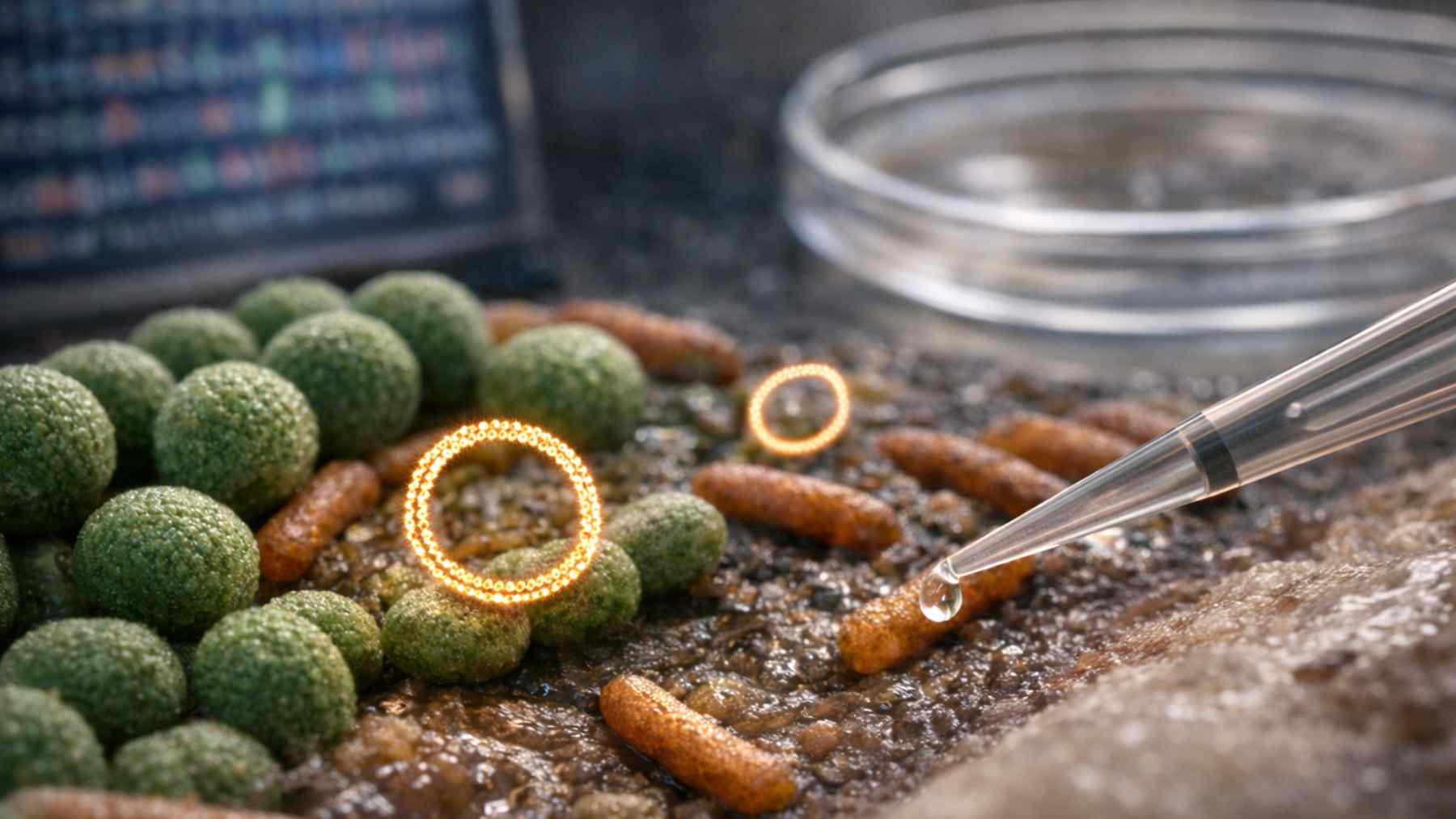
Another microbial hydrogen is Cemvita Gold H2 is one of the new entrants in the H2 world. Another experimental approach identified with hydrogen production is the Gold H2 project by a Houston-based biotechnology firm called Cemvita Factory. This technology is based on microbial means of converting organic compounds to hydrogen.
It is environmentally friendly as opposed to fossil fuels, as you may know. For instance, the name Gold H2 clearly combines the value of hydrogen and the additional work done by Cemvita. The second type of Gold H2 is quite unique in a way that it utilizes microbial technology in that specific bacteria are used to produce hydrogen.
It is also a very efficient and environmentally friendly, since it uses waste material to produce the article, therefore being part of a circular economy. Microbial hydrogen production involves the fermentation practices where some selected bacteria destroy the organic material and produce hydrogen in the process.
Microbial hydrogen could be the future: It’s “made from gold”, and a non-polluting source
This method appears to be highly advantageous in this regard because the feedstock that is used can be as diverse as agricultural waste, food waste, or any other organic matter. Another point that deserves to be mentioned about Gold H2 is that it is an ‘‘almost zero-carbon’’ electrolyte.
Unlike steam methane reforming and other classical approaches to hydrogen production, today’s modern technologies are almost free of carbon. On the other hand, by utilizing microbial methods, Gold H2 cuts down global emissions of greenhouse gases to a minimal level that is favorable to achieving sustainable development status all over the world.
With a specific reaction rate of thirty-two hundred and capacity figures that put Cemvita in the league of players that could command a place in the hydrogen market, Cemvita’s Gold H2 technology is clearly ready to play the hydrogen game. The company has stated its large production capacity and pilot-scale projects, with references to possible large-scale hydrogen generation.
Cemvita has gone ahead with pilot projects aimed at proving the viability of the technology they are using. For instance, the cooperation with Black & Veatch is based on the focus on the large-scale production of hydrogen and the development of a demonstration facility that could produce considerable amounts of the substance.
It’s not only a new renewable source: It’s a unique investment opportunity for Americans
The rate at which the microbial fermentation process produces hydrogen and the yield of hydrogen are other vital measurements. Preliminary experiments have been quite encouraging, revealing yields that are comparable with standard procedures. Countinuous improvements & optimizations are also anticipated to bring about improvements in these yields.
For any new technology, the factor of scalability is probably one of the most important elements to consider. Cemvita’s strategy provides for decentralized scaleability, which in turn enables production units to be added in segments in response to demand. It remains paramount for the company to remain dynamic in serving the market as it focuses on the regular provision of hydrogen.
What do you think of this idea to convert oil into golden hydrogen? We were telling you that it is an opportunity from the energy and economic points of view, but we must also add the geostrategic one. This source (or rather, this “color”) has been found only in the Spanish part of the Pyrenees, in France and in Albania, and it is extremely cheap compared to blue or green. However, we still have a long way to go to generate it on a large scale and sell it to the rest of the world.