Zero-emission mobility is centered on two very clear epicenters: one is Asia, with China and Japan leading the way, while the other is Europe, dominated by Germany and Italy. What about America? We have just turned the trend around with the hydrogen vehicle that the world doesn’t know about. It is so limited; there are only 90, but they are colossal, and you have a chance to see one: we tell you what it is and why the rest of the countries want to have it.
America, to present the world’s new hydrogen vehicle: It’s not a car, not a plane
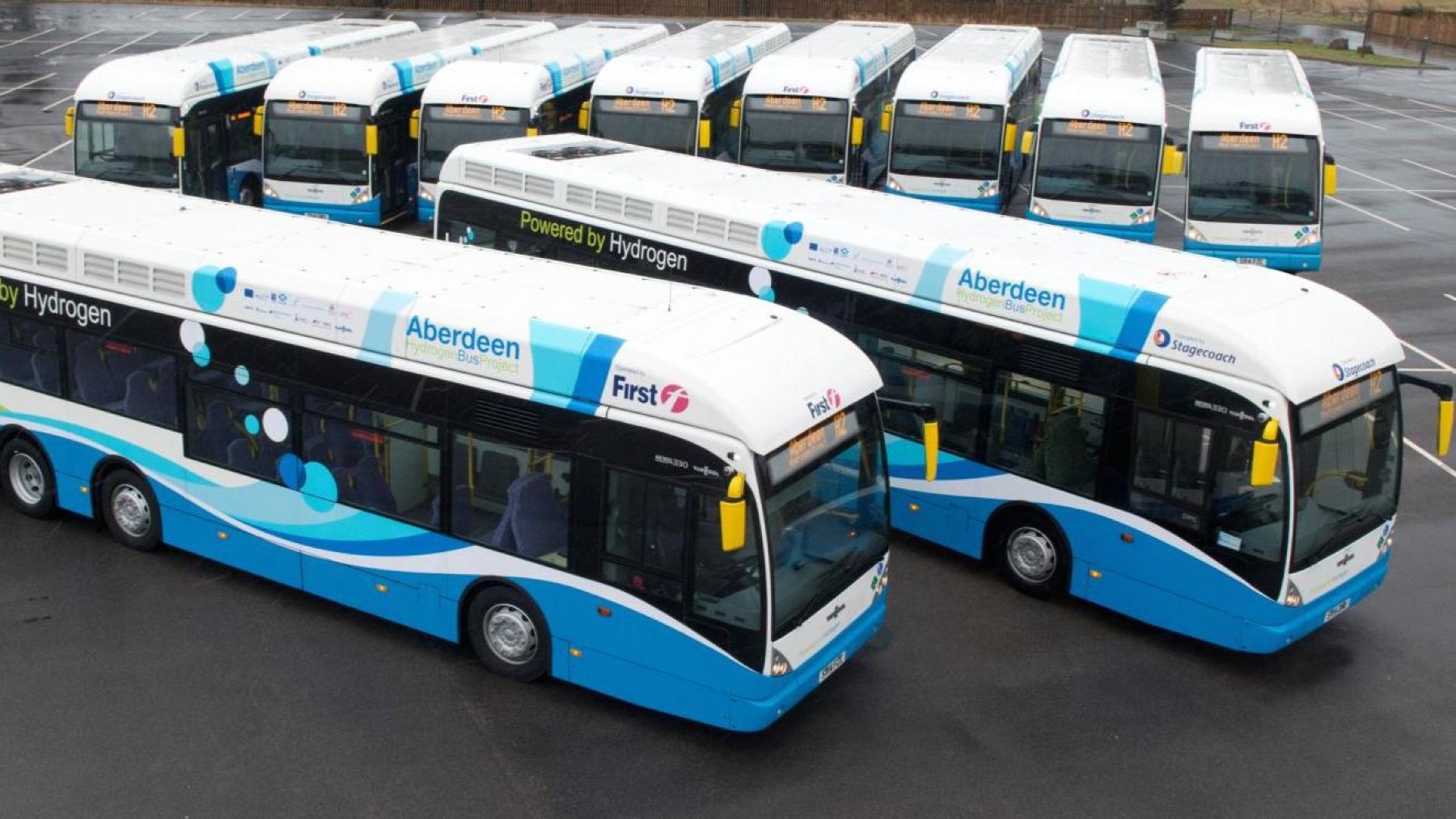
King County Metro, which is the public transit agency for Seattle and its surrounding regions, has revealed that it will demonstrate and put into use hydrogen fuel cell buses as it moves closer to achieving a zero-emitting fleet by 2035. To this end, the agency may decide to introduce up to four hydrogen buses starting in 2026, in addition to the existing battery-electric and trolley buses.
Some of the benefits include:
- Hydrogen fuel cell buses have some potential over conventional diesel and even battery-electric vehicles.
- They can go as far as 300 miles, which makes them ideal for all-day and very frequent lines.
- It is most helpful in winter, as examples of battery-electric buses have demonstrated poor range performance.
The hydrogen buses will be propelled by power cell engines provided by Ballard Power Systems Company. Wrightbus is the key customer of Ballard; it has placed an order for 70 of these engines, which will be delivered in 2024. Battery-range-extending buses will also be manufactured by a yet-determined supplier, though procurement costs are going to be slightly higher than for EV buses.
The first BEBs in America and a pilot program: What can the world learn from us
King County Metro’s hydrogen bus pilot program will last 18 months in order for the agency to evaluate the functionality of these buses in the region, such as in the mountains and in varying weather. Moreover, it must be noted that these buses will not be in service and could only run in the field for testing and evaluation.
It is approved by the King County Council, and Metro has made proposals to present a budget to authorize vehicle buying in the coming year. The pilot can work out successfully, and if the buses are considered ready for riders, they could be implemented in 2026. This has been supported by King County Metro’s target for the complete electrification of its bus fleet by 2035.
There are some problems: It won’t be as easy as we think, and experts are concerned
There have been some issues that the agency has had to deal with in this transition. Notably, battery buses, although an efficient technology, have not advanced as fast as the agency’s goal as envisaged. An additional risk that the agency has is the loss of bus manufacturers, which can be detrimental to its operations. Future electricity supply may also prove to be inadequate.
To this date, only a few of the 1,200 non-trolley buses in Metro’s fleet are fully electric, specifically about 50 units, which puts the EV proportion in Metro at roughly 4%. The agency has an agreement with GILLIG to acquire between 395 BEBs, of which 89 are planned to be procured for use in 2026.
The introduction of hydrogen buses as operational vehicles to incorporate into Metro’s public transportation system can reduce the risks associated with the exclusive use of battery-electric buses. It is in this sense that the agency hopes to follow several possible solutions for the development of a viable and sustainable public transit system in the region.
The first hydrogen bus in America is a step forward in sustainable mobility and also a success in terms of the diversification of fuels for public transport. The question you may be asking yourself now is: Where do we get a network of refueling stations? Across the country, we have less than 60, so the challenge now is to expand them in number and scope. Otherwise, we run the risk of leaving Elon Musk without his 2026 plans for Tesla, don’t you think?