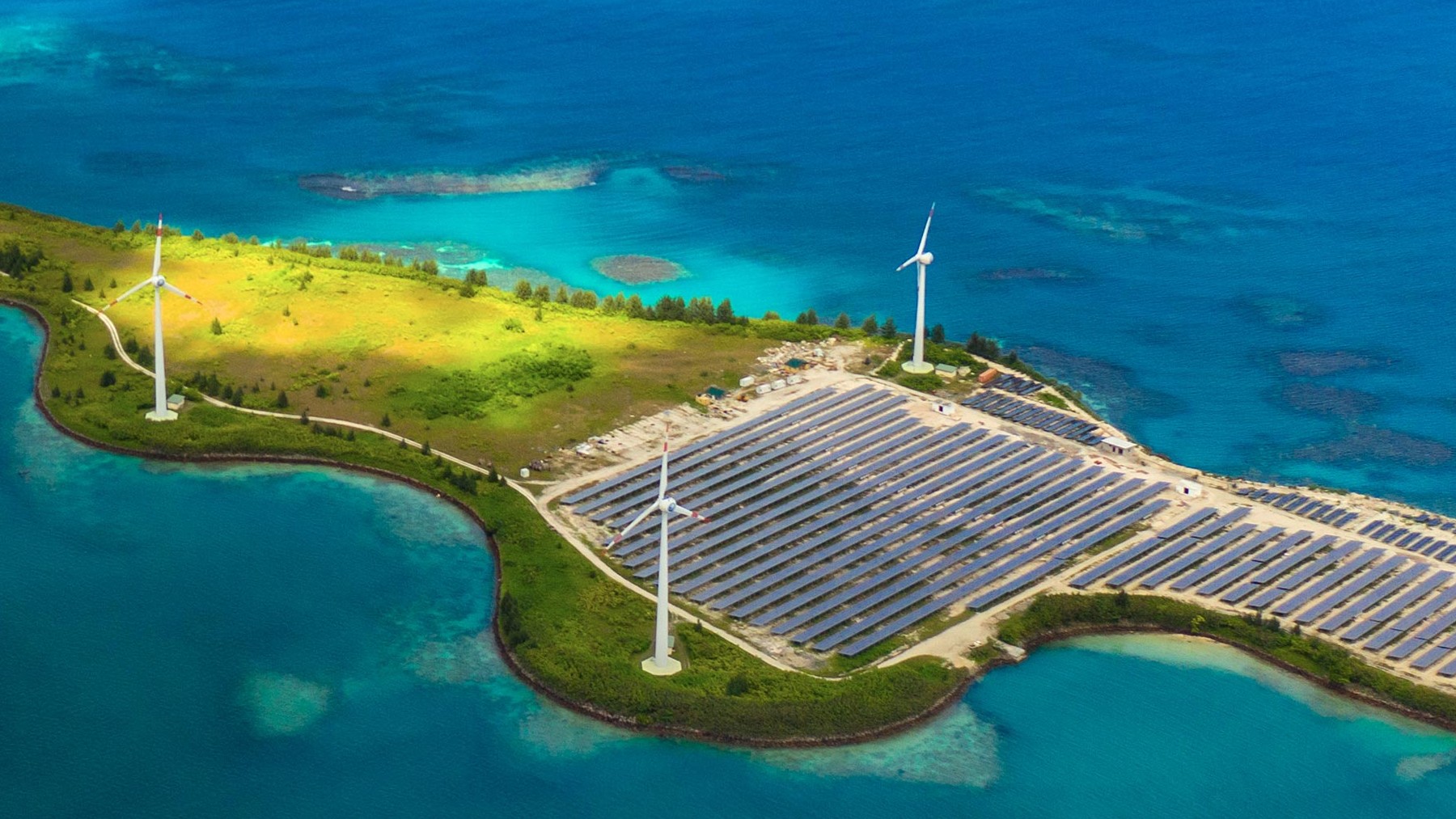
Energy islands, also called microgrids, are an example of sustainability and self-consumption. Over the last few years, several countries – especially emerging powers – have tried to develop the largest and most massive ones, when the trend should be the opposite. This is the smallest (and most expensive) ever seen, and it will be in this rural American village.
H2: Federal government goes for the smallest and most expensive microgrid: here’s where to put it
The small town of Montezuma, Iowa is about to make history as the site of the smallest and most expensive microgrid in the United States. This innovative project will provide the 1,300 residents of this rural community with a self-sustaining power grid that can operate independently from the main electrical grid.
For Montezuma, this microgrid will bring free electricity, clean energy, and energy security. The $5 million microgrid project is a collaborative effort between Montezuma Municipal Electric Utility and researchers from Iowa State University.
Once operational in 2025, Montezuma will become the first town in rural America to successfully implement a microgrid for their electricity needs. This localized power grid will combine solar panels, battery storage and backup diesel generators to provide residents with uninterrupted electricity service.
H2: This is what the Montezuma microgrid will look like: a self-sufficient and renewable energy island
The microgrid project planned in Montezuma, Iowa will be a historic partnership between academic researchers, the city, and utility providers. Iowa State University researchers have teamed up with the municipal Montezuma utilities to build a one-of-a-kind microgrid system for the town.
The project has received $4 million in funding from the National Science Foundation and an additional $600,000 from the Iowa Energy Center. This funding will be used for designing and constructing the microgrid over the next two years, according to official plans made public this year.
Researchers expect the microgrid to be operational by late 2024. The project timeline involves first designing and engineering the system this year. In 2023, construction will begin on integrating solar panels, battery storage, and advanced controls into Montezuma’s grid.
Once complete in 2024, the microgrid will seamlessly provide reliable, sustainable power to the town’s homes and businesses. This will be the first fully integrated microgrid in the state supplying a whole town.
H2: The idea makes sense, and so does the location: why does this small rural village need a microgrid?
The small town of Montezuma suffers from frequent power outages that can last for hours or even days at a time. These outages are caused by severe storms, ice, wind damage and other reliability issues with the traditional power grid infrastructure that serves the rural community.
Having an isolated microgrid will provide Montezuma with much greater energy resiliency and reliability. The microgrid’s on-site power generation from solar panels and battery storage will allow the town to continue operating even if the main power grid goes down.
Homes and businesses will no longer have to suffer productivity losses and food spoilage when extended outages occur. Rather than just being passive consumers from the central power grid, the microgrid allows Montezuma to take control of its own electricity supply.
At this point, it is inevitable to wonder whether it is a good idea to develop such an expensive microgrid and locate it in a rural area. Shouldn’t it be just the opposite, to centralize the points with the highest energy demand? We are waiting to find out how it will perform and, above all, what we can learn from such a proposal.