The generation of electricity from renewable sources has reached new heights, and not only because of the unfortunate rise of nuclear hazards, but also because of innovation in new means of production. The future seems to lie in hydrogen, and that in itself is an ideal proposition, but not the one America is developing and with which we have the world on tenterhooks. The plan sounds simple: to produce energy from space with this machine that NASA wants to start up thousands of kilometers away from us.
Energy from space? It’s not science fiction, but an ambitious objective set in America
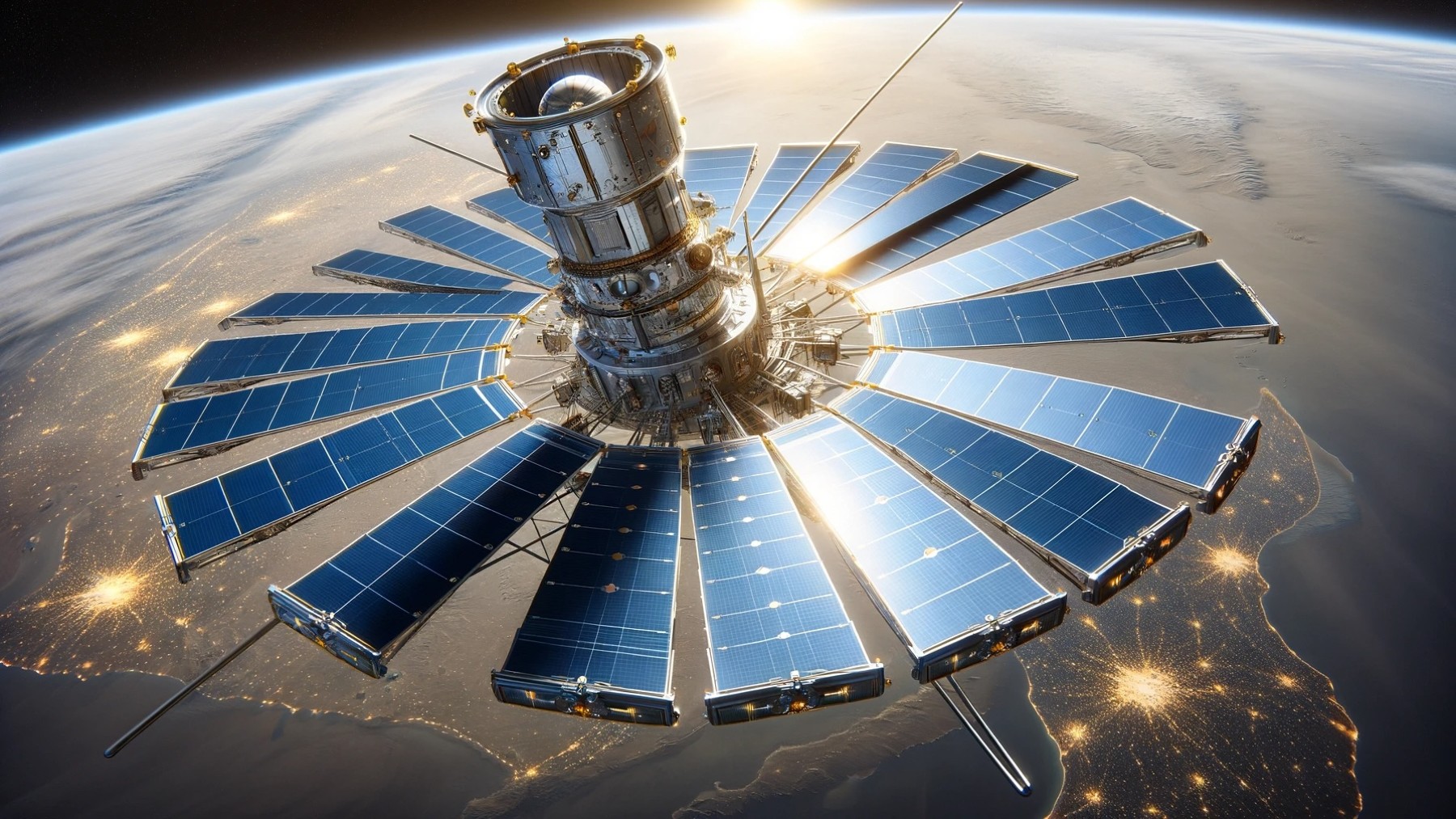
NASA has already started to research the prospects of space-based solar power, or SBSP, for the global energy mix and has posed technological, economic, and policy questions in connection with this novel idea. Space Solar Power consists of gathering solar power through space utilizing sundry satellites and transmitting electricity through the air to the Earth.
If implemented, this technology has the ability to guarantee a steady supply of energy, regardless of the weather or time of day, which can be highly recommended for areas that do not have access to normal electricity. The U.S. Office of Technology, Policy, and Strategy (OTPS) at NASA has been very instrumental in assessing SBSP.
OTIS recently published a report on the agency’s thinking about two conceptual architectures of SBSP systems in terms of lifecycle cost and the emissions of greenhouses. The outcomes reveal that the cost of electricity generated by those systems would vary between $0.61 to $1.05, $0.02, and $0.05 per kilowatt-hour.
NASA’s plans for generating energy from space: Solar panels or the “Dyson Sphere”?
However, the report provided explains that while the former comes at high costs, the SBSP systems’ greenhouse gas emissions are lower than those of the current U.S. electric grid, while they are on par with the terrestrial renewable systems. This places SBSP as another with the potential to achieve the necessary reductions in emissions, especially in the long run.
The possibility of other SBSP systems is quite large, more so since solar energy is freely available in space. However, definitive numbers referring to the total that could be produced remain in the doze category at the moment. Due to the interest in SBSP by various countries and organizations, much progress in the field has been made through various projects, such as those led by:
- The European Space Agency (which recently broke cooperation with Russia’s ROSCOSMOS).
- China (more focused on bringing humans to Mars).
- Japan (in collaboration with America).
- United Kingdom (developing theoretical models).
Interesting keys about the space-based solar plant: From this state’s collaboration to criticism
This invention by NASA is part of a development scene in which different countries are venturing into the technology of SBSP. Currently, the United States is working with schools, i.e., Caltech, that conducted earlier space experiments on SBSP systems. Such tests comprised deployable structures’ demonstrations, photovoltaic arrays, and wireless power beaming.
With regard to SBSP, is expected to be increasing cooperation with other countries and organizations, through which NASA will be sharing knowledge and information on further advancements. The presented model of cooperation might potentially enhance the tempo of progress in SBSP and contribute to the elaboration of possible issues regarding its implementation.
The opportunities of SBSP are quite optimistic, but it seems that recently the NASA report on this issue has been criticized by some enthusiasts who noted that the assumptions used in the course of cost calculations are too pessimistic. The critics in this case argue that there are improvements that have been made in the coupling technology, and the costs of launching SBSP are prohibitive.
It’s clear that the first space-based solar plant could be America’s definitive victory in the race for renewables, with an unstoppable advance that has already received an unexpected boost. Remember what it is? A team of scientists managed to teleport photovoltaic energy above our atmosphere, in what was a historic milestone that not even CERN has achieved. We’ll see if NASA ends up betting on this project or if it ends up being a mere experiment to demonstrate strength to China or Russia.