The automotive industry in our country has been focused exclusively on Tesla for years, an overdependence that experts are already warning about. However, the next few years are expected to be a new “golden age” for America. What has happened to make it so? A group of experts and a well-known laboratory have just developed the first “upside down” hydrogen engine. Only water to run and only water vapor to not pollute—that’s the premise on which they are going to change the world.
Japan and Korea had the “engine of the future”: Now, it’s time for America to revolutionize the roads
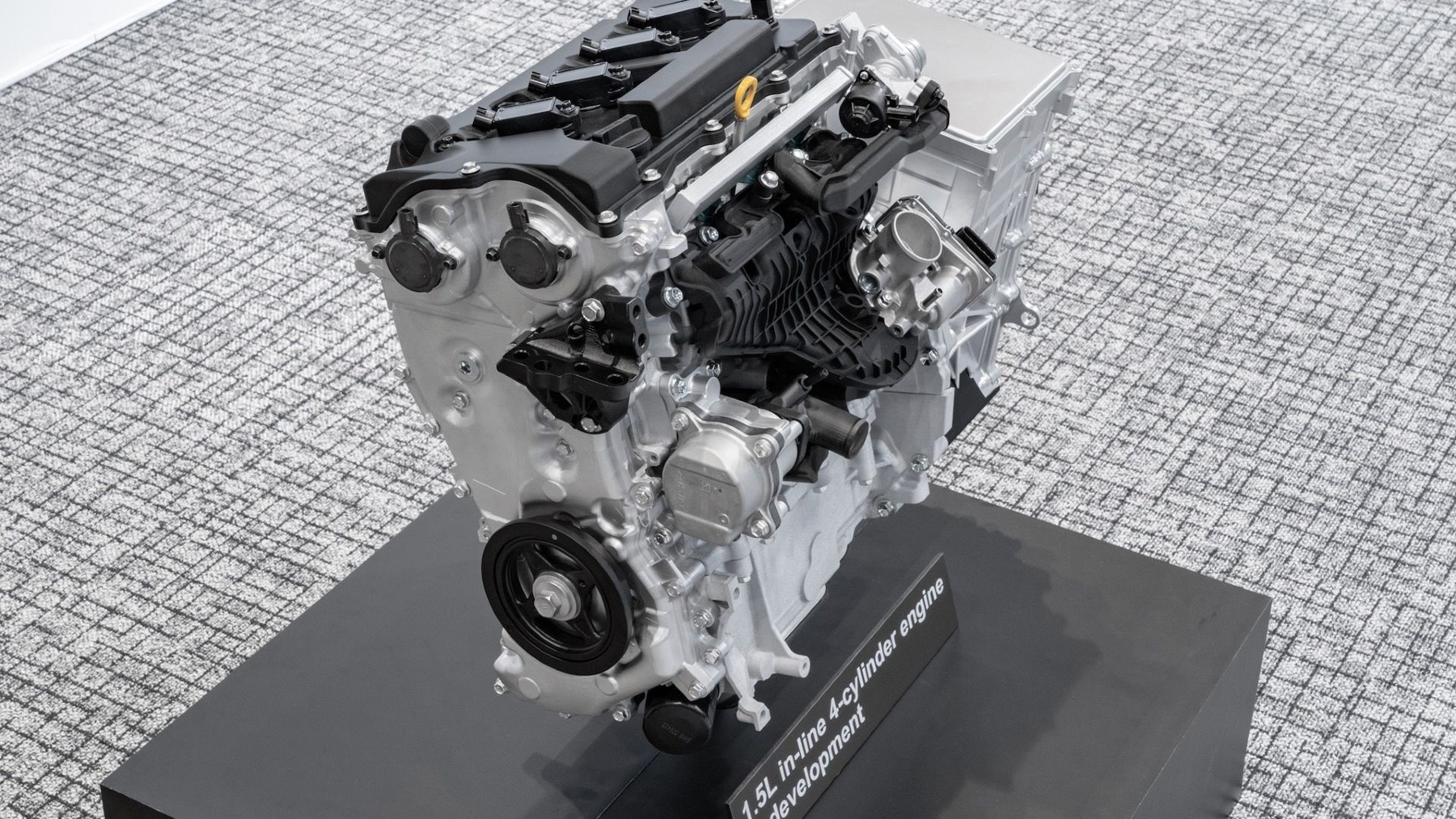
Argonne National Laboratory, along with Achates Power, is leading the way in the research of hydrogen in an opposed-piston engine, promising to bring down the number of emissions in long-haul transportation drastically. This revolutionary engine layout, which began over a hundred years ago, is being refitted to use hydrogen as fuel.
The opposed-piston engine has a novel design in which two pistons are located in a single cylinder to remove the heads’ need. This design enables the operation of a two-stroke combustion cycle that can generate two numbers of power strokes for crank shaft revolution, as opposed to the orthodox four-stroke engines.
Consequently, opposed-piston engines are generally lighter, less expensive and easier to produce than other types of engines, which is why they are useful for various purposes, especially for the usage in heavy transport means such as trucks and military vehicles. Opposed-piston engines were used during the Second World War in submarines and aircraft carriers.
From World War II to 2024: New hydrogen engine to be developed in America with this carmaker
However, due to the recent technology in the field of electronic fuel injection and control systems, interest in this type of engine has been revived. The hydrogen-powered opposed piston engine is designed to provide a similar power and weight to diesel while not having the same emissions.
Key performance characteristics include:
- Power Density: The two-stroke cycle makes it possible to achieve greater power magnitudes, and for this reason, it’s preferred in applications that are rather demanding.
- Efficiency: The primary experiments in engine operation have revealed comparably high thermal efficiency as regular gasoline on behalf of hydrogen due to its high reactivity and low ignition energy, which allow for avoiding the heat loss during combustion.
- Torque: The engine design is expected to deliver a broad range of optimum torque, which is essential in commercial trucks and off-road vehicles.
- Environmental Benefits: Using hydrogen, which, when burned, creates only water, the engine will eliminate greenhouse gas emissions, a major problem within the transportation industry.
America’s first hydrogen engine, in detail: What can we expect from the future? These are the plans
The long-term strategy of enormously successful hydrogen-powered opposed-piston engines is being used in other segments of the transportation industries, especially medium- to large trucks, industry-related vehicles, which includes mining & agricultural segments, and Military vehicles.
Achates Power is strategically positioned in these markets with an understanding that the world is shifting towards a greener means of transportation. This project has been supported by the U.S. Department of Energy’s Vehicle Technologies Office, with the wider program targeting the enhancement of more efficient and innovative vehicle concepts.
The DOE has set aside $133 million to fund research in this area in order to prove the federal government’s support for clean transportation technologies. Moving to the next phases of testing, Achates Power and Argonne National Laboratory are to perform full-scale tests designed to involve vehicle prototypes.
The advent of an “upside down” hydrogen engine could be the ultimate boost to the automotive industry in America. What’s more, we could take the lead with the fuel that China is leaving behind by wanting to monopolize the EV industry. Well, it’s basically the same thing we were doing, but we have realized in time the mistake we have made, and now our main rival will be Japan, which is much more difficult to overcome in the current global market.