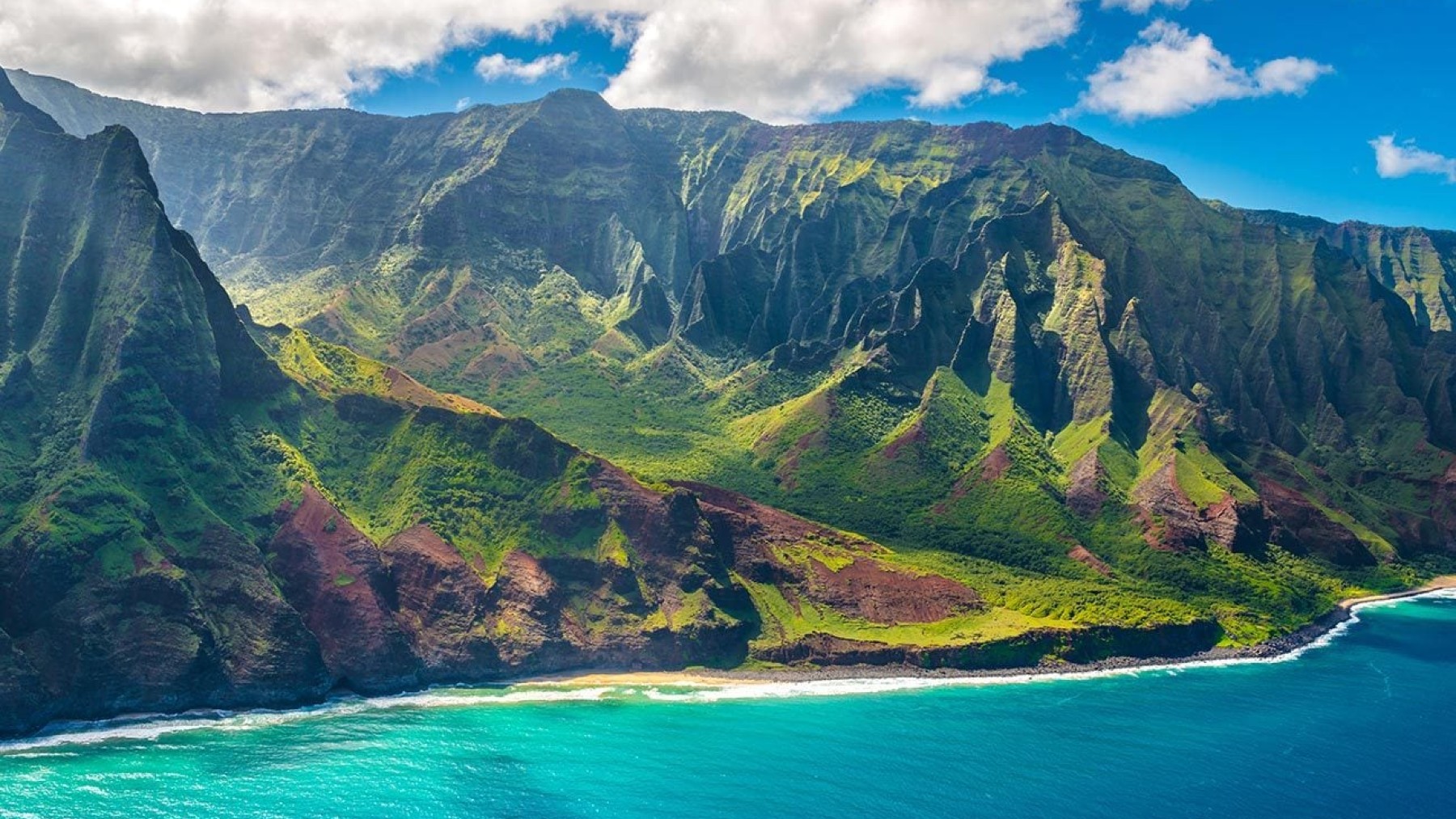
When we ask ourselves which are the green engines of our country, states such as Washington or New York come to mind, as well as California for its commitment to renewables in the residential sector. However, a group of experts has discovered what they have quickly called the “clean energy paradise” (USA Today expression). Can you imagine what it is? It is quite far away, but within our borders, and it has become the heart of surprising, futuristic and promising projects.
Extraordinary discovery in America: This is the “clean energy paradise” everyone is talking about
Hawaii can be considered the clean energy haven of America, as the state is positively leading the way to a 100% clean energy future. The state has successfully laid down targets for less imported consumption of fossil-based energy and more acceptance of different types of renewable energy.
With more advance available from solar and wind all the way to geothermal and hydropower, Hawaii is surely going forward to developing more natural resources to energize the Islands. Specifically, in 2008 the state of Hawaii initiated the pioneering Hawaii Clean Energy Initiative (HCEI) that joined both attempts of the state and the U. S. Department of Energy.
The HCEI even aimed at the ambitious level of attaining 100 percent clean electricity by 2045, which would make Hawaii the first state in the country to adopt it. This ambitious plan has been the driving force behind the state’s huge improvements in the category of renewable energy resources.
Currently, the state has an RPS of 35% and thus has met the intended goal of 30% before 2020. This exalted achievement is clear evidence of the state’s ongoing determination to form clean energy and the contribution of three aspects that include policymakers, utilities and the private sector.
How is Hawaii trying to become the core of renewable energies in America? Four keys (and plans)
Hawaii’s attempts to transition to renewable energy sources have been quite successful. As of the year 2022, the state’s contribution of renewable energy sources to the total electricity output of the state exceeded 35 percent, as was planned for the year 2020. This has been made possible by increasing the generation and deployment of solar, wind and likewise renewable solutions on the islands.
Future plans make Hawaii determined to step up and progress to a new level toward achieving the goal of 100% renewable energy in the state. The state has even feathered great objectives to supply 70% of the state requirements through renewable resources by 2040 and a 100% by 2045.
To reach these goals, Hawaii is pursuing a multipronged strategy that includes:
- Expanding Utility-Scale Renewable Projects: For large-scale solar wind and geothermal developments, the state is currently engaging utilities and independent power producers for the development of energy.
- Promoting Distributed Energy Resources: Hawaii is promoting decentralized generation, particularly rooftop solar, residential and commercial storage, and other distributed resources, in the interest of increasing community-level control.
- Modernizing the Grid: Currently the state is focusing on upgrading measures which include the installation and use of smart meter systems and updating the smart grid to create room for the inclusion of the renewable energy systems.
- Enhancing Energy Efficiency: Hawaii also has stringent energy-efficient measures in buildings through codes and appliance standards, as well as offering rewards for energy efficiency programs, including building efficiency.
Beyond sun and wind: The “other renewables” that have made Hawaii a paradise
Thought Hawaii was all solar panels and wind turbines? The state is coming a long way with other sources that are not alternative, but promising (and no, none of them are nuclear, you can rest assured). We’ve stuck with 3, and we’re going to show them to you.
Geothermal energy
Regarding geothermal energy, Hawaii’s geology includes volcanoes, and therefore Hawaii can be a good candidate for geothermal energy. The only geothermal power plant in Isla is at the Puna Geothermal Venture for big Island, which has only 38 MW of power generation capacity.
Hydropower
The geography of Hawaii is largely mountainous, and the islands receive quite a lot of rainfall, making them suitable to harness small-scale hydropower. These small run-of-river hydroelectric plants, for example, the Wailuku River Hydroelectric Project on the Big Island, help support the state’s renewable energy generation portfolio.
Bioenergy
The state is also focusing on the use of bioenergy, where waste from farming and other municipalities is used in the production of electricity. Some of the industrial plants include biomass and waste-to-energy plants, where the H-POWER plant in Oahu specializes in the conversion of municipal solid wastes to electricity.
It is clear that Hawaii has everything to become the “clean energy paradise” that media like USA Today are presenting to the world. The truth is that the implementation of renewables in the 50th state has been more successful than was thought several years ago, when the IRA was approved with incentives for hydrogen, which was quickly “absorbed” by several American cities. What do you think of this discovery? It is certainly optimistic to say the least.