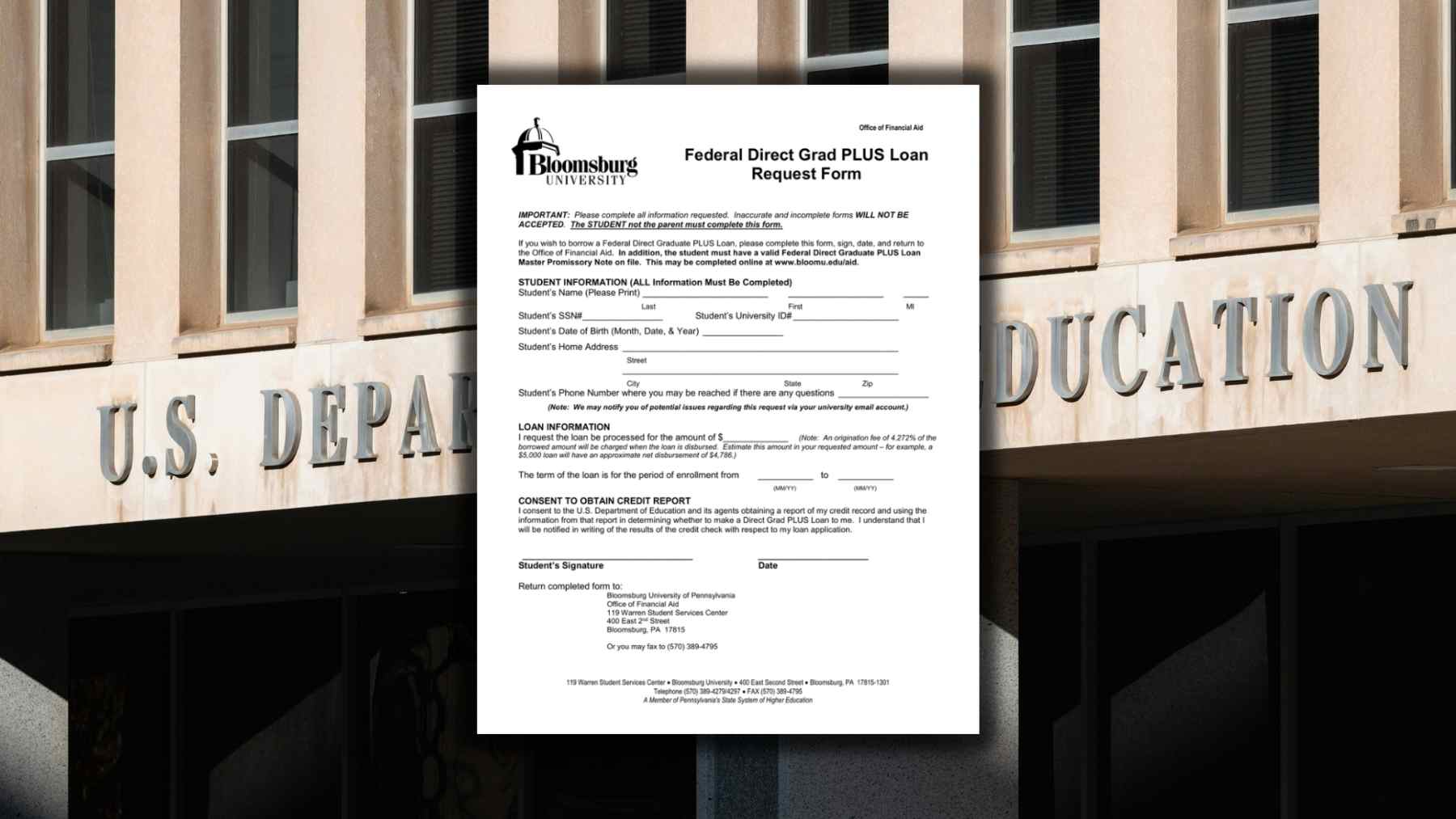
Starting in July 2026, a quiet change in U.S. student loan policy could reshape who gets to design climate-friendly buildings, teach the next generation, or staff overheated emergency rooms. Under rules tied to President Donald Trump’s One Big Beautiful Bill Act, the Department of Education is moving to treat architecture, education, nursing and several other fields as “non professional” for federal loan purposes. That label means sharply lower borrowing limits for future students in those programs.
Repayment Assistance Plan and new borrowing caps
The shift replaces the open-ended Grad PLUS system with hard caps and a new Repayment Assistance Plan that ties payments to income. Graduate students in programs that are not on the professional list will be limited to borrowing $20,500 per year and $100,000 in total.
Students whose programs are classified as professional can access up to $50,000 annually and $200,000 over a degree. Undergraduate caps stay the same.
Architecture, education, and nursing loan eligibility
Architecture, nursing, education, social work, physical therapy, and several other careers currently sit outside the proposed professional list. Nursing deans warn that this could be “devastating” for advanced tracks that already cost more than the new lifetime cap, especially nurse anesthetist and nurse practitioner programs that run year-round.
Lawmakers from both parties have urged the Department to add nursing to the professional category, arguing that lower loan limits risk worsening an already severe workforce shortage.
Buildings and construction emissions
For the climate and environment, the timing is awkward. Buildings and construction already account for roughly one-third of global energy demand and about 37% of energy- and process-related carbon dioxide emissions. Architects sit at the center of that problem and its solutions.
Their design choices decide whether a new school locks in decades of high energy bills and emissions or uses passive cooling, natural light, and low carbon materials. If fewer students can afford advanced architecture training, who will deliver the net zero buildings cities are promising on paper?
American Institute of Architects and licensing standards
Professional bodies are sounding that alarm. The American Institute of Architects stresses that the title “architect” follows years of demanding study, exams, and licensing, and warns that lower loan caps will reduce the number of people who can reach that point. Local chapters add another layer, noting that higher reliance on private loans will hit students from underrepresented communities hardest.
That matters for sustainability. The people who grow up breathing polluted air or riding sweltering buses often see design flaws that others miss and are badly needed at the drawing board for healthier, more efficient neighborhoods.
Nursing workforce and climate change health impacts
Nursing sits on the front line of climate impacts in a different way. Health agencies already describe climate change as a fundamental threat to human health, with more extreme heat, floods, fires and air pollution all driving illness. A recent global assessment linked rising heat to roughly one death every minute worldwide.
When a heat dome settles over a city or wildfire smoke turns the sky orange, it is nurses who staff overwhelmed emergency rooms, monitor vulnerable patients and keep health systems functioning. Making graduate nursing programs harder to finance pulls against that reality.
Department of Education definition of professional degree
The Department of Education insists that its definition of professional degree is an internal funding category rather than a judgement on any occupation. Officials say agency data shows that about 95% of nursing students already borrow below the new caps, and they argue that loan limits will push schools to control tuition so graduates are not trapped in unpayable debt.
Nursing and architecture leaders counter that the remaining students are exactly those training for the most advanced and expensive roles, which health systems and cities increasingly depend on.
Timeline and public comment period before July 2026
What happens next is still in motion. The negotiating committee that drafted the professional degree framework has reached consensus, yet the Department is only now moving toward a formal proposed rule and public comment period.
Advocacy groups are preparing detailed responses, and lawmakers are signaling that they may seek legislative fixes if key climate-critical professions stay off the professional list.
Low-carbon buildings and climate literacy
At the end of the day, this is not only a fight over labels on a federal form. It is a question of who gets the chance to design low-carbon buildings, to teach climate literacy, and to care for patients in a hotter, riskier world. The planet needs more people in those roles, not fewer who can afford the training.
The official statement was published on the U.S. Department of Education website.