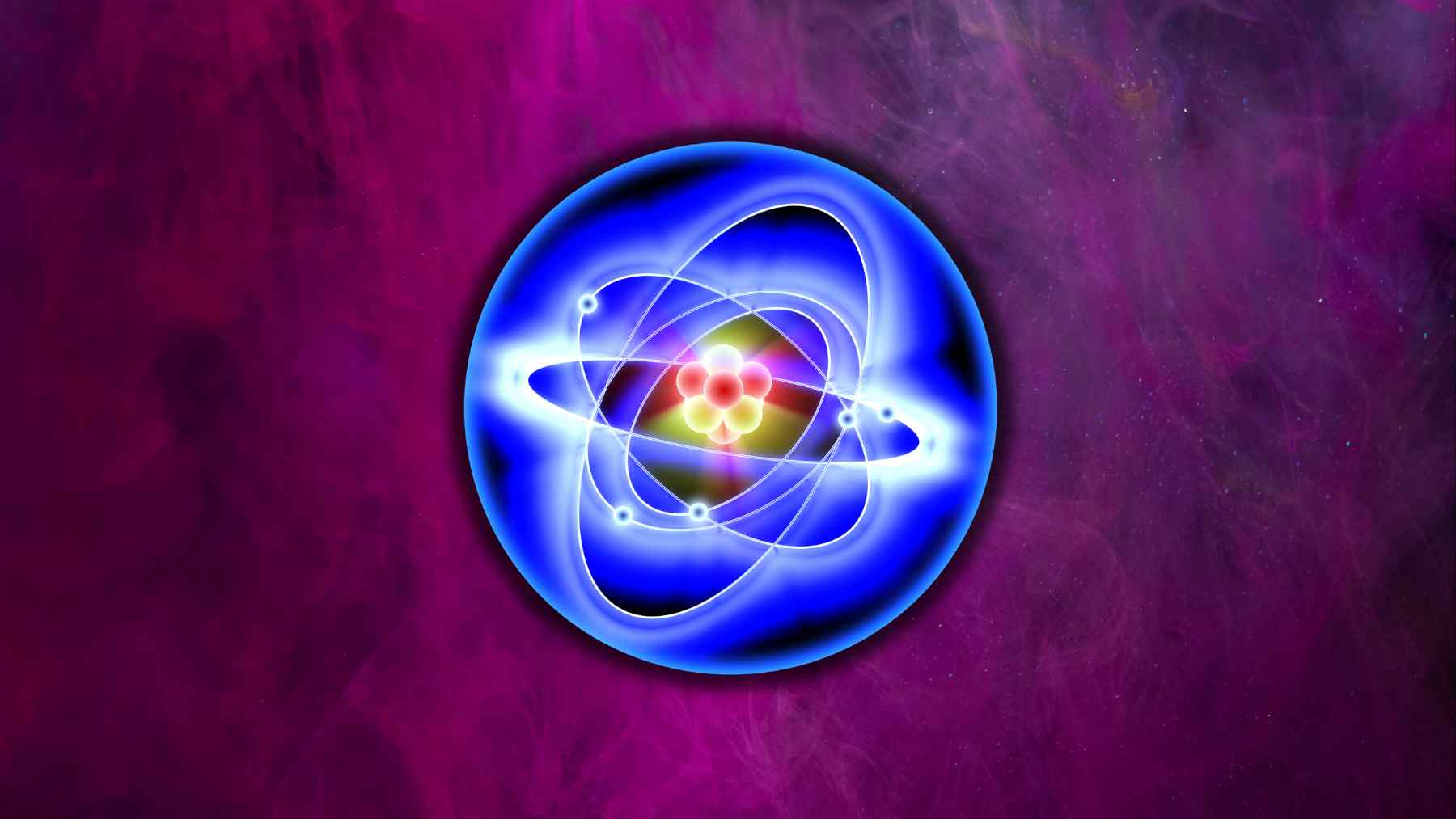
One country has just made a quantum leap in renewable energy, with a project that even the UN and IEA theorized decades ago. We have created an artificial South Korea Sun that has placed the research center at the unheard-of temperature of 100 million degrees. All for what? That’s the only negative point: we have invented the most dangerous source in history, and they want to explore it to solve our electricity crisis in America.
South Korea’s biggest energy project is also its undoing: the mistake they have made
Nuclear fusion has long been sought after as a potentially limitless and clean energy source. Fusion reactions involve fusing light atomic nuclei, such as hydrogen isotopes deuterium and tritium, to form heavier nuclei like helium. This process releases enormous amounts of energy, even more than nuclear fission reactions.
Researchers around the world have built experimental fusion reactors to replicate the fusion process that occurs naturally in stars like our sun. One promising reactor is South Korea’s KSTAR, nicknamed the “artificial sun.” It uses powerful magnetic fields to contain hot plasma made of deuterium gas and sustain a fusion reaction.
In late 2022, KSTAR set a new record by maintaining a plasma temperature of over 100 million degrees Celsius for 30 seconds. This is the longest duration achieved so far at such extreme temperature required to fuse hydrogen atoms together. Let us not forget that nuclear energy is far from being renewable or environmentally friendly.
South Korea’s artificial sun, a historic invention: it is at 100 million degrees Celsius
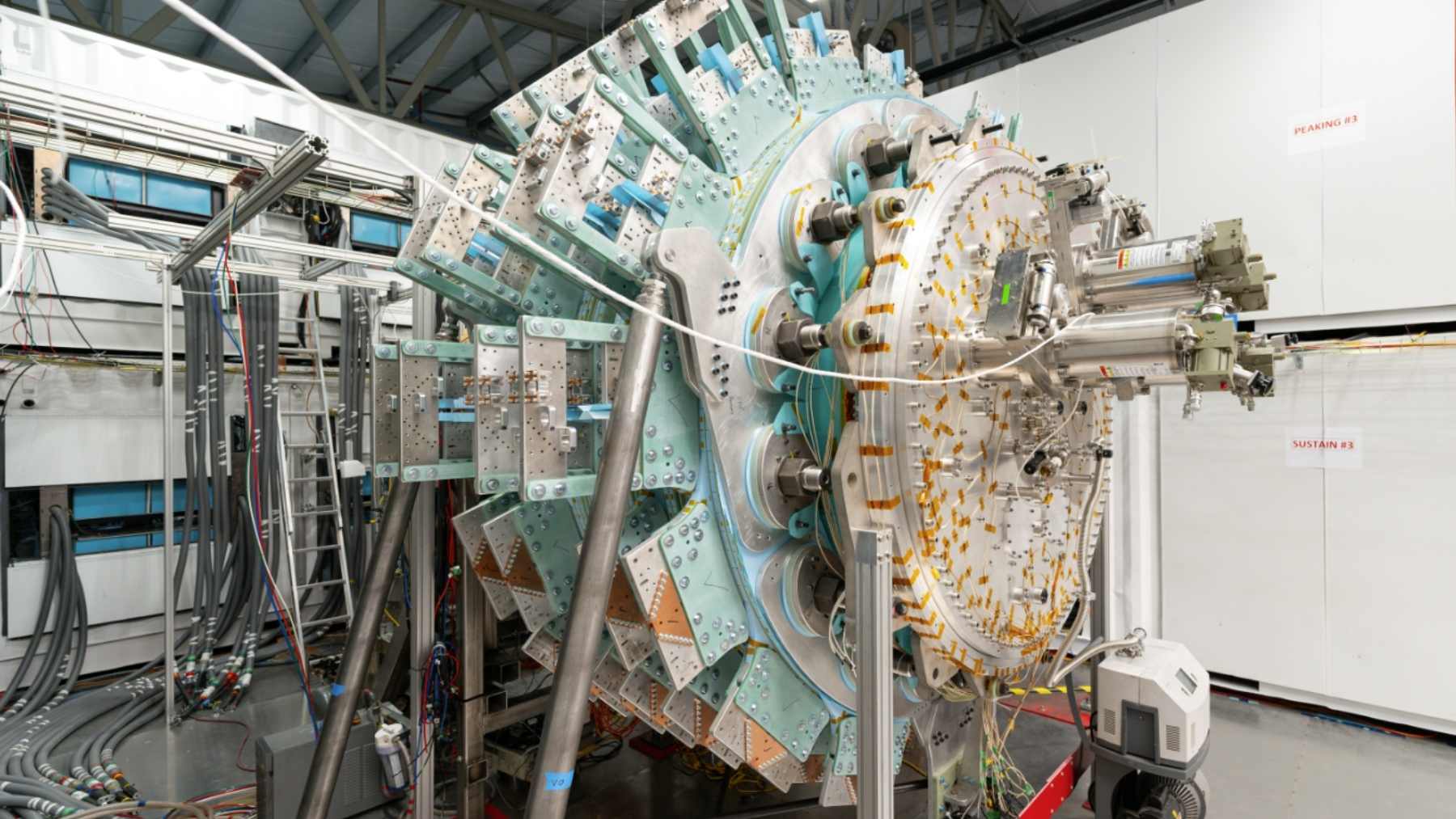
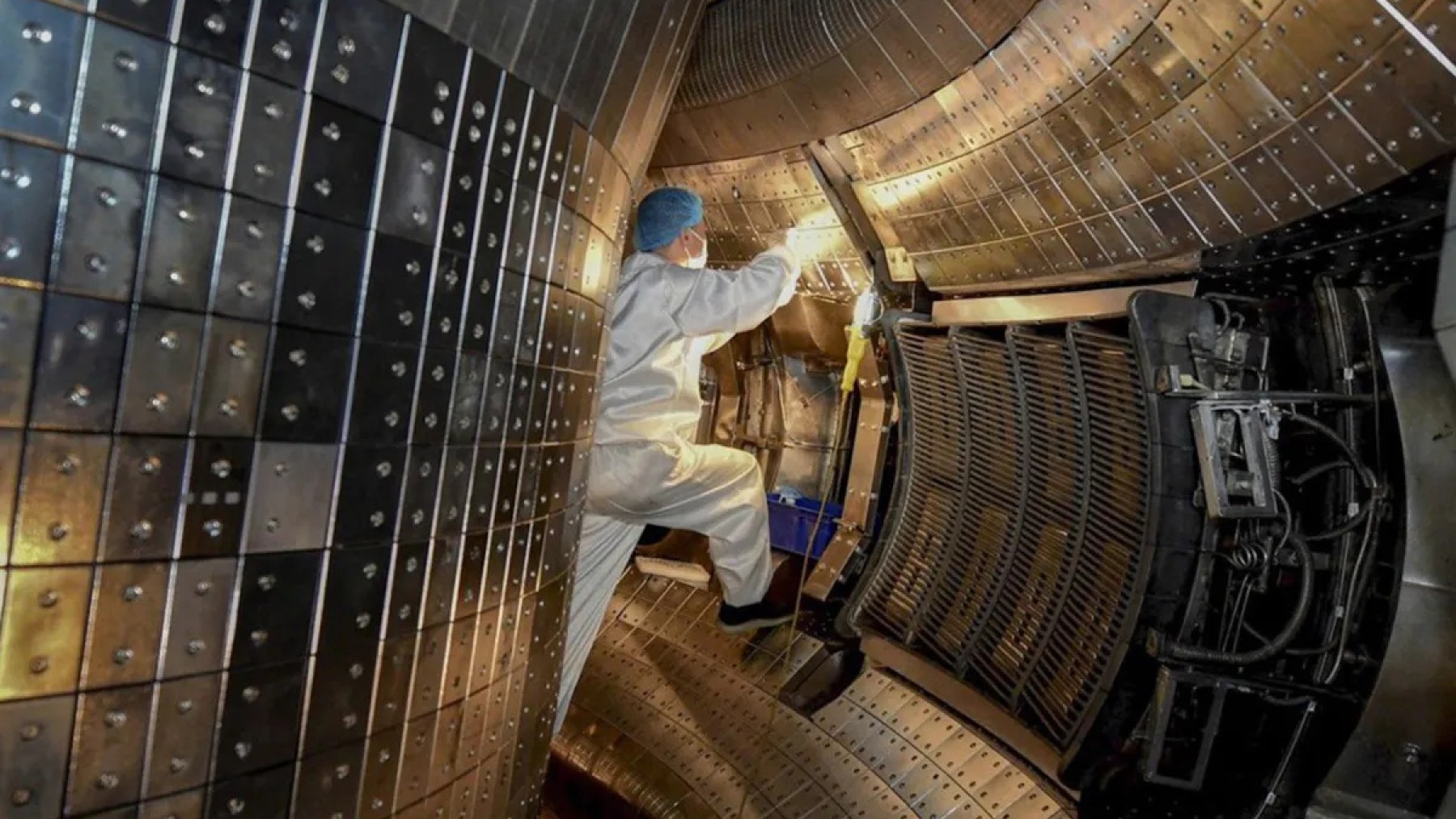
The Korea Superconducting Tokamak Advanced Research (KSTAR) reactor, also known as the “artificial sun”, is a superconducting tokamak magnetic confinement fusion device located at the National Fusion Research Institute (NFRI) in Daejeon, South Korea.
The tokamak is a donut-shaped vacuum chamber that uses powerful magnetic fields to contain hot plasma and provide the conditions for fusion reactions. KSTAR’s superconducting magnets allow it to create a strong magnetic field for plasma confinement while consuming less energy compared to non-superconducting magnets.
The spherical tokamak design provides a compact, high-performance configuration for studying the physics of advanced tokamak operations, exploring methods for improving plasma stability, and testing materials and components for future fusion reactors.
KSTAR aims to achieve a plasma current of 2 MA and pulse lengths up to 300 seconds at full power. It is a key facility for South Korea’s long-term strategy of developing fusion energy as a safe, environmentally sustainable power source.
A look at the trajectory of South Korea’s artificial sun: look at what they have achieved
The Korea Superconducting Tokamak Advanced Research (KSTAR) reactor, nicknamed the “artificial sun”, has set new records for sustaining an ultra-hot plasma used in nuclear fusion. In 2020, KSTAR achieved a plasma temperature of over 120 million degrees Celsius for 20 seconds. This broke its own previous record.
Just recently in 2022, KSTAR reached a plasma temperature of 100 million degrees Celsius and maintained it for a remarkable 30 seconds – another huge milestone. To put this in perspective, the core of the actual Sun is estimated to be around 15 million degrees Celsius.
Remember, however, that no energy source can be considered renewable if it pollutes for more than 20,000 years. This is the case with raw materials such as tritium, uranium or plutonium, which are capable of destroying entire ecosystems in the event of a nuclear catastrophe.
It is clear that this artificial South Korea Sun will solve many of the problems that scientists have at a theoretical level, both to understand how energy is generated inside a plasma ball and to know how electricity behaves at very high voltage. However, let us not forget that South Korea is still making the mistake of considering nuclear power as a renewable source, which will have serious consequences in the future.