Pursuing sustainable energy has prompted the emergence of a black wind fence technology that opposes solar panels for market domination. The black wind fence emerges as a groundbreaking innovation because it annually offers your home 2200 kWh of electricity. This article delves into the details of this groundbreaking technology, its benefits, and its potential impact on the future of home energy generation.
A stunning blend of energy efficiency and modern design
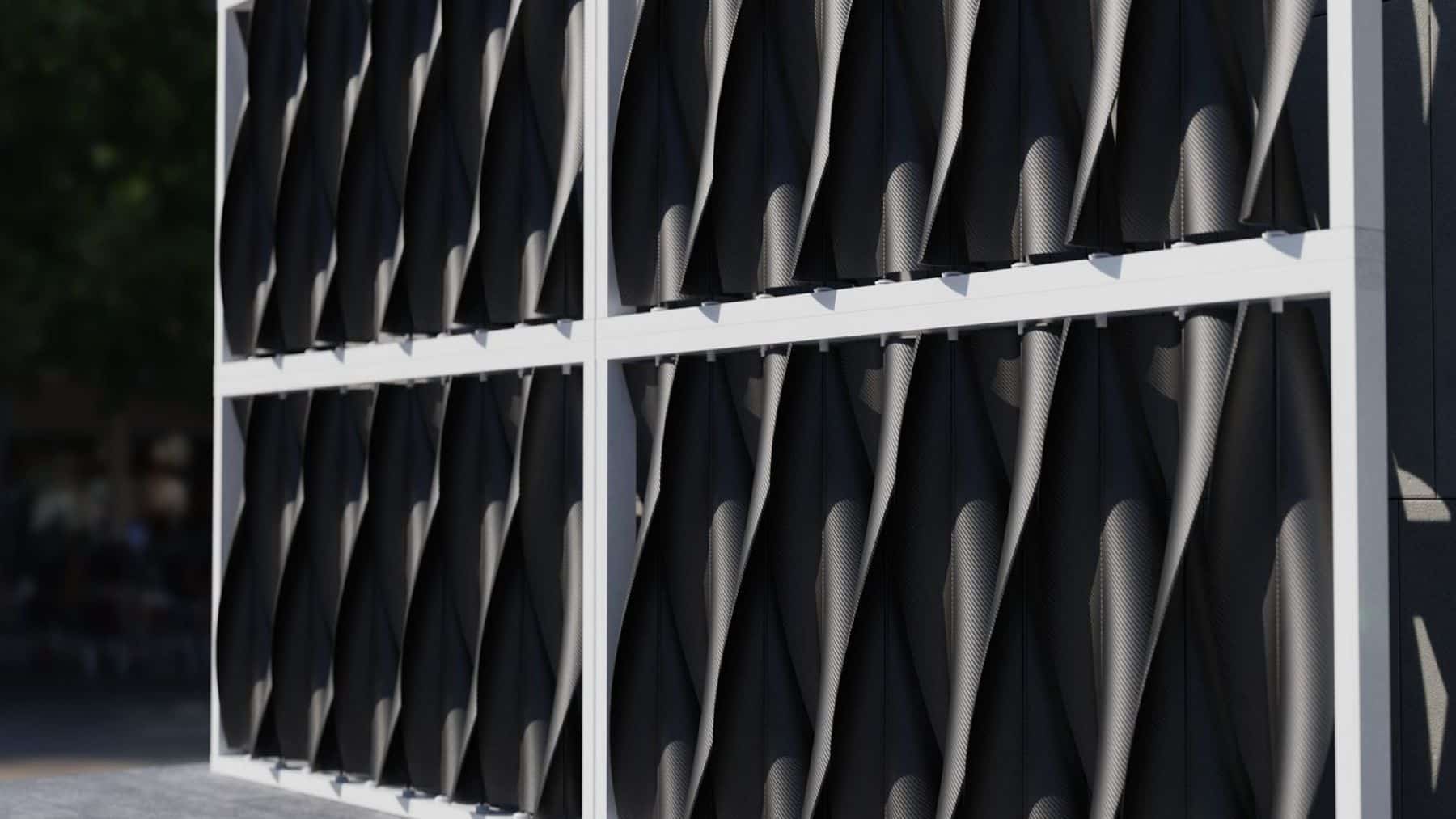
New York-based designer Joe Doucet implemented the modular wind fence as a twisted structure containing wind turbines. There are significant differences between typical large-scale wind turbines because the wind fence fits perfectly inside urban spaces for residential use and hotel accommodations. Each module measures 14 feet by 7 feet and is made of 80% recycled content, supporting maximum power generation through eight helix-shaped blades.
The team from Doucet’s group performed wind tunnel tests on three final wind fence designs, which stemmed from 16 original prototypes. The helix design stood out as the most effective power generator, producing 2200 kWh annually. One wind fence can produce enough electricity to power 20% of typical residential energy consumption annually.
The wind fence serves as a power source but remains a remarkable work of visual art.
Aesthetic point of view emerges as a remarkable characteristic of using wind fences for energy generation. The design exists as an architectural enhancement in addition to its energy generation capacity, according to Doucet. The wind fence design integrates rotary wind turbines, which generate artistic motion while acting as a renewable power source.
Vertical-axis turbines that power wind fences operate at lower performance levels than ordinary horizontal-axis turbines with three blades. The operational restriction that each vertical-axis turbine surface monitors wind for only a single time period results in decreased total efficiency. The wind fence features creative design attributes that generate power in urban locations and positions itself as a promising distributed power generation technology.
Implementing wind fences represents a major development in building better sustainable power generation technologies. The wind fence presents property owners a strong solution for lowering their dependence on grid power while providing them an alternative to traditional solar panels. Using the wind fence technology results in decreased energy expenses provides residents greater autonomy from the power grid, and generates lower amounts of carbon emissions.
This wind fence system might become the dominant technology for residential energy generation throughout the future.
At present, Doucet aims to develop the wind fence in a way that allows all consumers to affordably access it. The founder now conducts interviews to find market partners for the wind fence while awaiting delivery of customized pilot units for immediate testing. A successful implementation of the wind fence would result in its spread across urban landscapes, radically modifying our perspective on energy production. Home energy generation finds a creative solution through the innovative design of the black wind fence system.
The wind fence provides an attractive modern solution to solar panels through its functional design and energy-generating capabilities for significant power output. It emerges as a game-changing sustainable technology that demonstrates excellent potential to transform future power generation systems. Different settings can benefit from the modular design of the wind fence system. Residential power requirements can be addressed with multiple wind fence installations that users can adjust by increasing or decreasing unit numbers based on their energy needs.
This novel wind technology shows promise in entering new housing developments, enabling widespread acceptance of renewable energy among cities. People are adopting the wind fence for alternative power generation because it creates energy production and artistic value during the transition to sustainable power despite rising costs and environmental change concerns in the present era. Cities ‘ renewable energy investments will likely create the wind fence, which is an omnipresent feature of urban settings.