Great powers, such as Japan and America, are not only great in the economic sense, but also in technology. Remember Elon Musk’s extravagant Neuralink project? The same controversy that was created at the time may return, but multiplied by 1000. India has just unveiled the Blue Brain Project, aimed at creating the first artificial brain in history. If the controversy is great, it will be even more so now that a historic failure has been discovered that has caused casualties: you won’t believe what has happened.
First it was Elon Musk with Neuralink, but India has gone further: The first artificial brain in history
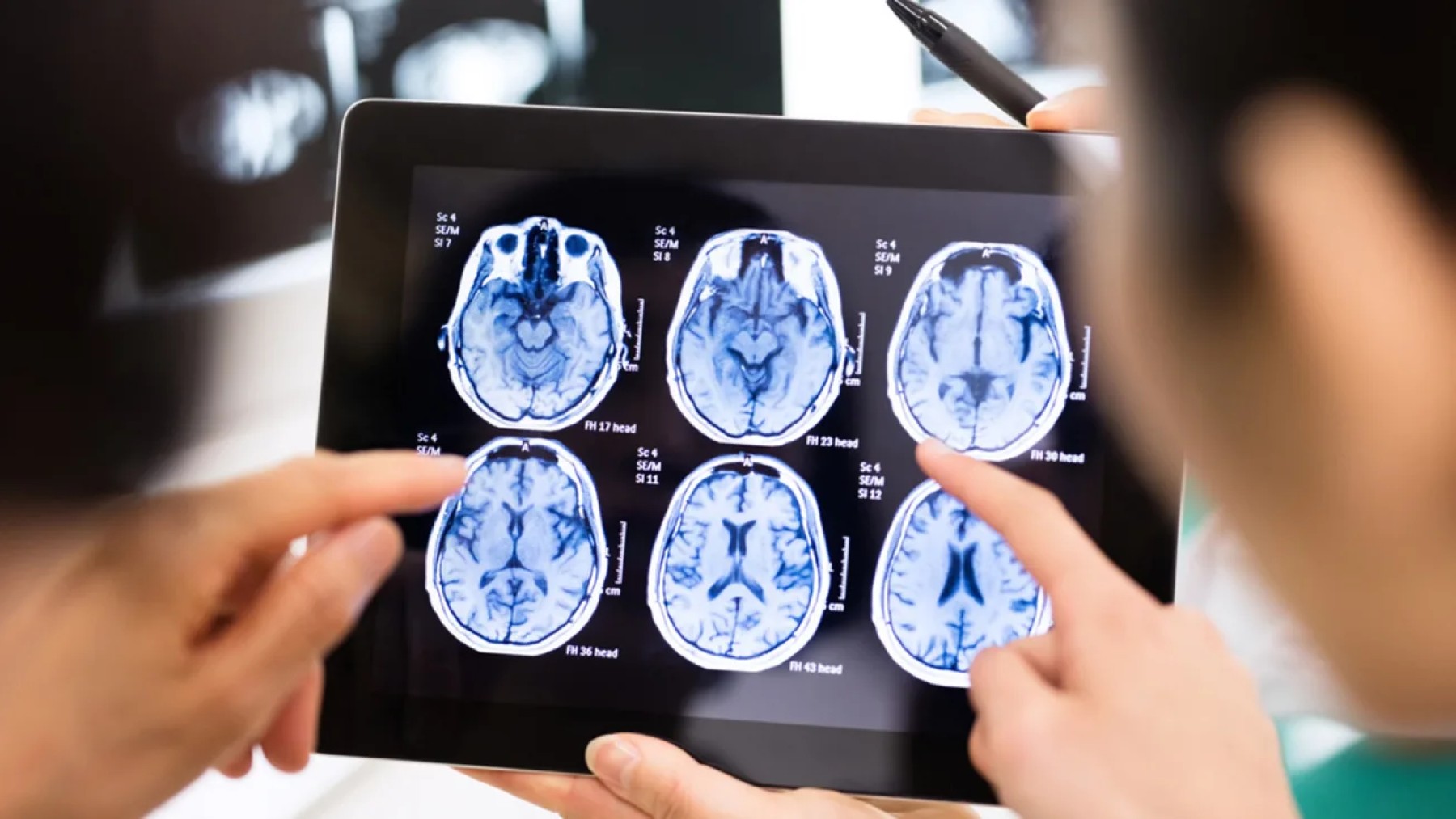
The ambitious project known as the Blue Brain Project was started in 2005 by the École Polytechnique Fédérale de Lausanne (EPFL) in Switzerland. This groundbreaking project has achieved considerable advancement in comprehending the human brain and its functionalities, and the final aim of this project is to replicate a whole human brain in a supercomputer.
The Blue Brain Project is devoted to building biological realism of the rodent and eventually the human brain within the blue Gene system. It is noted that neuroinformatics, high-performance computing, and data-driven modeling forming the basis of the project according to computational neuroscience.
This way, experimentally acquired data will be connected with computational modeling, to provide the scientists with better insight into the brain. The Blue Brain Project has accomplished some goals towards simulating a whole human’s brain. In 2015, the project was successful in simulating a neocortical column, which is the smallest functional unit in the neocortex.
This simulation used 31,000 neurons and roughly 37 million connections; hence, it is the most comprehensive simulation of a part of the brain to date. Another important project hit in 2019 when the researchers managed to simulate what can be considered a full mouse brain, given that this animal’s brain comprises about 70 million neurons.
This supercomputer controls a brain: the Blue Brain Project, with a historic controversy
This simulation was processed with the assistance of the Blue Brain 5, supercomputing system, which is capable of working at a peak of performance equal to 12.5 petaflops and might complete 12.5 x 10 to the power of sixteen calculations per second. The Blue Brain Project is a division of several projects, and each project has its own goal to achieve.
The initial period of activity from 2005 to 2015 was dedicated to creating appropriate methods and approaches for regeneration and modeling of the rodent’s brain. The second phase that started in 2016 seeks to expand the goals of the project and incorporate the human brain.
The project has also had its fair share of hitches, compounded by the brain’s inherent structure and design plus its current computational prowess. But the researchers are not discouraged and go on with their work in order to achieve the task of mimicking the human brain.
What everyone feared has happened: Blue Brain Project has had a failure, and there are victims
In 2020, the Blue Brain project disappointed the researcher when it could not faithfully model the electrical activity of a neocortical microcircuit. This led the researchers to realize that their model was incomplete and lacked some important facets, for example, neuromodulatory actions and long-range couplings.
However, this notwithstanding, the Blue Brain Project still draws a lot of attention and interest among scientists. Perhaps one of the most fascinating aspects of the project is what it will achieve; a total makeover of knowledge and understanding of the human brain. However, through modeling the structure of the brain, various neural disorders such as Alzheimer might just get a solution.
India’s Blue Brain Project is a demonstration of extravagance in technology by the emerging superpower, and could be a danger to Elon Musk’s Neuralink. Not in itself because it is competition, but because it is stirring up controversy among doctors, with the WHO itself up in arms against this type of “breakthrough”. Do you think that the ethical limits of medicine have been exceeded? Maybe so, or maybe we are paying a fair price for curing neurological diseases.