Tesla and Elon Musk want to lead the global EVs market, despite stiff competition from China. However, that doesn’t mean it’s America’s only proposition going forward. The whole world is on edge with the 15-liter hydrogen engine unveiled in California, which could change everything. A prototype that runs on water (yes, water) and emits only steam has zero emissions and can be refueled in seconds. Sound miraculous? It’s reality, and we’re going to prove it to the planet.
This game-changing engine is neither Japanese nor German: It could be the end of Tesla EVs
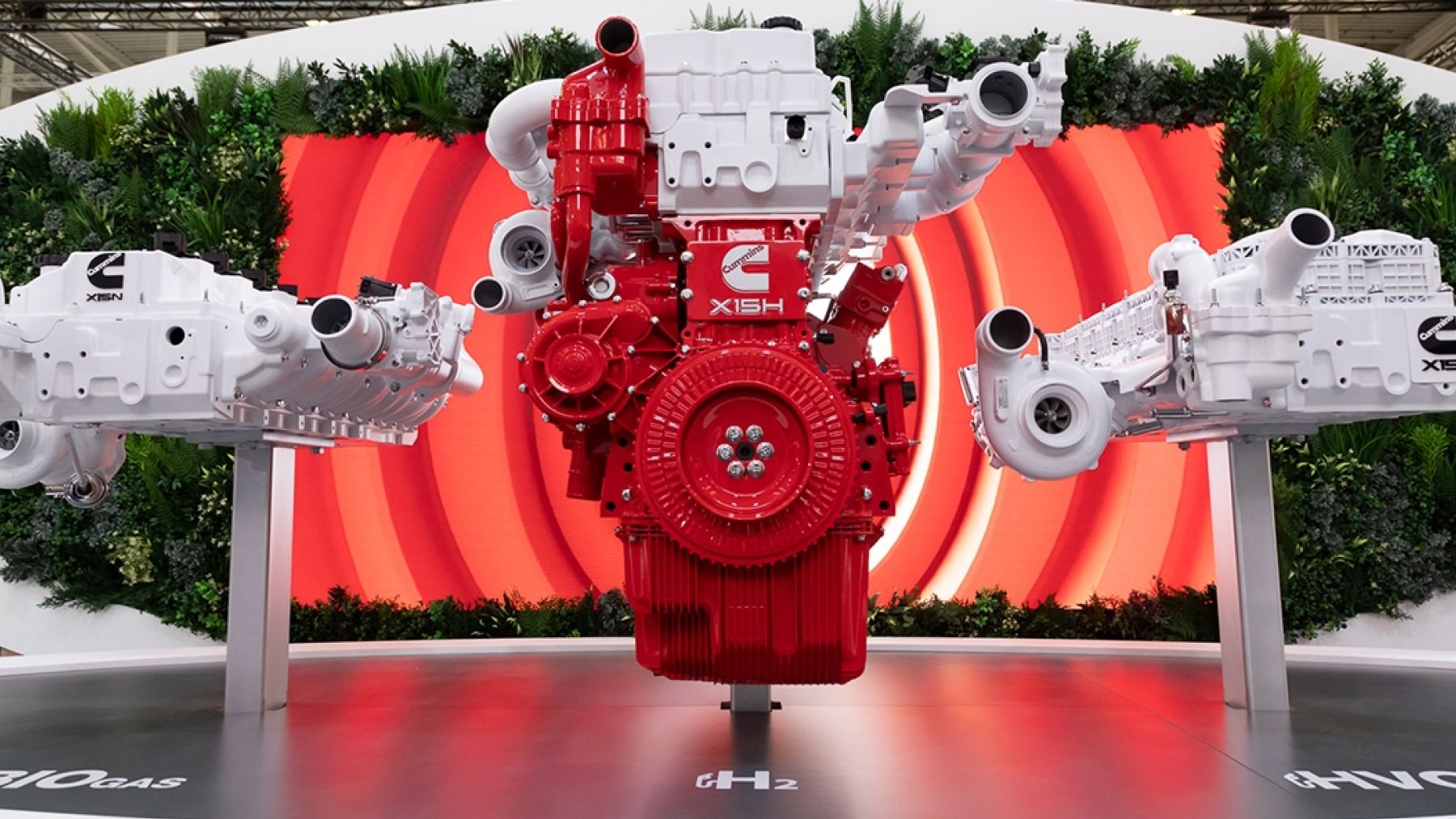
Also, Cummins, which develops and supplies engines for various industries, has recently unveiled a completely new 15-liter hydrogen engine for the transport industry. This new engine is a statement of the company’s promise to achieve better environmental policies and reduce carbon emissions.
Cummins’ 15-liter hydrogen engine is revolutionary in the transport industry since it replaces the conventional diesel engine and is environmentally friendly. This engine employs hydrogen as a fuel, which is stored in a tank and then transformed into electrical energy by way of a fuel cell.
The electricity generated firmly propels the engine with zero emissions of the toxic gases and, in effect, brings down the environmental effect of carriage service greatly. Therefore, the best system that runs the Cummins 15-liter hydrogen engine is fuel cell technology. A fuel cell is an electrochemical power converter that converts fuel into electricity.
Why are Cummins hydrogen engines so different from conventional ones? A new chapter in FCEVs innovation
Referring to the Cummins engine example, the relationship between the product and the inputs is as follows: The hydrogen is stored in the tank, and with the help of the pump, it is supplied to the fuel cell. At this place, hydrogen reacts with oxygen and as a result, electricity, water and heat are generated.
This process is very efficient, because the fuel cell is capable of converting up to 60 % of the energy content of the hydrogen into electricity. The engine itself is used in such a way as to use the electricity produced by the fuel cell most efficiently. It also uses a small chamber combustion system as well as a high-pressure fuel injection system.
Four keys to understanding the Cummins hydrogen engine: 15 liters and 500 hp of power
The Cummins 15-liter hydrogen, the engine, is aimed at providing great horsepower and torque ratios. And the model’s maximum power output can reach 500 horsepower, while maximum torque hits up to 1,800 Nm, thus the engine can operate with greater efficiency if installed in heavy trucks, buses, and other commercial vehicles.
Such power figures are almost equivalent to the conventional diesel engine, which provides the major bonus of zero emissions. The creation of the 15-liter hydrogen engine at Cummins was not an isolated practice but was carried out afterward by several groups and specialists within the firm.
The new Cummins 15-liter hydrogen engine enjoys powerful numbers on paper, which should serve to make hydrogen a strong contender in the transportation industry. Some key performance metrics include:Some key performance metrics include:
- Power Output: It has a maximum torque of up to 500 horsepower, thus making it preferable for use in activities that require strength and power.
- Torque: The engine outputs up to 1,800 lb/ft of torque for performance and towing capacity.
- Fuel Efficiency: The engine also has the fuel economy of up to 35% better than the normal diesel engine, which helps to minimize fuel consumption and therefore general expenses.
- Emissions: The company goes further by stating that the engine produces no emissions, hence the pollution level of the transport sector.
America continues unstoppably to develop new prototypes for the mobility of the future, even in the face of stiff competition from China and Japan (separately, fortunately). The goal is for this new Cummins hydrogen engine to go where conventional FCEVs have failed, with a new strategic concept and a network of hydrogen refueling stations that the White House has pledged to develop through historic subsidies (we’ll see what happens).