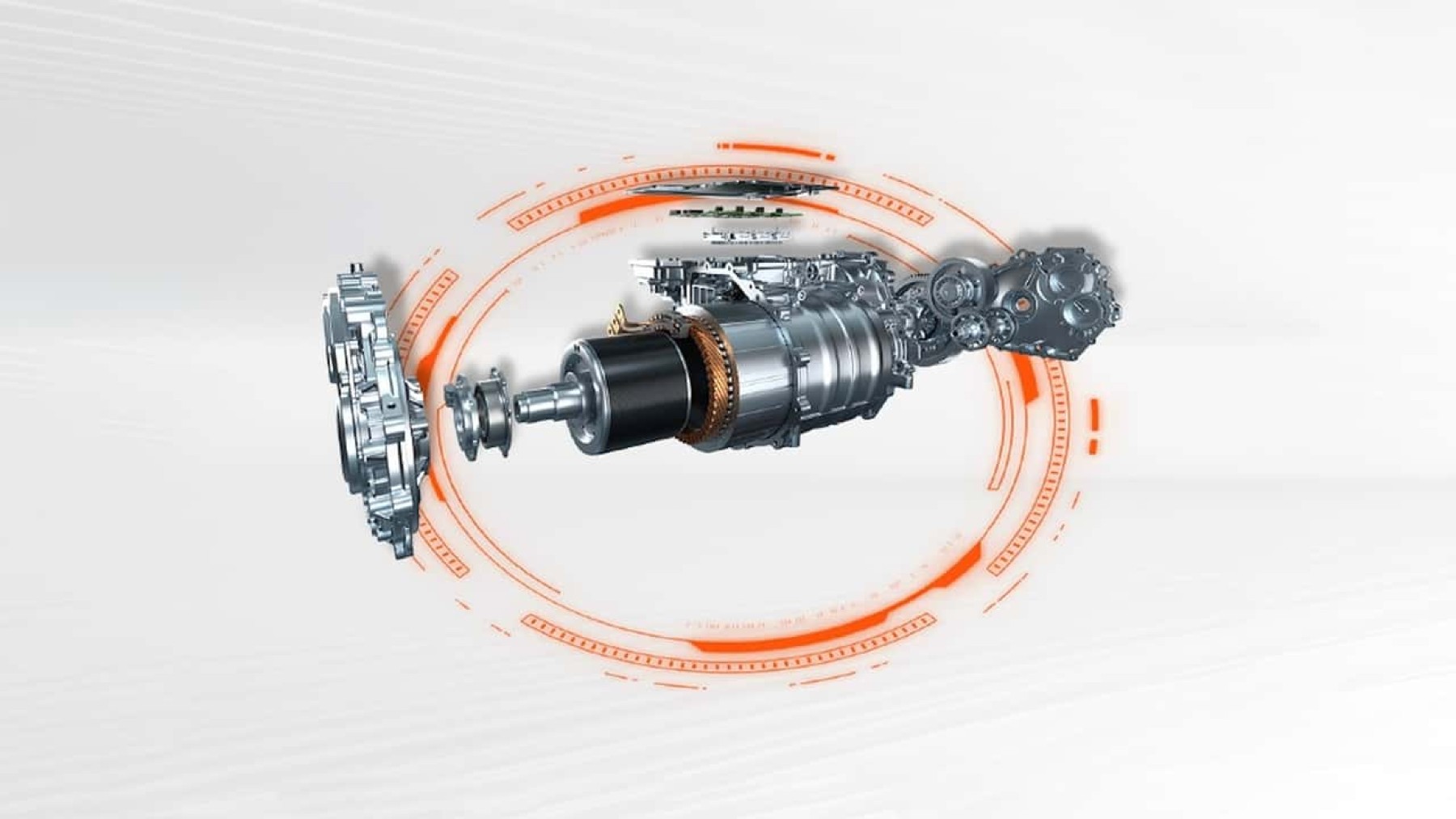
As the world begins to undertake sustainable energy projects, China is making significant progress in developing innovative technologies which to adapt to a green world. In August of this year, Chinese automobile manufacturer GAC-backed Hyptec announced their newly developed Quark Electric Drive 2.0. The engine is set to be a major improvement in electric vehicle (EV) technology due to its improved efficiency and cost-effective nature.
An innovative ring-shaped design: This could be the engine of the future
GAC has claimed that the new EV technology has already surpassed expectations by breaking three world records: the highest motor efficiency of 98.5% ; the highest motor power density of 13kW/kg; and the highest motor speed of 30,000rpm. The motor can boost both the density and milage of EVs by an additional 50km. The secret behind the engines ground-breaking success lies in the materials the Chine powerhouse has used to develop the engine.
The Quark Electric Drive 2.0 uses materials known as amorphous alloy materials. These are colloquially known as “liquid metals”. These next-generation materials can produce superb magnetic properties and permeability. The potential of these materials is to produce increased magnetic and permeability properties which are 20-100 times higher than traditional silicone steel sheets. These sheets are essential for operating EVs, and the new source material used by GAC has significant potential.
Revolutionizing fuel efficiency with advanced propulsion technologies
The new GMC engine is to be installed into existing Hyptec models. Hyptec is the English brand name for GMC to reach international markets. By switching to the newer model, EVs can gain an additional 50km travel range and Extended-Range Electric Vehicles (EREV) can gain an additional 150km with the same fuel consumption as the previous model engines. The Quark Electric Drive 2.0 has been developed with efficiency as a priory and does not disappoint.
More however, the motor does not compromise power for efficiency. The engine is said to still deliver high levels of torque without adding any extra weight to the vehicle. It’s power density of 13 kW/kg is to account for its uncompromising power efforts while the record-breaking efficiency of 98% allows for the vehicle to travel longer with the same amount of satisfaction. Further, with the new engine, an all-wheel-drive car will have the same range as a two-wheel-drive car.
The Quark Electric Drive will serve as the power core for Hyptec’s future supercar models
Early in August of this year, GMC also dropped their latest latest supercar with Aion. The Hyptec SSR stands out in luxury EVs. It features a a 900-volt SiC chip-based platform, over 900 kW of power and a peak torque of up to 12,000 Nm. Additionally, the Hyptec SSR can accelerate from 0 to 100 km/h in a jaw-dropping 1.9 seconds. It has a lightweight carbon-fiber body for increased aerodynamics but still holds a tensile strength up to five times greater than steel.
The car is priced between 1.28 million yuan to 1.68 million yuan. In dollars, the car sits between $182,346.62-$239,329.94. Electric supercars are not a foreign concept, and there are plenty to be found in the lineup of multiple global auto traders. Currently, the most expensive luxury electric supercar is the Automobili Pininfarina’s B95. Coming in at $4.7 million, the car is one of the fastest in the world. Only ten have been made.
Changing EV technologies are a great indication that the market has not been exhausted just yet and there are still many pathways of opportunity and potential for the future of EVs. While many automobile companies are turning their attention to hydrogen fuel-cell technology, including legendary EV brand Tesla, fans of EVs will be happy to know that they are not going anywhere anytime soon and are on a continuous journey to reach their optimum efficiency.