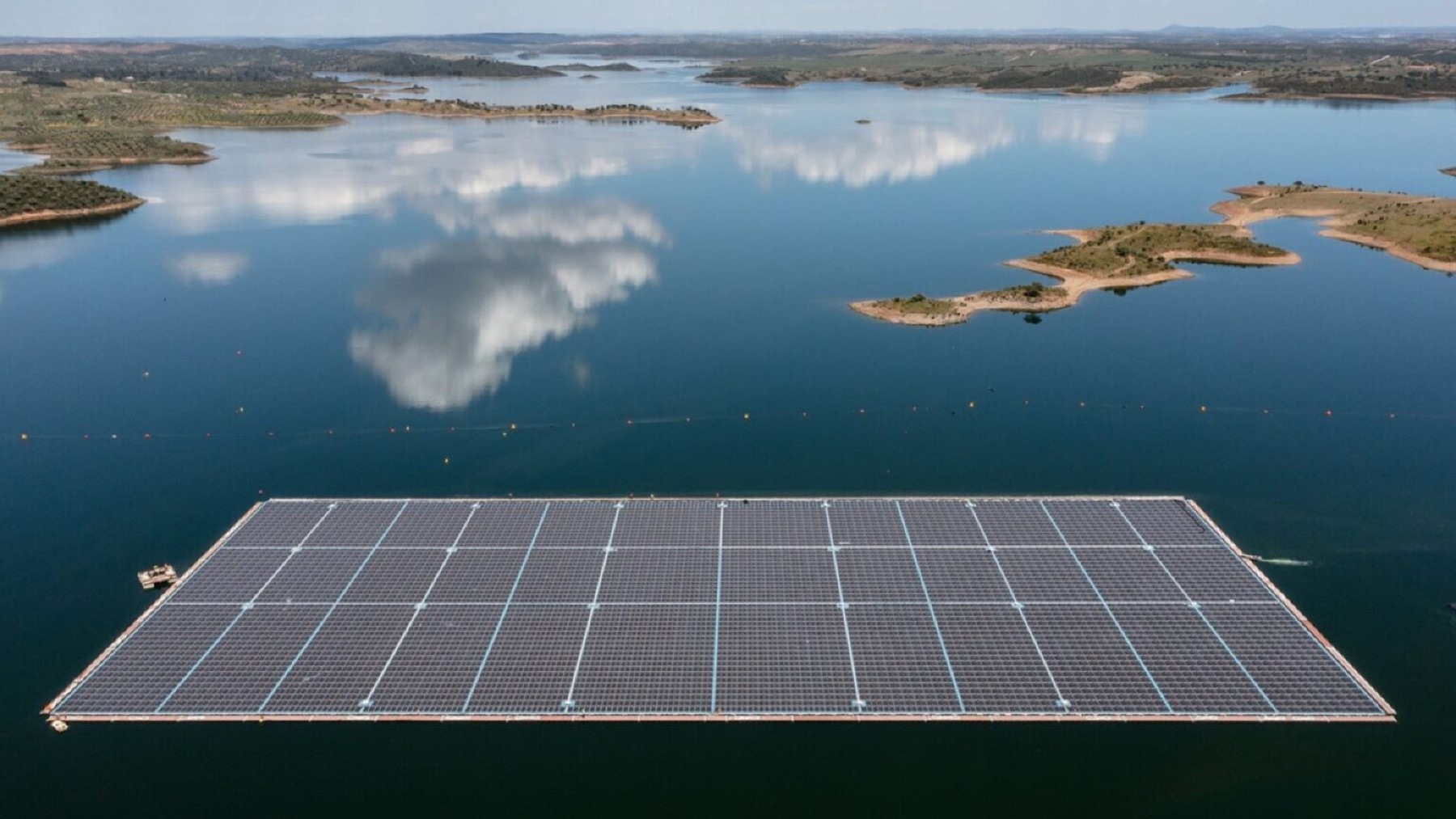
Photovoltaic technology is the most efficient of all alternative energies. However, when it comes to solar panels there are always opportunities for improvement, but we introduce you to the material that is responsible for the failure of solar panels, although China wants to use it again.
The material that caused the failure of solar panels has been revived
The Chinese company Aiko, specialized in the research, design, development and construction of solar panels, will launch a new type of photovoltaic plate that is not made of heterojunction, perovskite or diamond powder, but of a material that failed in the past as a component.
We are referring to N-type photovoltaic plates, like the old ones, but with a new combination with which an efficiency beyond 25 % is achieved. The secret is that the company moved the copper busbars to the rear of the solar panels, thus reducing the shading of the cells.
The characteristics of this new solar module: it surpasses everything known and is very cheap.
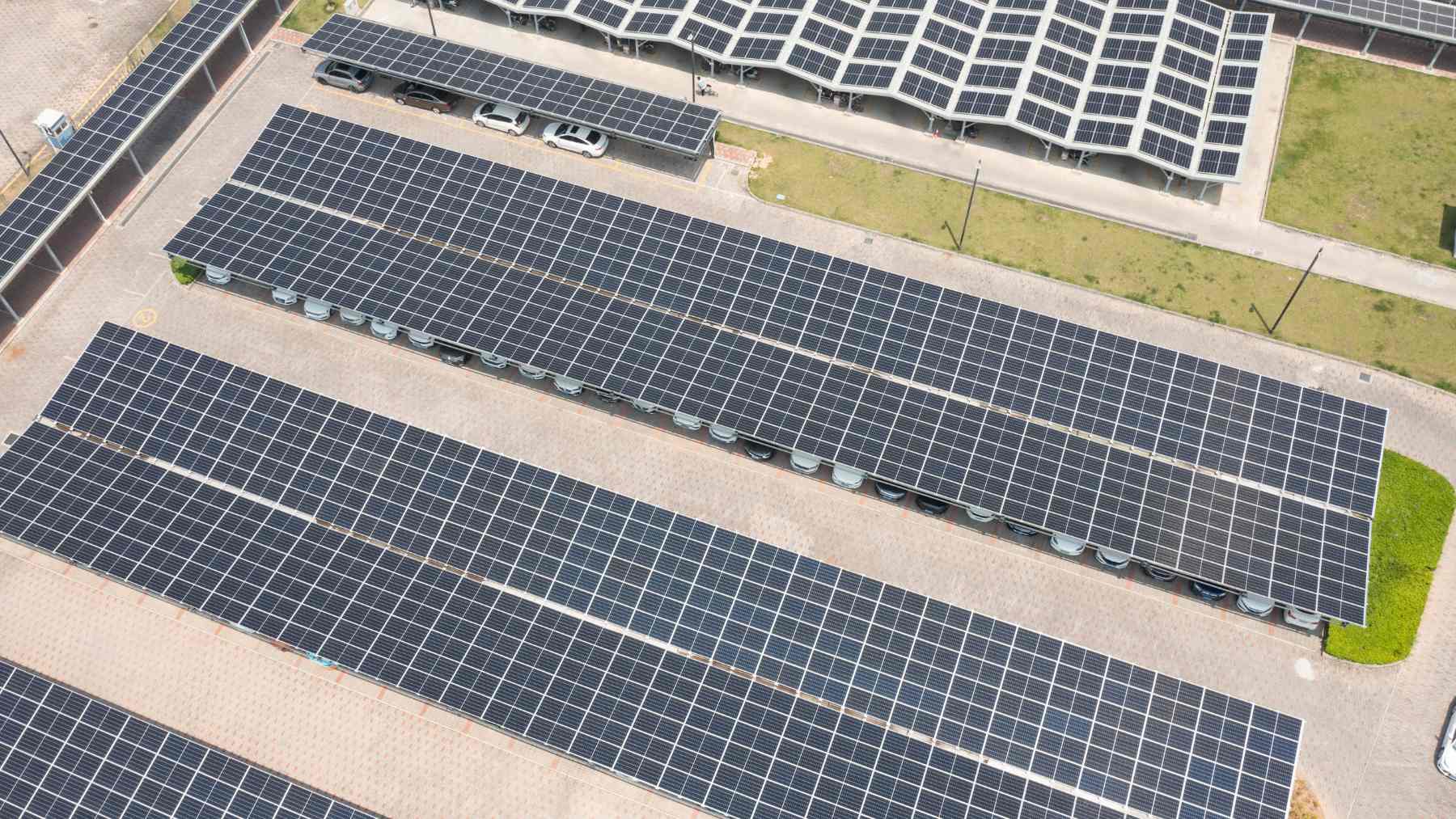
The new solar panel was christened Comer 3N72e and is the workhorse of Aiko’s new New Infinite series. It comes with a maximum power of 650 W and its N-type solar cells have a sunlight-to-electricity conversion efficiency that is the highest on the market at 25.2% and is very low cost.
Moreover, its conversion efficiency is given by the high number of 144 photovoltaic cells, which are made in a different way than the old ones, which gives them great durability. It is larger than conventional ones, measuring 2,278 mm high by 1,134 mm wide and 30 mm thick.
This is due to the relocation of the copper bars in the panel configuration. But despite being large, they are also very light as their weight is under 30 kg. This is because it has a mono-glass design with only one layer of tempered glass with a thickness of 3.2 mm, highly transparent.
It has a reduced but very resistant aluminum frame, made in one piece with the perforations already made for its installation. Speaking of this, they can be placed both horizontally and vertically so that their N-type cells capture as much sunlight as possible.
Regarding its durability, it also has many advantages. The annual degradation of its materials, especially with regard to its solar cells, is less than 1% in the first year and from the second year onwards it is estimated to degrade by a maximum of 0.35%.
It therefore offers an efficiency guarantee of 30 years, at the end of which its capacity will be at least 88.85%. Aiko has full confidence in its solar panels, so much so that it gives a 15-year warranty on materials and workmanship. Its operating temperature ranges from -40 to 85 ºC and it is IP68 certified.
The Chinese manufacturer is not afraid of perovskite modules… yet…
With these new N-type solar panels, Aiko is taking on Japanese perovskite technology, which it is not afraid of. Since, despite high performance and low manufacturing cost, it still has serious stability problems and will take 5 to 10 years to become commercially available.
In conclusion, the old and well-known N-type solar panels arrive with force with this new model that resuscitates this material that once meant its failure. It also represents a strong competition for perovskite panels, which are not yet on the market.