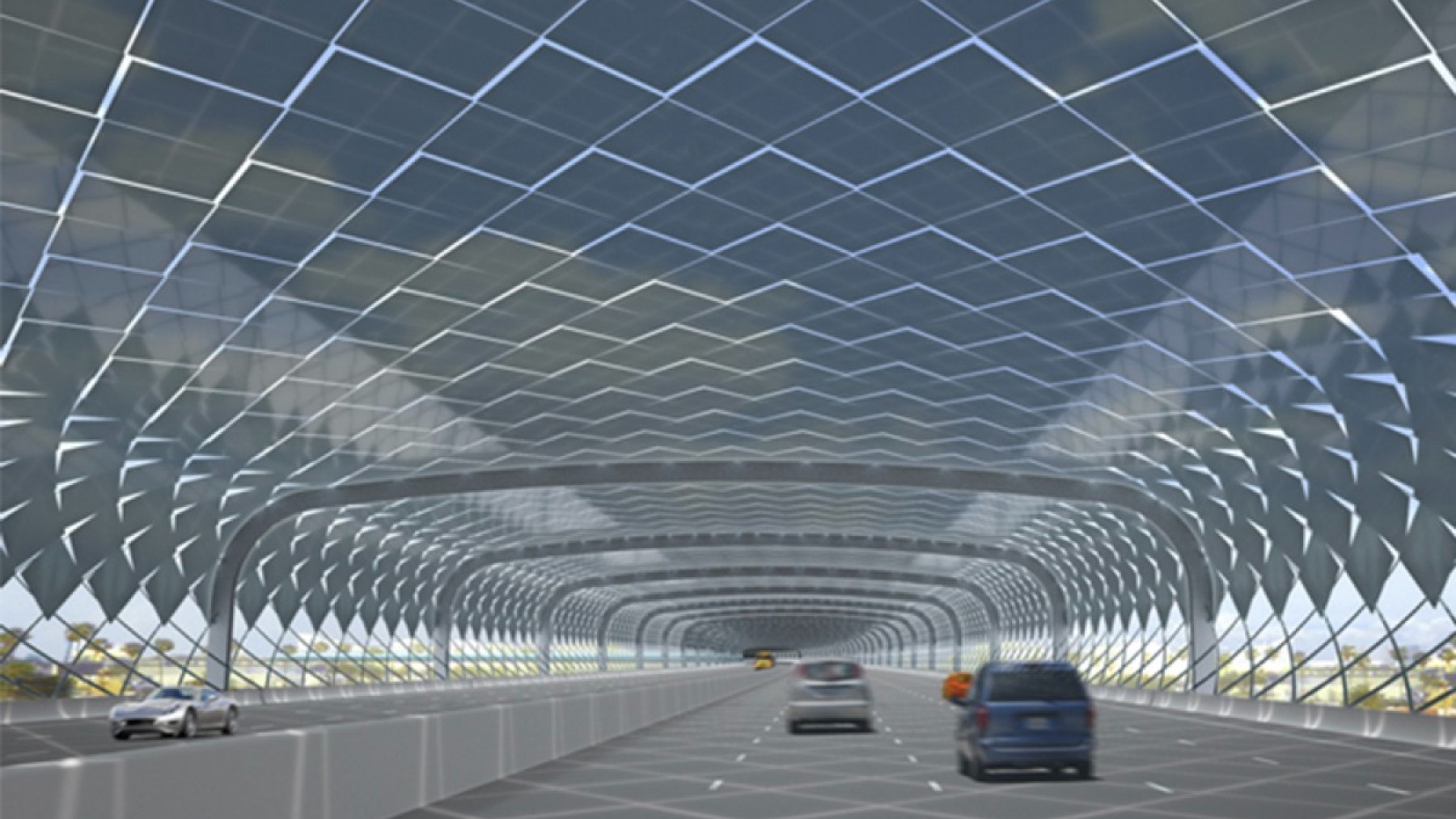
Over the past two decades, Dubai has gained increasing notoriety around the world, mainly due to the titanic mega-projects that have made it the talk of the town for all sorts of reasons. The most recent is The Green Spine, a gigantic photovoltaic highway that will make all mobility solar-powered and ultra-efficient.
A photovoltaic highway: Dubai aims for a green megaproject
The United Arab Emirates has built up a solid economic power base thanks to oil, of which it still has a monopoly. However, with the world heading towards a total decarbonisation of economies, the state authorities feel a strong sense of urgency to diversify their economy away from dependence on fossil fuels.
That is why they have embarked on increasingly ambitious architectural and urbanisation projects. Some, like the futuristic city The Line, are the target of strong questions about their viability and sustainability. Others have been economically successful, such as the artificial island of La Palma Jumeirah, which has generated huge profits as a real estate project.
According to Urb, the company in charge of the new photovoltaic highway, this new mega-project will be more viable than previous ones, and will help reduce emissions and make mobility more efficient. The Green Spine promises to be not only a roadway for more efficient and sustainable transport, but also a whole area of circular economy.
A ‘20-minute city’: the cleanest and most efficient photovoltaic highway in the world
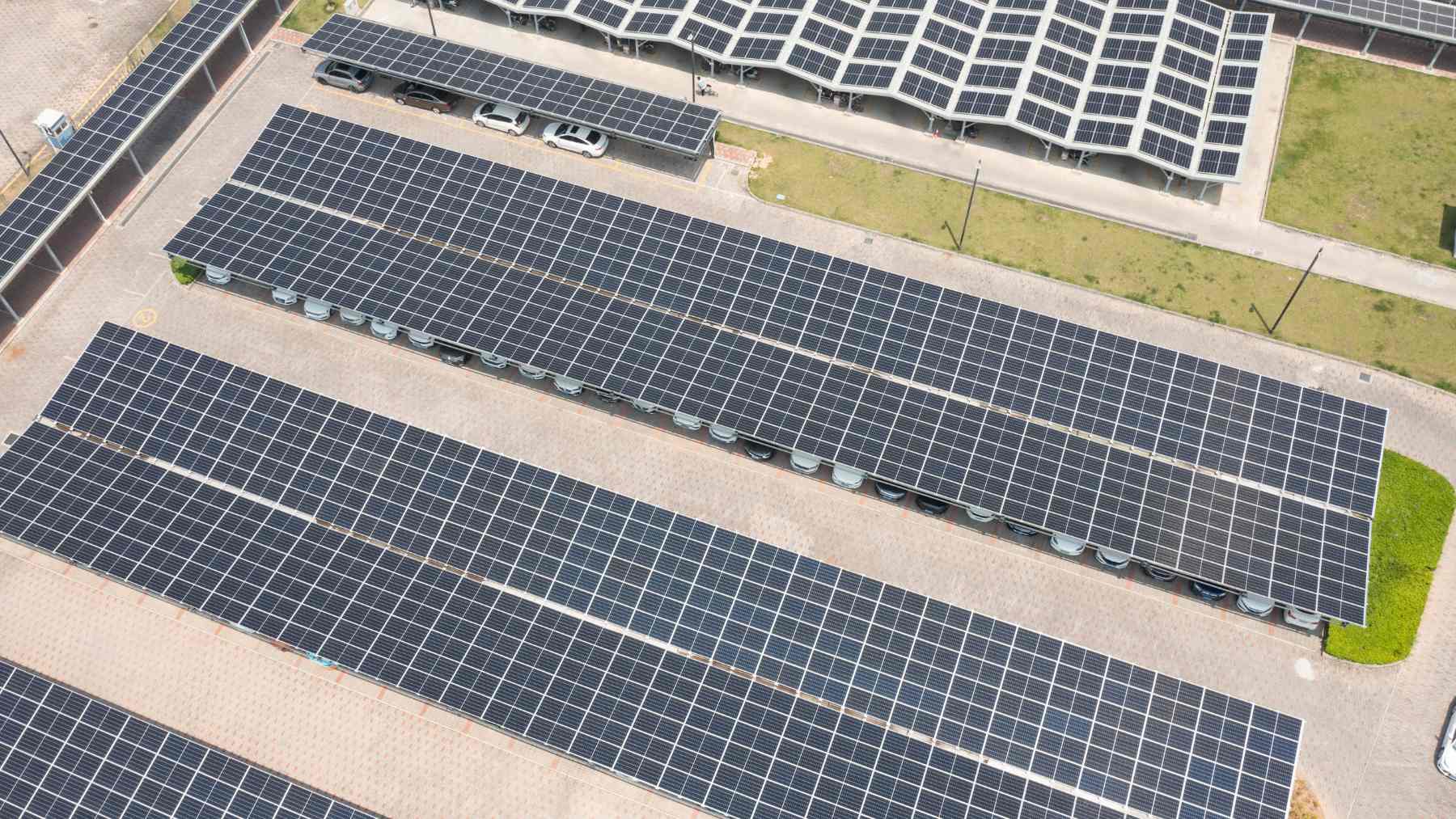
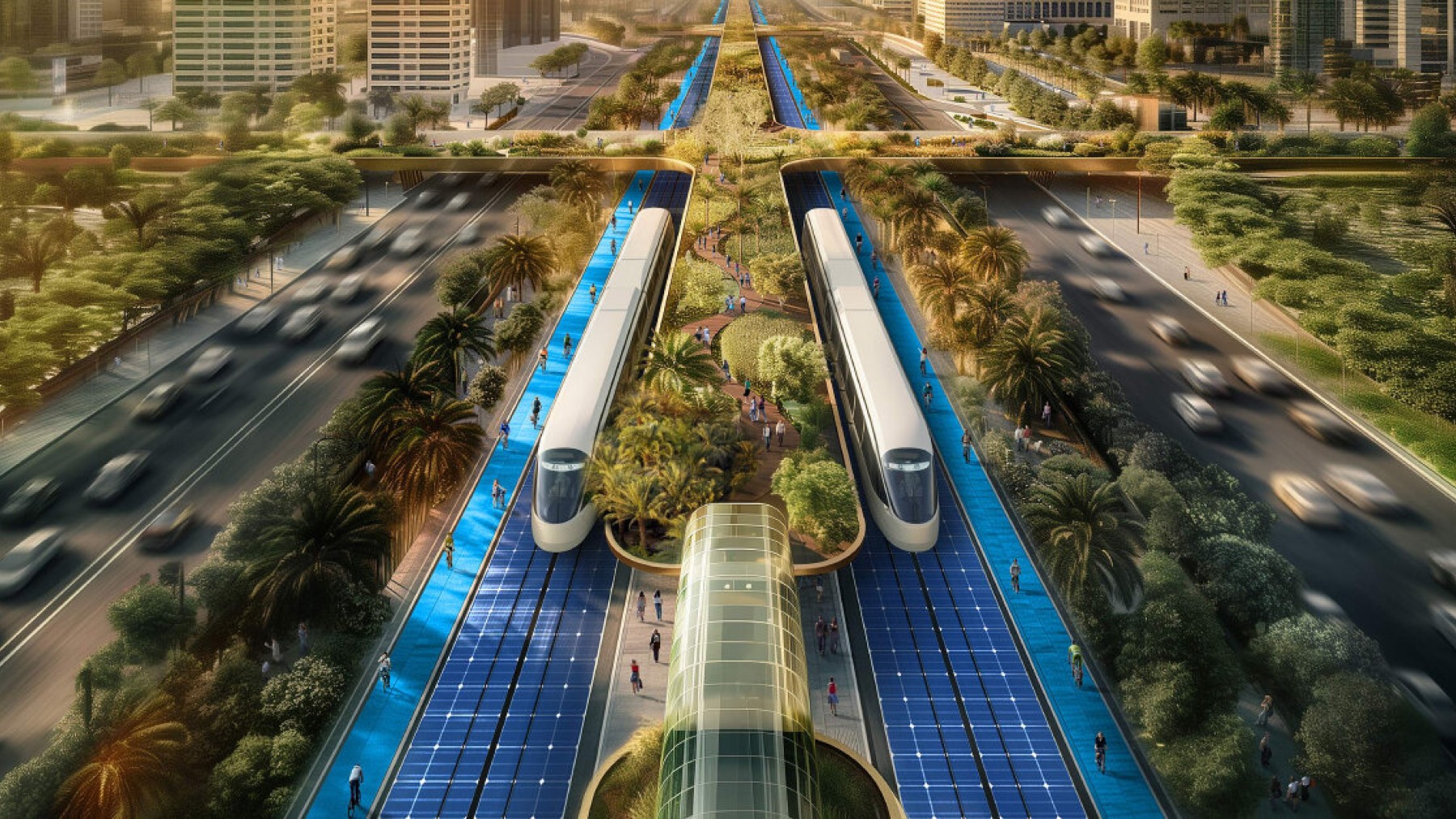
Urb’s proposal is much more than a photovoltaic highway, but rather an area built around Dubai’s Sheikh Mohammad Bin Zayed Expressway, which stretches 64 kilometres. A photovoltaic park of the same length will be installed here, with a capacity to generate 300 MW of energy that could electrify some 130,000 homes.
This energy would also power a line of electric trams that would connect the entire area by means of emission-free, high-speed, electric transport. It will also install a system of bioswales, a series of ducts and pipes that help capture rainwater and distribute it properly to prevent the flooding that has recently affected them.
The project aims to create a green corridor to help reduce emissions and make traffic more efficient. That is why more than one million trees and native plants will also be planted along the entire length. In this way the photovoltaic highway will also be a biodiversity protection area, which could become a trend to be emulated in other parts of the world.
A real green revolution: Dubai wants to replace all cars with bicycles
The Green Spine will also have a network of cycle paths and pedestrian walkways that will allow people to travel to service and leisure areas, etc. in a matter of minutes, reducing the need for private vehicles. In addition, a sensor system will be installed to provide information about traffic, energy consumption and emission levels.
According to the project specifications, once the photovoltaic highway is completed, it could reduce more than one million tonnes of CO2 emissions. There are also some projects for commercial and entertainment areas among others.
Will The Green Spine have a future?
The project on paper is very ambitious, although the approach could be promising. However, we have already seen what happened with Neom and The Line, the two mega-projects near Dubai that have been halted due to lack of liquidity in the state coffers.