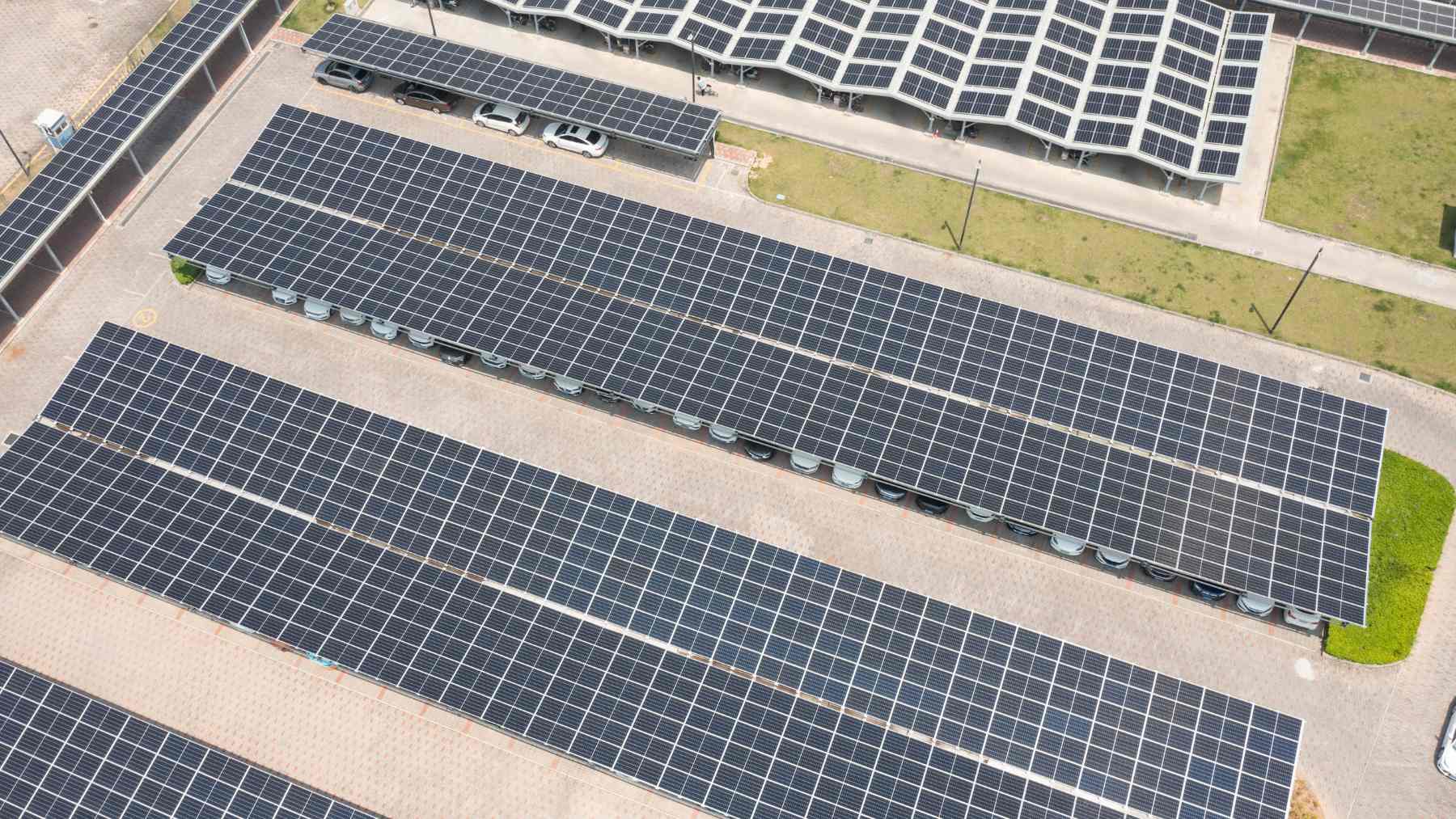
Chinese module maker Aiko Solar has built a 150 kW off-grid solar carport at about a 4,300-meter elevation on Mount Everest. With a 200-kWh backup system, this revolutionary initiative is set to power electric vehicles in one of the most secluded patches of the Earth, establishing a sustainable energy model fit for the most resilient environments.
Joining sustainability and functionality: Vision of renewable by Aiko Solar
Constructing a solar-powered supercharging station at Mount Everest’s extreme altitude posed significant challenges, demanding creativity, and precision. The station is equipped with high-performance 645 W bifacial dual-glass solar cells with 23.9% efficiency, which can handle intense UV radiation, freezing temperatures, snowdrifts, and extremely high winds and provide reliable operation under harsh weather conditions.
This solar carport is not just a charging station but a cleverly designed sustainable transportation ecosystem. It offers 20 parking spaces and 3 x 4.6 kW supercharger venues, a mix of convenience and efficiency. The design combines space-saving and UPC panels, as the carport is an architectural element.
Situated on National Highway 318 as one component of the Sichuan-Tibet Highway Supercharging Green Corridor, it resolves the issue of stable charging of electric vehicles in high-altitude areas. The station promotes sustainable travel in this remote region by reducing “range anxiety.”
Aiko Solar’s project exemplifies how renewable energy can thrive in inaccessible and ecologically sensitive environments. Utilizing high-altitude solar radiation, it offers a scalable, eco-friendly, commensurate solution to innovate and bridge the gap between high technology and environmental protection on a global scale.
The nightmare of coordination: Beating Mount Everest’s remote environment for renewable energy
Constructing this solar marvel was as much of a colossal nightmare as the Mount Everest trek itself. Given the remote location, transporting specialized gear in and out of forklifts was a logistical nightmare. Uncooperative weather, including hailstorms and blizzards, increased the process’ complexity.
The thin air at great heights also posed health threats to both personnel and the machines. Workers regularly suffered from oxygen deprivation and overwhelming fatigue while tracing through temperature swings that were testing the human endurance and the durability of the machines.
Each stage of this was built with meticulous planning and forecast modifications. Aiko Solar has developed and delivered n-type ABC modules that can scale Mount Everest’s physical and environmental challenges. These modules are well-equipped for dealing with extremely high UV and cold ambient conditions and thus are ideally suited for Mount Everest’s challenges.
The presence of inverters in Huawei’s technology also offers an elevated level of performance and guarantees the continuous conversion and storage of fluid energy. The project also highlighted the importance of engineering innovation.
Its carport-like architecture optimally incorporates solar panels (just like the ones that China wants to use again) into the construction, where coexisting is space-effective and system-sustainable, a physical manifestation of all the off-the-grid energy innovations.
Fueling tourism: The solar carport transforms electric vehicle travel into remote areas
This solar-powered carport is more than an engineering feat; it addresses a critical need for over a million annual tourists. Reliable electric vehicle charging in a previously under-served region promotes sustainable tourism and reduces environmental impact.
Electric vehicles are increasingly popular along the Sichuan-Tibet Highway, but the lack of charging stations has been a barrier. With this carport, eco-friendly travelers can now travel the area in an environmentally friendly way. Aiko Solar is building a model of the possibilities of renewable energy with ample high-altitude sunshine. The project enhances tourism and demonstrates that sustainability can thrive in the depths of extreme environments, paving the way for similar innovations worldwide.
The solar-powered charging station installed on Mount Everest is proof of human ingenuity and perseverance. This project connects technology with nature and sets a new standard for what is possible when innovation meets determination (like these solar panels that are the future of sustainable energy).