The search for gravitons that were predicted by Einstein, the hypothetical particles responsible for gravity, has posed a formidable challenge in modern physics. While photons, the quanta of electromagnetic radiation, are relatively easy to detect, gravitons have remained purely theoretical. This is because they interact very weakly with matter, making them incredibly difficult to observe with existing technology.
However, a team of researchers led by Igor Pikovski at the Stevens Institute of Technology has proposed a groundbreaking experiment that could change this. They aim to detect these elusive particles using a novel approach involving quantum leaps in an acoustic resonator coupled with advanced quantum sensors.
A revolutionary method: Using quantum sensors to detect gravitons in a supercooled acoustic resonator
The experiment centers around an acoustic resonator—a heavy cylinder designed to oscillate at specific frequencies when subjected to external forces. This resonator is connected to quantum sensors capable of detecting minuscule shifts in energy levels. The researchers’ plan involves cooling the resonator material to near absolute zero, thereby minimizing thermal noise and making it easier to detect energy shifts potentially caused by gravitons.
According to the team, the interaction with a graviton should cause a distinct ‘quantum leap’ in the resonator’s energy levels, much like how an electron transitions between energy states due to photon interaction in the photoelectric effect. This would be a significant breakthrough, as it could provide the first tangible evidence of gravitons.
Overcoming the barriers: Challenges of measuring the faint graviton signal amidst overwhelming noise
Although Pikovski’s team has proposed a compelling method, several significant challenges remain. The first hurdle is the minimal energy variations that the material may absorb or emit in response to graviton interactions.
Gravitons are theorized to be massless and to interact very weakly with matter, making their detection an incredibly delicate process. The acoustic resonator and quantum sensors must be extraordinarily precise and sensitive to detect the subtle energy changes caused by a graviton, especially in the presence of environmental noise.
Additionally, current state-of-the-art quantum sensors and material technologies are not yet sophisticated enough to achieve the necessary sensitivity and resolution. Even when the resonator is cooled to very low temperatures, the thermal noise could still be overwhelming, drowning out the faint signal of a graviton.
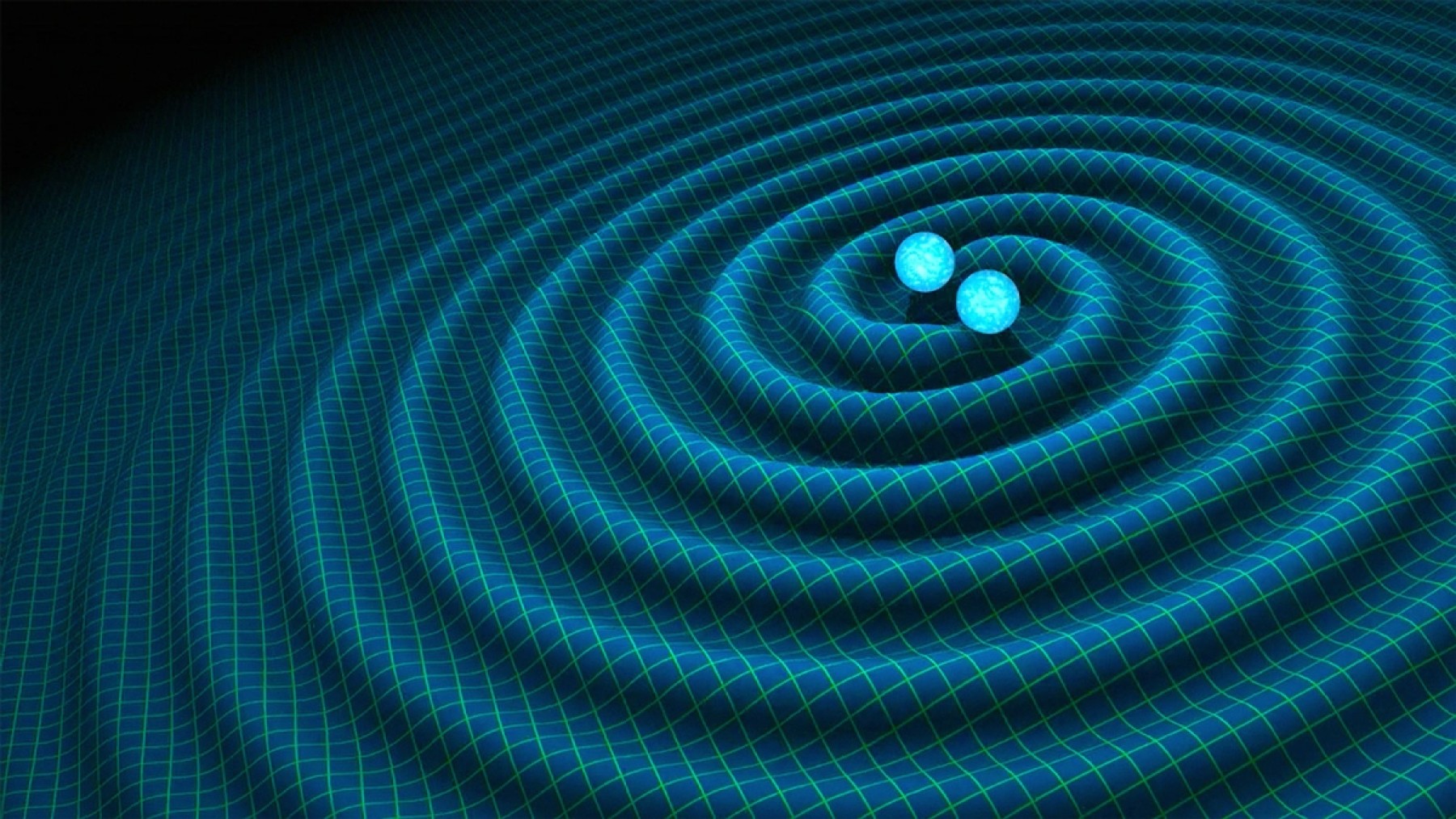
Furthermore, eliminating interference from other gravitational forces, such as those from nearby objects or seismic activities, presents another formidable technical obstacle. The team is exploring the possibility of incorporating data from devices like LIGO, which detects spacetime ripples caused by astronomical events.
This could help pinpoint when and where gravitons might be detected. However, this approach would require significant advances in both theoretical analysis and experimental preparation to ensure proper synchronization of the two systems.
Potential breakthrough: What the discovery of gravitons could mean for our understanding of the universe
The pursuit of gravitons is not just an academic exercise; its implications for physics could be profound. Detecting these particles would revolutionize our comprehension of the universe. Currently, gravity is described through Albert Einstein’s general relativity, which portrays it as the curvature of spacetime caused by mass and energy.
However, this framework does not account for quantum mechanics, the branch of physics that describes the behavior of particles on a subatomic scale. Gravitons, as the quantum carriers of gravity, could serve as a crucial link between these two pillars of modern physics.
Their detection would indicate that efforts to unite general relativity with quantum mechanics—known as quantum gravity—are on the right path. It would enhance our understanding of spacetime structure, black holes, and the early universe.
Moreover, discovering gravitons would also provide evidence for a quantum field theory of gravitational interactions, analogous to how photons function within the electromagnetic field. This could transform our understanding of the fundamental forces and particles, potentially leading to new and unforeseen developments in theoretical and experimental physics.
A new era in physics: How graviton detection could reshape our view of fundamental forces and particles
The implications of detecting gravitons go beyond just confirming a long-standing theoretical prediction. Such a discovery would offer a new perspective on the nature of reality, potentially enabling us to unify the seemingly incompatible theories of general relativity and quantum mechanics into a single, cohesive framework.
A successful detection of gravitons would represent a monumental step forward in our quest to understand the fundamental workings of the universe. It would open up new avenues of research, from the study of spacetime configurations and black holes to the early moments of the cosmos. The confirmation of a quantum field theory for gravity could revolutionize not just physics but our entire understanding of the cosmos.