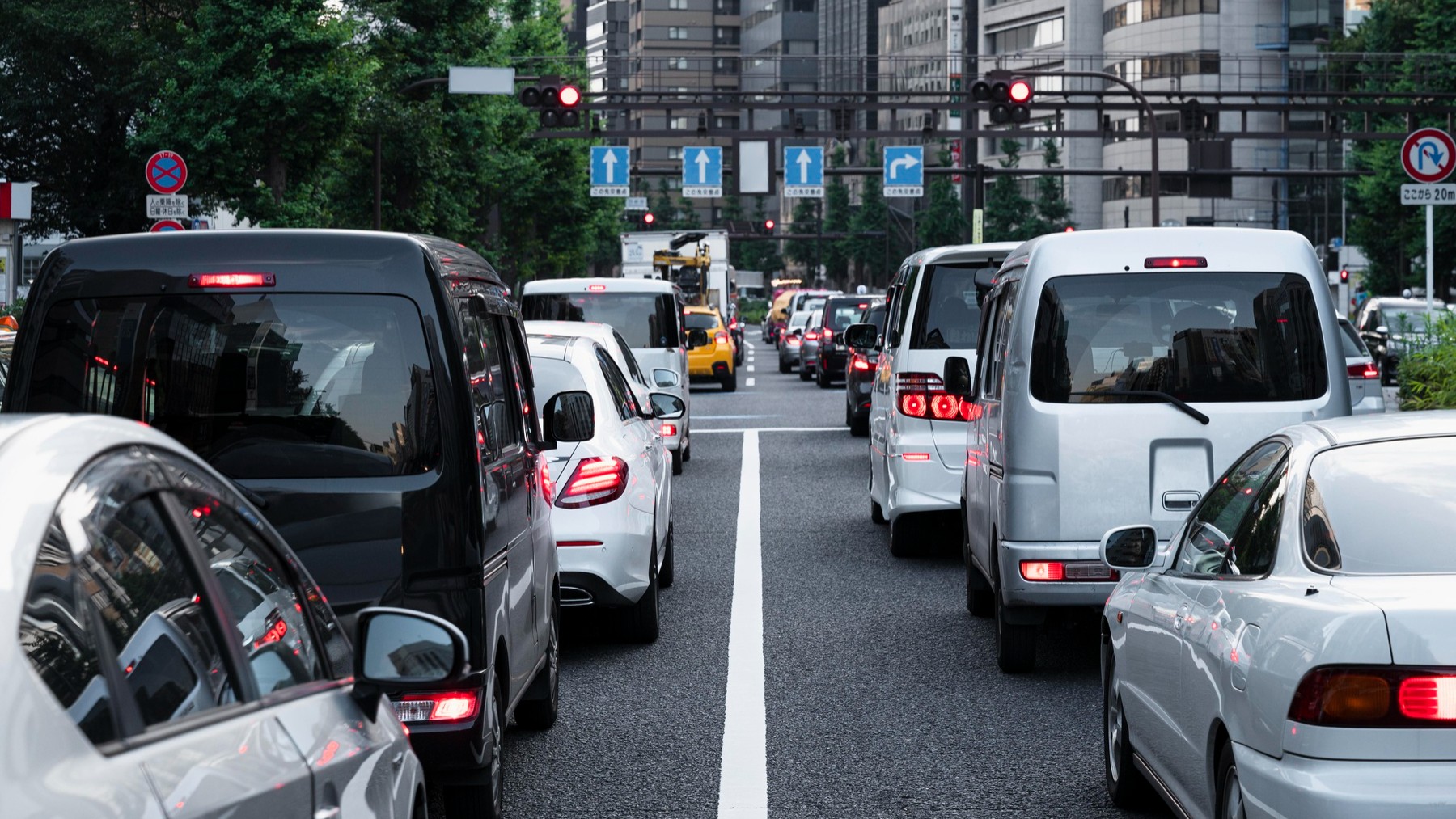
Traffic gridlock is a situation that is well known in cities such as New York, Washington, or California, resulting in unacceptable carbon dioxide emissions into the atmosphere. However, what if we could convert the overcrowding of cars into energy production? This is the project that has America on tenterhooks.
Energy production in urban areas presents a problem: we have no space for renewables
In 2023, the cities of Miami experienced chaos on the roads. In summer, the overcrowding caused the beach areas to collapse, and in winter, thousands of Teslas were left on the roads, unable to start because of the extreme cold. Is there anything positive we can take from this?
While we see how there is no room for so many vehicles, the truth is that there is no room for renewable energies either. Solar photovoltaics need large tracts of land to generate the necessary electricity, and wind power requires a well-situated site with no buildings around to block the wind turbines.
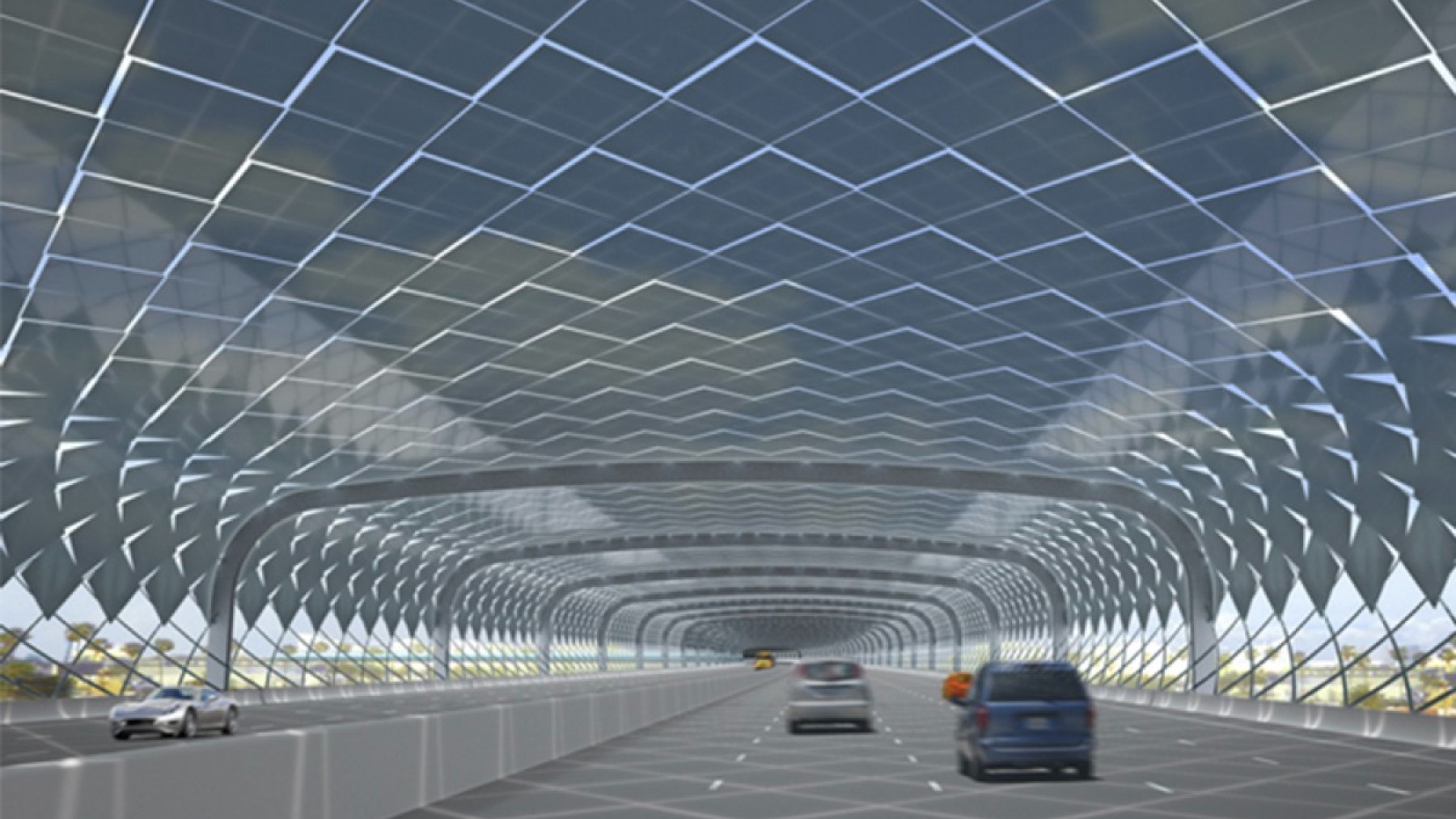
So what could we do? Felix Ke Chen’s project, from Imperial College of London, aims to be a never-before-seen approach. He wants to combine both problems so that each solves the other. The result has just been mentioned by the platform Prototypes for Humanity.
Generating energy from traffic: how cars can help us reduce our dependence on coal
The project is known as AlgaeWave, and is focused on taking advantage of noise pollution to produce electricity. In other words, it is not based on renewable resources, but on one that has a negative impact and from which we can draw a positive side. Traffic, of course, is also detrimental to our ecosystems.
Thanks to a closed-loop system, it takes the shock waves created by passing cars and transforms them into a stimulus to accelerate the growth of microalgae. An aluminum tweeter-style speaker and a glass resonator with steel strings make this possible through a tube structure.
A connector then absorbs the impact and directs it into the culture, where the microalgae are in constant motion. Once they grow, they can be used to produce biomass. According to the person responsible for and creator of the project, the process is shortened by 30 % in time and 27 % in cost.
AlgaeWave project at a glance: how it aims to revolutionize our roads and make them more sustainable
As you can imagine, transforming the negative impact of noise pollution into energy will be a turning point. The intention of the mind behind the idea is to use it for industries such as biofuels, biopharmaceuticals and sustainable food. The latter is the one that could benefit the most, according to forecasts.
However, there is still a problem to be solved, and that is how we mitigate the damage that traffic noise poses to our ecosystems. Western and southern regions are in constant contact with nature, as are states such as Utah and Alaska, not to mention Hawaii (where, of course, there is even less space).
Finally, it is worth taking a look at the patron of this project, the Imperial College of London. As you can see, on the other side of the pond they are also capable of generating impressive ideas for our sustainable development and that of our communities. In the meantime, we will continue to explore how to bring it to reality in America.
Once again, the experts prove that creativity can go beyond research. Turning problems into opportunities is the mechanism that allows science to break through, again. Energy production with traffic in dense cities reflects this, and time will prove it.