The new formulation by Argonne National Laboratory and Achates Power researchers makes hydrogen-powered opposed-piston engines a stepping stone in the search for tomorrow’s transportation. This latest collaboration of working together on the heavy-duty internal combustion engine that gives a view of the starting point for BEVs, carbon-neutral traditional hybrids, and fuel cell EVs has the potential to significantly displace conventional technologies in long-haul commercial vehicles and other applications.
Hydrogen as a fuel also supports the international goals of lowering carbon emissions and combating global warming. By combining the hydrogen in an efficient opposed-piston configuration, the said engine technology brings closer the dream of a green future for industries solely relying on fossil fuels and pollution to meet their transportation needs. Thus, this development is a major landmark in the genealogy of sustainable mobility solutions as the world tries to abandon traditional combustion engines.
The game-changing benefits: How opposed-piston engines transform hydrogen combustion
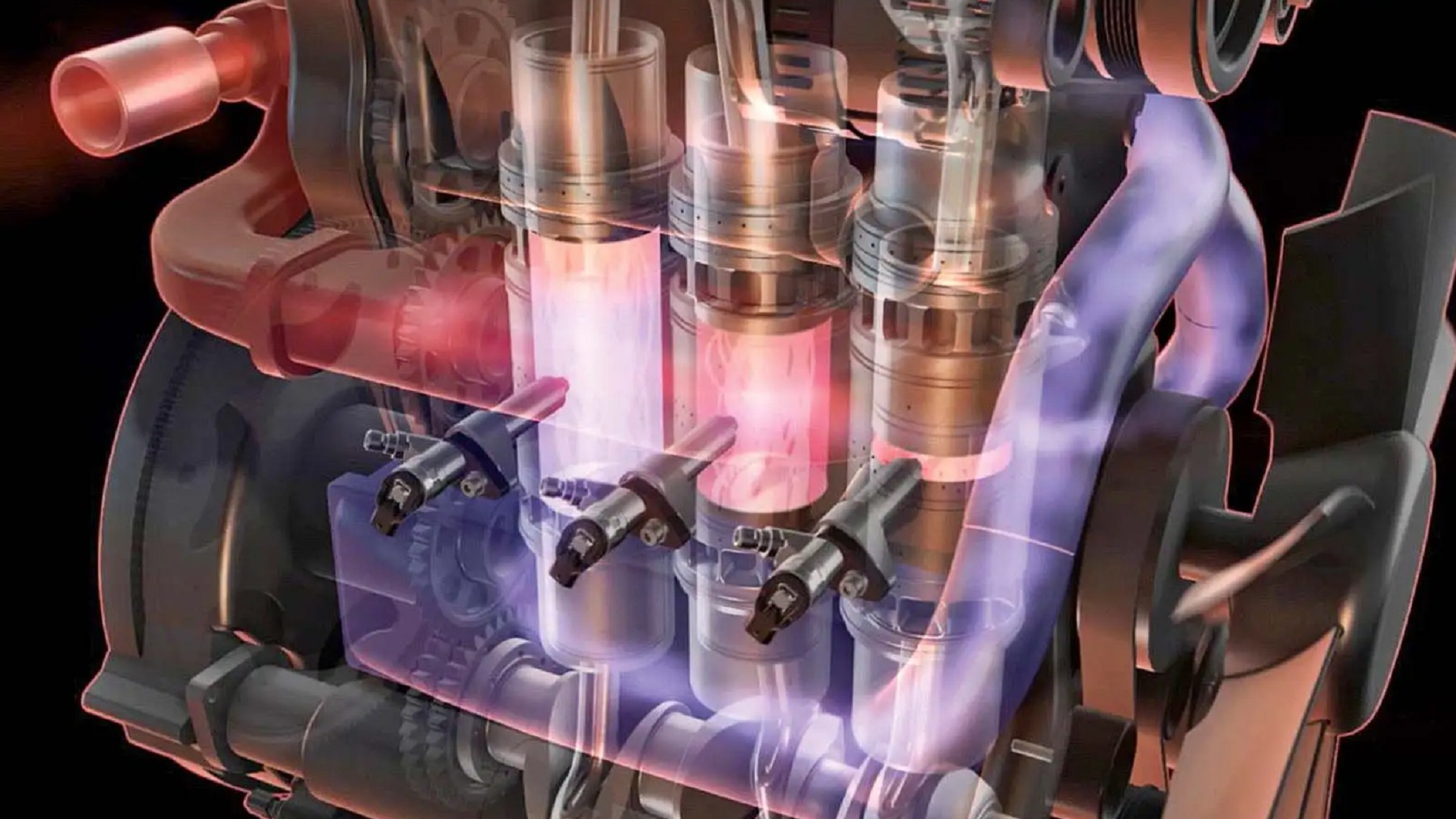
Notable benefits accrued from using opposed-piston engines for hydrogen combustion are as follows. Conventional hydrogen combustion methods in opposed-piston engines are more favorable than traditional ones. The feature is that their design does not have cylinder heads and is less heat-consuming and less efficient. It can be useful when using effective but very reactive hydrogen fuel with low ignition power.
Moreover, the two-stroke combustion cycle in opposed-piston engines yields the crankshaft two power strokes per cycle instead of four-stroke engines, giving out more power, lighter weight, cheaper, and easier to construct. This characteristic also enables the effectiveness of heat control and a better distribution of fuel within the combustion chamber, leading to the efficiency and output of the engine. Moreover, the opposed-piston structure is ideal for enhancing hydrogen combustion, thus contributing to improved power and minimized emissions.
Pioneering advances: Improving big-bore engine architecture and combustion systems
The early tests that the Argonne scientists performed showed that the opposed-piston engine could operate on hydrogen and deliver power, a fact that no test before these had proven. However, the researchers admit that this is in its infancy and state that the full-scale combustion emission shootout uses collected data to improve the engine design and combustion strategies. Employing systematic changes to the combustion mode or other engine areas, they consult or sometimes collaborate with Achates engineers on-site and through video conferencing to modify aspects of the engine for better performance.
It means that a co-evolution of solutions can happen where the engineering team can address problems and opportunities related to hydrogen combustion, and the combustion team can focus on exclusive equations relevant to the combustion process. Ongoing refinement should continue in aspects like fuel injection timing, the form of pistons, and the thermal regime to improve efficiency and horsepower and reduce emissions.
Future prospects and funding: The potential uses and financial backing of the hydrogen engine project
Thus, Achates Power’s hydrogen engine strategy is for commercial mid- to large trucks and off-road or highway vehicles used for mining, agriculture, construction, and military purposes. The U.S. Department of Energy’s Vehicle Technologies Office has supported the project. This organization falls under the Office of Energy Efficiency and Renewable Energy, and an additional $133 million has been assigned to research new and innovative advanced vehicle technologies.
This multimillion-fund support shows the government’s seriousness in pursuing constructible transport solutions and less pollutive HDVs. The described number of potential applications demonstrates the universality of the hydrogen-powered opposed-piston engine. That is also an effective alternative to the conventional diesel engine in various industries. It can help reach tighter emission targets for sectors where electrification has not yet occurred, allowing them to achieve power and range demands of such high loads.
The road ahead: Argonne National Laboratory and Achates Power pioneering sustainable transportation
Therefore, the achievement of Argonne National Laboratory and Achates Power to design an opposed-piston engine powered by hydrogen is a breakthrough in the search for viable long-term automobile solutions. Based on the preceding arguments that stem from the novelty and efficiency of opposed-piston engines in light of future and fundable projects, there is great potential for general transportation decarbonization and a brighter future.
As innovations and improvements to this concept proceed, this distinct approach to engine design could deliver a different method for heavy vehicle propulsion. This is necessary to solve the problems of fossil fuel-based engines and provide a more efficient way for transportation in heavy industries.