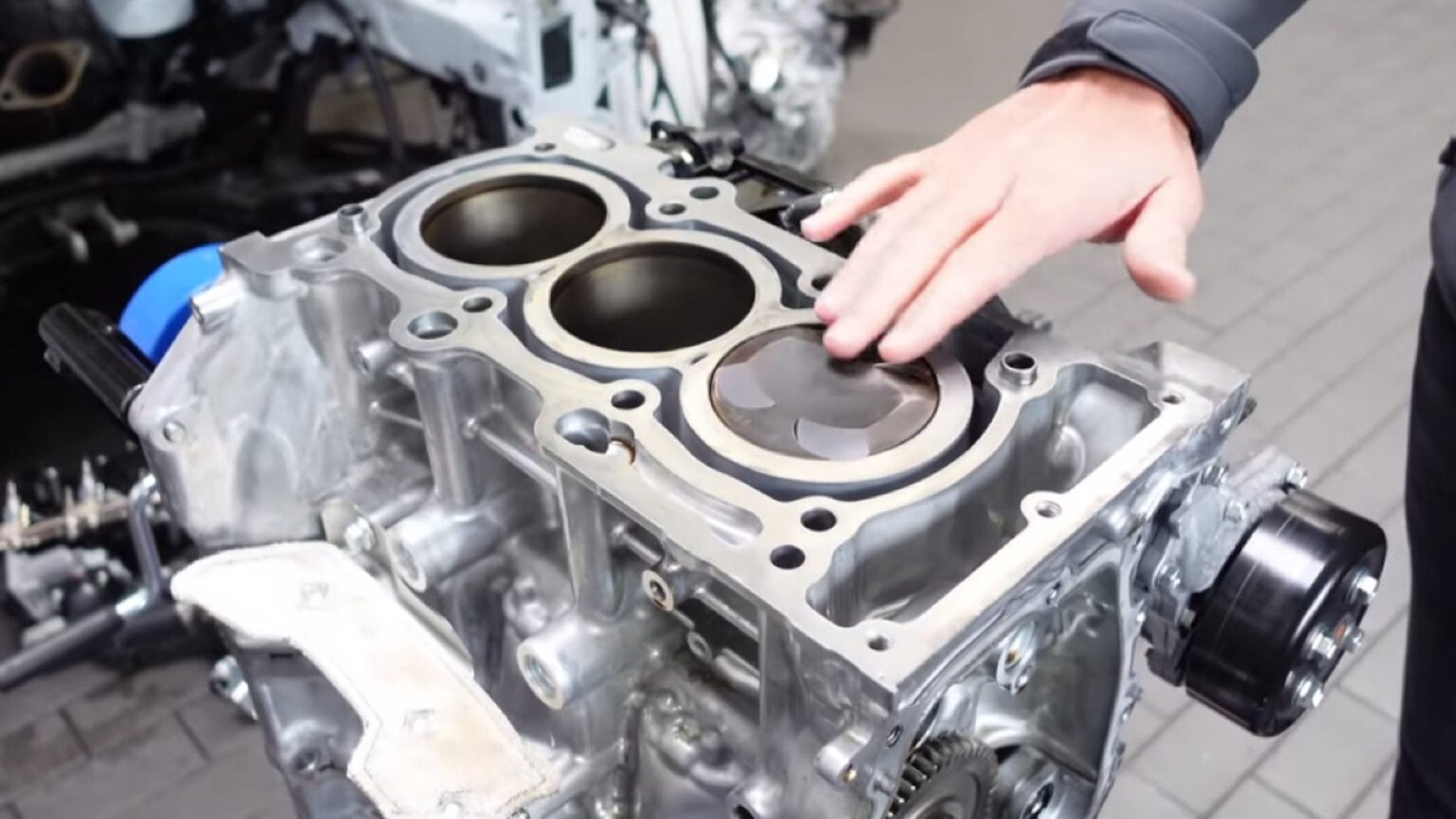
Toyota has done the opposite of taking direction from the green wave that is spreading through the car industry due to the growth in popularity of electric vehicles (EVs) by creating their new next-generation internal combustion engine (ICE) flexible that can run on everything from gasoline to synthetics, biodiesel, or even hydrogen.
This achievement can be seen as the best indication of Toyota’s continuous furtherance of combustion engine technology, where the company is striving to stick to the pinnacle of auto-making, even outpacing some of the biggest names in the industry, such as the United States and China.
Driving innovation through racing excellence: New engine to run on all known fuels
Analyzing Toyota’s formative value chain for innovation, the company began developing new ideas under the leadership of its former chief executive officer, Akio Toyoda, but is now the company’s chairman. Toyota insisted on creating a hydrogen race car, which became the impetus for the first work on the new generation of ICE by adopting the 1.
Synergistic with the 6-liter three-cylinder engine from the GR Yaris in hydrogen combustion, Toyota engineers learned heat management and a plethora of other aspects from the combustion of hydrogen, which, unlike gasoline, burns much faster and generates more heat. This racing pedigree has played a crucial role in advancing what society once envisioned as achievable using recent combustion engines.
Compact, efficient engines for versatile uses: How this new proposal could change everything
Using the experience from constructing the hydrogen race car, Toyota has developed advanced engineers who have significantly progressed in developing small, light, and powerful engines for better fuel economy. Such new generation power plants are developmental, with cuts in or size by about 10- 20% while at the same time producing higher power with efficiency.
It is in line with the just-fought idea of hybrid engines, which will, in the future, be used to create a symbiotic combustion and electric engine systems drive train. This power delivery approach enables the smooth delivery of power while keeping emissions and fuel consumption minimal.
Diverse strategies for carbon neutrality: We have reasons to be optimistic
Despite the case, Toyota is still keen on developing ICE vehicles even in the future. they are targeting improving the engine of the vehivles to make them more efficient and be able to use a wide variety of fuels. However, this may not contradict the move towards electric-based vehicles given its strategy, known as ‘multiple Routes to Carbon Neutral’.
Therefore, Toyota aims to meet the market niches with battery electric vehicles, plug-in hybrids, conventional hybrids, and advanced ICE technologies. This strategy does not shrink from the notion that carbon neutrality is not within easy reach, and it understands that a holistic strategy may not be feasible. Using a set of different solutions, Toyota aims to target global markets and infrastructure, resources, and consumer preferences to offer everyone the concept of sustainable mobility.
Toyota’s engine revolutionizing sustainable mobility: Towards a cleaner future on the roads
For this reason, Toyota’s next-generation combustion engine is a tech-notch advance since it shows that electric cars are not the only way automobile industry players can achieve carbon neutrality. With motorsport support and innovative thinking, Toyota has developed an engine that offers a neat credible solution to those not ready to embrace full-scale electrification, high thermal efficiency, and the ability to power multiple models.
The challenges currently threatening the industry on the route to sustainable mobility could contribute to Toyota’s global market leadership and leave behind large players such as the USA or China in the strategic race to turn into a carbon-neutral economy. With engineering prowess supporting this diversification strategy, I suspect it will be capable of turning the industry’s perception of what the future of transport holds into one complete circle, offering nearly all that the customer and the environment may require.