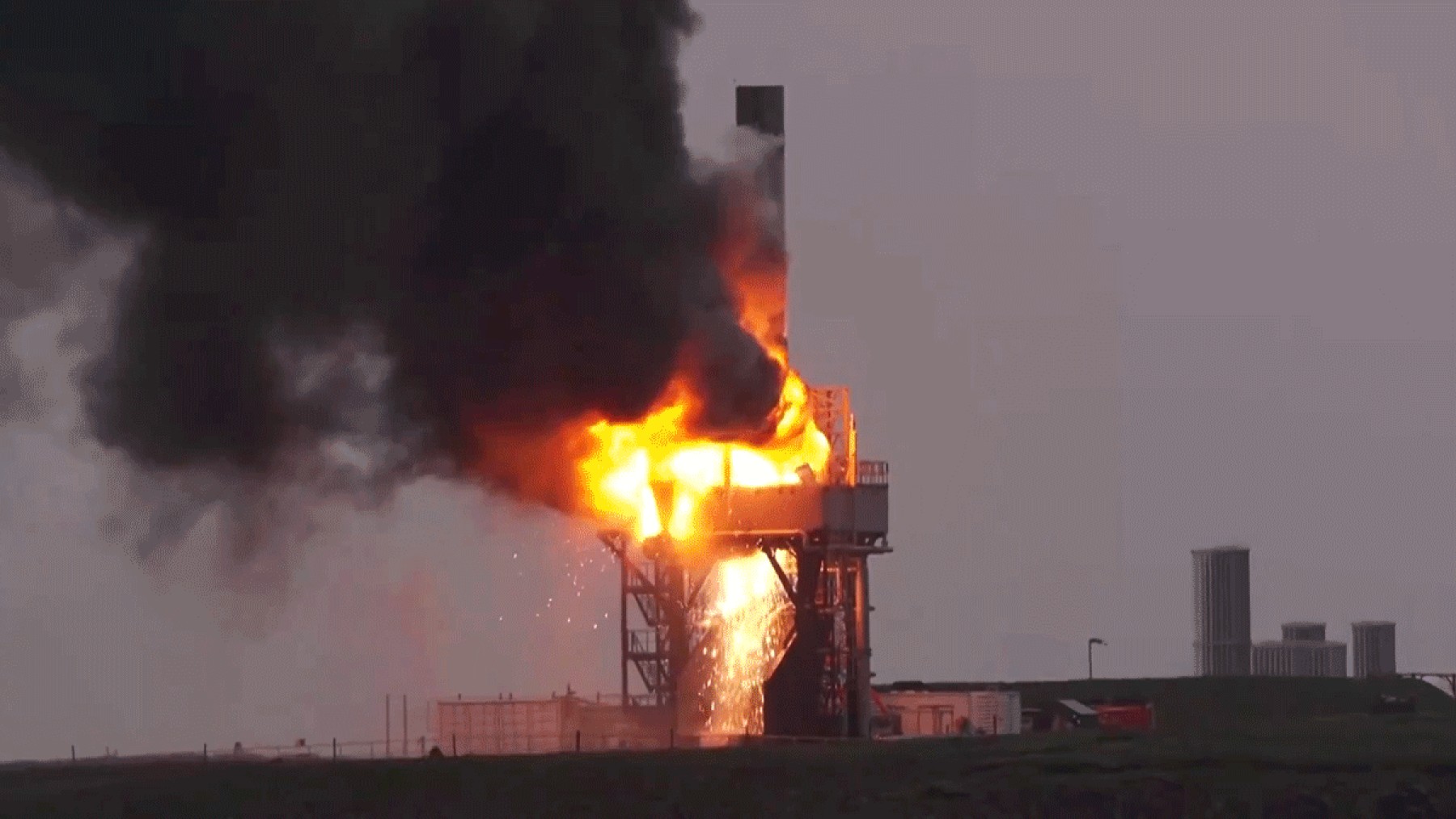
On the 19th of August in 2024, a near-catastrophic engine explosion happened at SaxaVord Spaceport, located on the Shetland Islands near the northern part of Scotland. In a test firing, one of the rocket engines blew up, creating quite a video-recorded sight.
Rocket Factory Augsburg (RFA), the German company that conducted the test, luckily noted that nobody died in the explosion. The fire and smoke filled the launch pad, but the base remained intact and was soon extinguished. This case painted a clear picture of the dangers of rocket testing and the need to ensure safety measures were in place.
SaxaVord Spaceport’s crucial role in the UK’s space strategy and space exploration ambitions
As part of Britain’s space strategy, SaxaVord Spaceport, located on Unst Island, firmly establishes its position. It has been licensed by the Civil Aviation Authority recently and is tailored to accommodate small rockets for placing payloads to LEO.
With SaxaVord being the only fully licensed vertical rocket launch port in Western Europe, the project stands as a new tier in space development, designed to boost the UK’s commercial space industry growth. This role fits into the UK’s overall vision of making the spaceport operation the country’s centre for space exploration and technologies.
Rocket Factory Augsburg’s test of groundbreaking rocket fuel and the explosion that raises questions
The test performed by Rocket Factory Augsburg was on a new kind of rocket fuel, which is a technical advancement in rockets. This novel fuel was believed to significantly improve the efficiency and performance of the rocket to unprecedented levels that may redefine the industry. However, the explosion that occurred led to some question marks in this new fuel, as well as testing methods that were used.
The company is now in contact with SaxaVord Spaceport and other relevant stakeholders to determine the cause of the explosion incident. As such, these factors must be recognized and addressed to improve safety measures and the success of the tests and launch in the future. Solving these problems would be crucial to developing rockets and asbestos and ensuring public trust in space projects.
The UK’s broader aspirations in space and how incidents like these shape the future of space exploration
This explosion happened against the UK’s ambitious move to establish the country as a space flight hub. The need: In 2022, the UK launched the first licensed vertical spaceport in Cornwall for horizontal rocket launches. These launches entail using rockets taken to altitude by an aircraft and then released for initiating the process instead of vertical launches.
The lessons and knowledge attained from Cornwall and other comparable locations will guide and enhance risk protection at SaxaVord. This incident clearly demonstrates that new technologies being developed and used in space exploration come with certain risks, meaning that continued development of safety enhancements and operation improvements are necessary if future space missions are to succeed and be safe.
More specifically, the future progress of the nation’s space industry and the UK’s competitiveness in the international space market will critically depend on the lessons derived from such occurrences.
Why the SaxaVord Spaceport explosion is both a setback and a Learning Opportunity for the UK’s Space Mission
Therefore, the explosion at SaxaVord Spaceport is a significant setback for Rocket Factory Augsburg and the UK’s emerging space mission. From this source, the accident is responded to, and though no persons were affected and the potential dangers could be soothed, the problems faced in rocket testing and space flight are enormous.
The investigations will, therefore, go on to determine the causes of the explosion, improve safety measures and develop enhanced technologies. As a result of filling the gaps, future space operations will be successful and safe, enabling the UK to become one of the critical space players in the world. It is imprinted to solve these problems to keep on going and to believe in the ability of the UK’s space programmes.