Hydrogen engines were considered a means of achieving zero-emission transport for many years and were marketed as a replacement for battery electric vehicles (BEVs). The allure of hydrogen was clear: it is characterized by a rich fuel supply, rapid refuelling, and high energy density. However, the road to general acceptance has been bumpy, and hydrogen technology has not been able to deliver as expected.
On the other hand, electric motor technology is also evolving, and there is Equipmake’s HTM-3500 motor to emphasize that the future might not be hydrogen-powered after all.
The pros and cons of hydrogen engines in transportation
Hydrogen was once regarded as the magic bullet for getting transportation off fossil fuels. Hydrogen cars, on the other hand, can take less than five minutes to be refueled, similar to conventional gasoline cars, which are more convenient for the consumer. Also, hydrogen fuel cells have a high energy density, which may give cars a longer range than electrically powered vehicles.
This technology appeared well suited to the applications of heavy-duty vehicles such as trucks and buses, which need to cover a long distance with a high power output. Still, hydrogen has encountered some issues, even considering the aforementioned benefits. Hydrogen production requires a lot of energy, and most of the hydrogen produced today referred to as “grey hydrogen,” is made from fossil fuels and is thus counterproductive.
Further, the required support facilities for hydrogen refueling stations have not emerged sufficiently and are lagging behind the rapidly growing number of EV charging stations. Such limitations have limited the application of hydrogen engines in the market.
The emergence of high-performance electric motors as a viable alternative
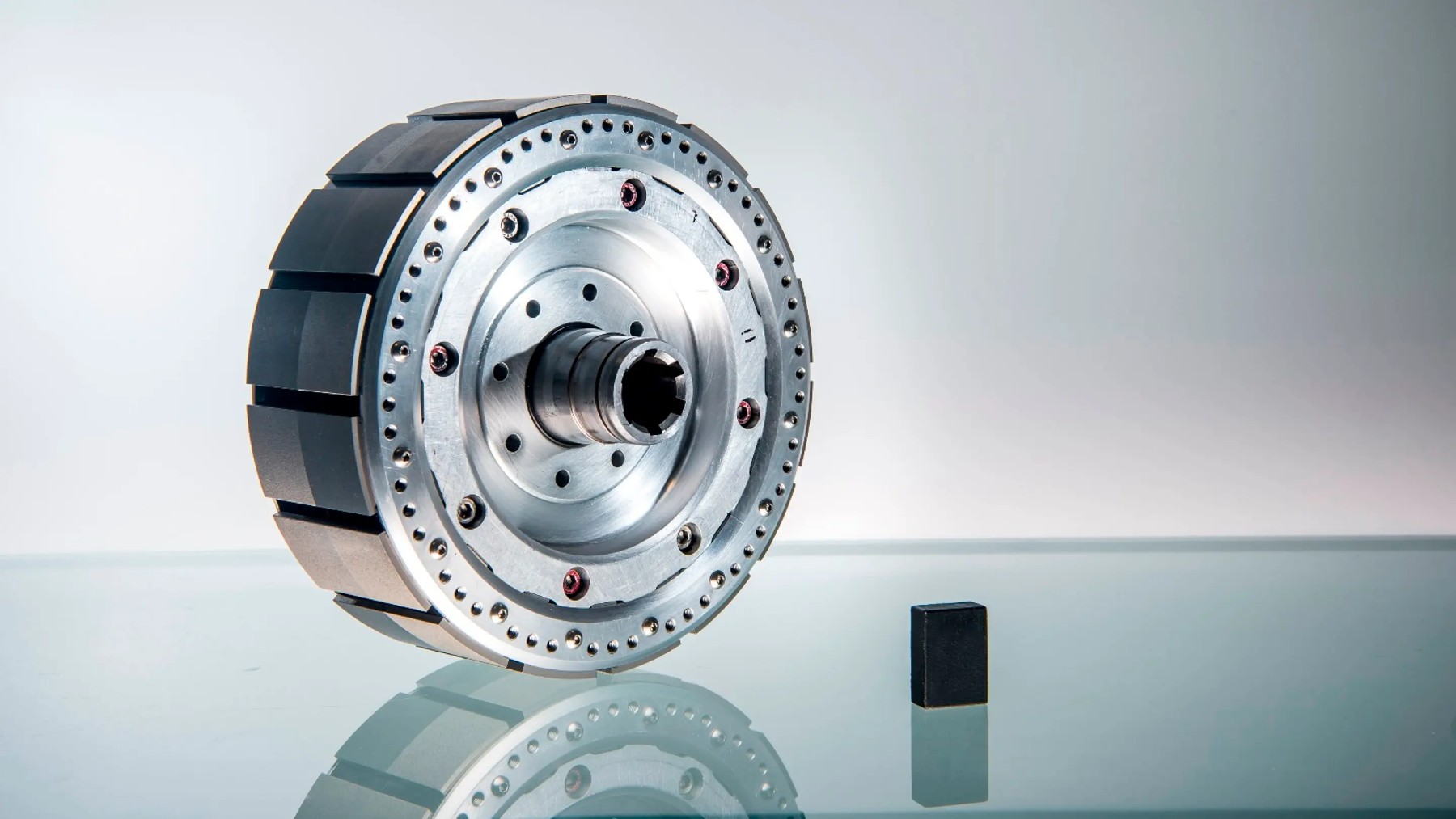
Hydrogen technology has remained stagnant, while electric motors have advanced rapidly. One such advancement is Equipmake’s HTM-3500 electric motor, developed for heavy transportation applications such as buses, trucks, and off-highway vehicles. This motor has the same peak output as the previous model: 3500 Nm of torque and 400 kW of power; however, the continuous power is twice as large, 200 kW at 2,500 rpm.
This major improvement suggests electric heavy-duty vehicles can perform with higher real-world capability. Equipmake’s motor is directly connected to the vehicle’s prop shaft and axles, so there is no need for a transmission system. This makes the motor lighter and smaller, positively affecting the overall weight and design of the vehicle’s power train.
These advancements are helping to reduce the efficiency differential between electric and traditional internal combustion engine (ICE) vehicles. Equipmake also leads the way to a zero-emission future through its Zero Emissions Drivetrain (ZED) system, which provides total electric drivetrain solutions. This involves several electric motors, inverters, and power train parts for heavy vehicles and aerospace applications.
Why hydrogen has struggled to compete with advanced electric motors
The efficiency differential is one of the primary reasons why hydrogen has not been able to penetrate the market, and this is relative to electric motors. Hydrogen fuel cells involve a complicated process of converting hydrogen into electricity and then to the car’s electric motor. This process entails massive energy losses, making fuel cells much less efficient than direct-use battery power.
On the other hand, electric motors such as HTM-3500 transform electrical energy into mechanical energy much more efficiently. In addition, electric vehicles (EVs) enjoy a more developed and increasing infrastructure support. While charging stations for electric vehicles are gradually being established almost everywhere, hydrogen refueling stations are scarce and costly.
The high costs of developing a hydrogen infrastructure and the energy losses incurred during hydrogen production have disadvantaged the technology. Other barriers include the high cost of manufacturing hydrogen vehicles and the high cost of hydrogen energy. Although there has been some improvement in reducing the cost of hydrogen, it is still costly compared to electricity per mileage and, hence, unsuitable for consumers and commercial companies.
How futuristic prototypes like the HTM-3500 Motor point toward the future of transport
The wheel-shaped HTM-3500 motor symbolizes future transport as it is designed and has a higher power density than other electric motors. In contrast to hydrogen engines, which still have many challenges, the future of electric motors has already arrived. Some companies, such as Equipmake, always develop new technologies to improve electric propulsion systems in different industries.
Although hydrogen technology is not yet obsolete, electric motors are the most developed in the race for zero-emission transport. Electric high-power vehicles utilizing state-of-the-art motors like the HTM-3500 demonstrate that electric drive suits even the most arduous transport requirements.
For instance, Equipmake has teamed up with Perkins to create a heavy-duty hybrid electric system, shifting the industry away from traditional fuel. The company also works with international players such as Sona Comstar to introduce electric motors in the Indian and Southeast Asian regions.
Hydrogen technology’s shortcomings and the bright future of electric motors
Hydrogen cars have not become a reality as many people expected them to. This is because of inefficiency, cost, and lack of proper infrastructure. On the other hand, the technology of electric motors is improving at a very high rate, and there are examples of their practical application, such as Equipmake’s HTM-3500 motor. Electric solutions seem to be the way forward for the future of transportation, and hydrogen is a technology that almost made it but fell short.
With the rise of the global shift towards zero-emission vehicles, the wheel-shaped engine prototypes of next-generation electric motors could be the future of cars.