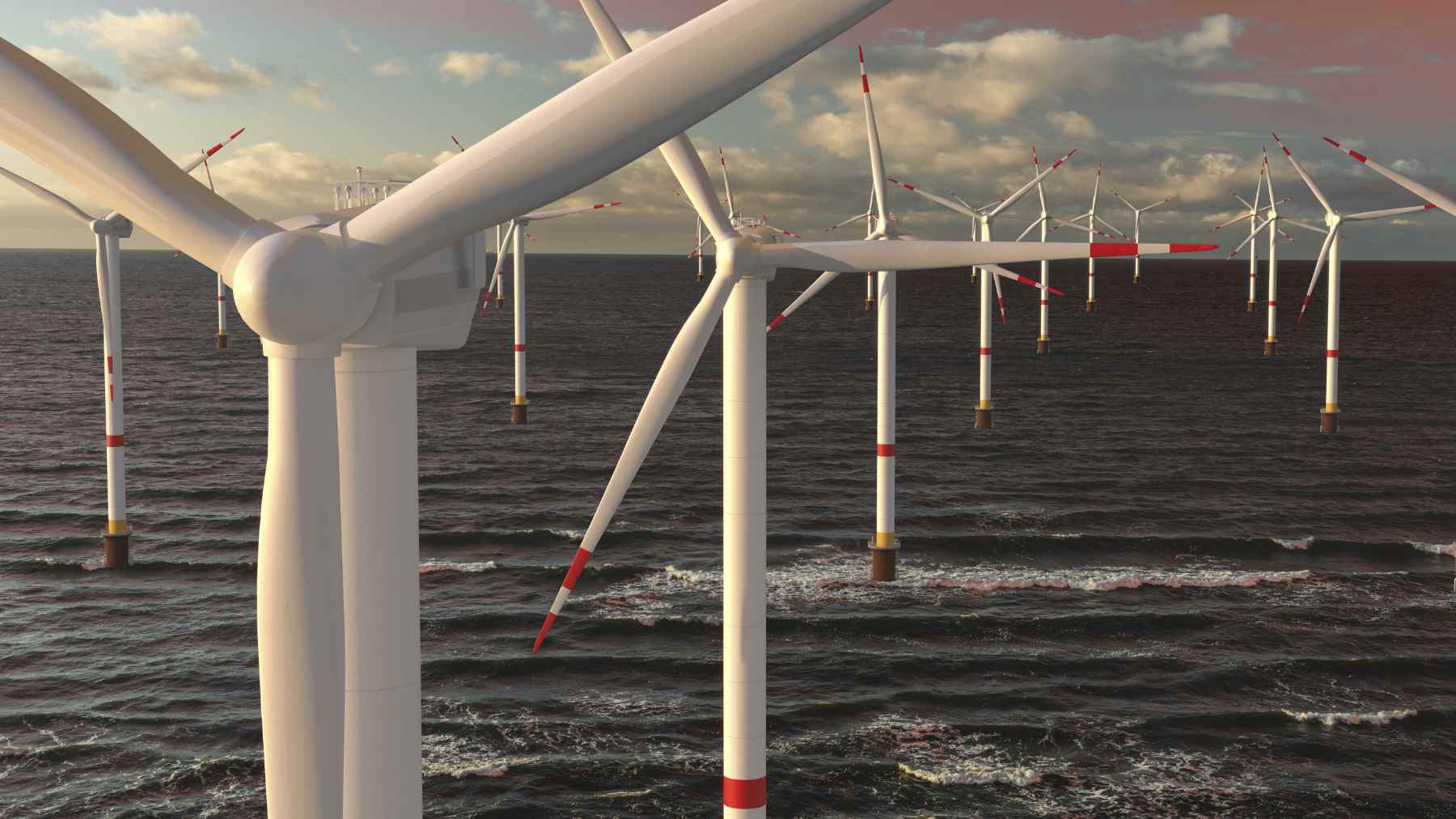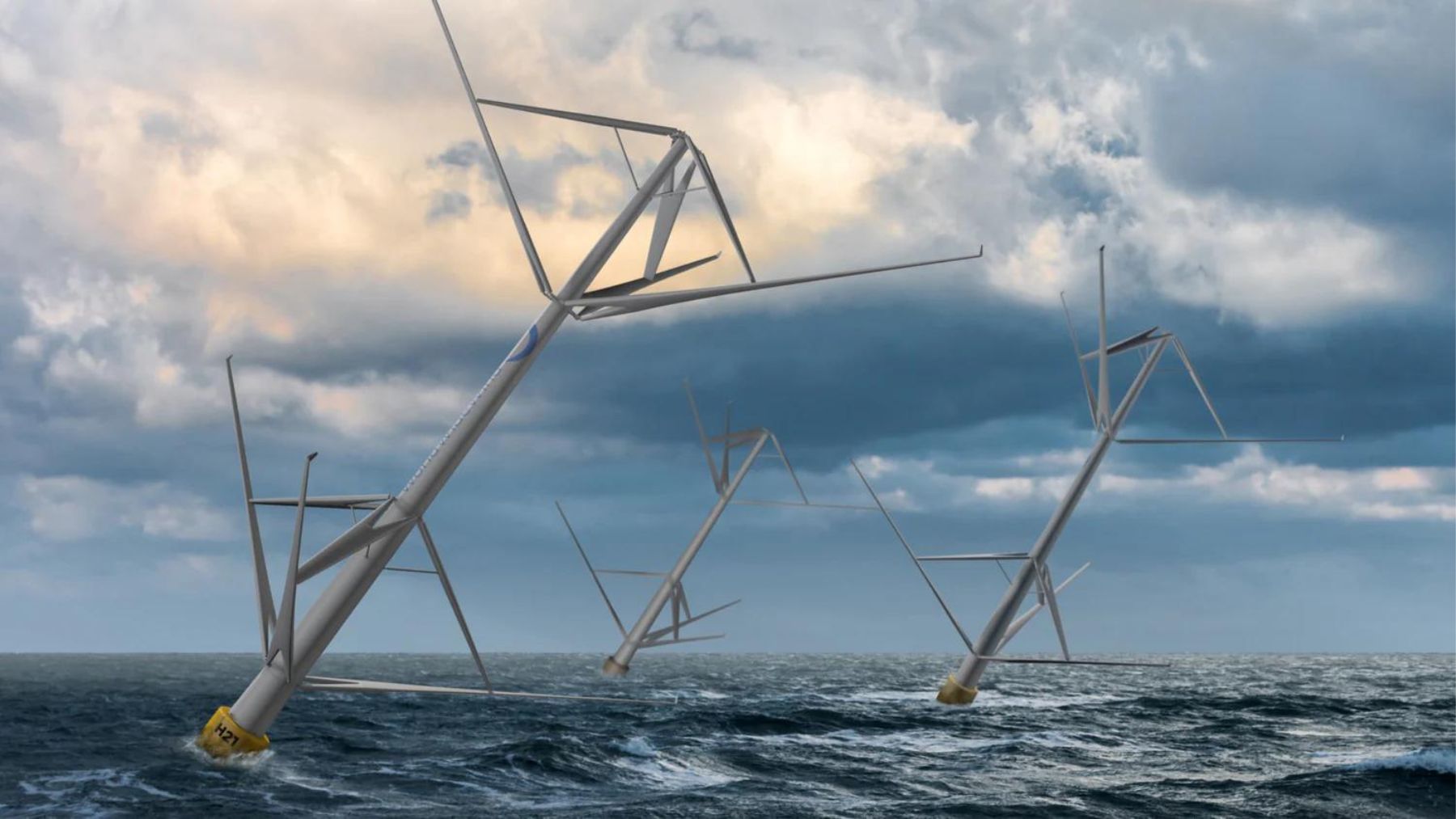
Europe, in its involvement with renewable energies, has planted wind turbines upside down over the sea. We are talking about 20 MW that scientists cannot explain. If you were surprised by what we told you about offshore wind turbines with vertical axis, the information you will discover below will leave you speechless. With this move, the continent is betting on offshore wind energy. This type of energy is clean and renewable.
It is obtained by harnessing the power of the wind produced offshore, where it reaches a higher and more constant speed due to the lack of barriers. To exploit this resource to the maximum, mega-structures have been created on the seabed and equipped with the latest technical innovations.
This is a major step forward for Europe, given the incredible advantages offered by offshore wind energy. On the one hand, it is a renewable, inexhaustible and non-polluting energy, in addition to the fact that the existing wind resource in the sea is greater than that of the land (up to double). Likewise, the visual and acoustic impact is very small due to its offshore location and maritime transport is easier to carry out.
Wind turbines upside down: Europe focuses on devices scientists don’t understand
A European project is developing the first offshore wind turbine platform that pivots downwind like a weather vane. This new offshore wind farm system comes with the promise of faster and cheaper installation and operations and will be tested in the Mediterranean. It goes by the name of the NextFloat+ Project, an initiative that has won a €13.4 million grant (over $14.5 million) from the European Commission.
Installing wind farms at sea is a logical idea, as sea breezes tend to blow regularly and open water provides a more predictable and reliable wind pattern than on land. However, the engineering challenges of installing offshore turbines are extensive and may even outweigh the advantages of offshore wind farms.
This unpleasant situation arises because turbines need to be robust, with blades that do not bend under load and strike their own mast, and they need heavy anchoring systems to keep them in place, a costly requirement to install.
Europe strengthens its commitment to renewables: installs wind turbines upside down
NextFloat+ is a consortium led by Barcelona-based X1 Wind and incorporating Technip Energies and NextFloat Plus SAS. Its purpose is to develop a 6 MW wind station prototype called X90. A triangular floating platform with a single turbine that is assembled on land and then towed to the installation site.
The X90 uses a Single Point Mooring (SPM) method and a Tight Leg Platform (TLP) that requires no special heavy equipment for installation. In a TLP, the triangular structure floats on the surface and three cables are connected to an anchor on the seabed. We are talking about depths exceeding 500 meters.
These are tensioned to hold the platform precisely in place. For the X90, TLP uses an SPM for the trio of cables that allows the platform to passively rotate into the wind. Before the platform arrives at sea, the SPM is installed with a quick-connect system that allows the platform to snap into place upon arrival.
Offshore wind energy: Europe says yes to upside-down wind turbine installation
In principle, everything points to this system being designed as an inverted turbine. With X90, the rotor remains fixed on the platform and does all the turning. In turn, the turbine acts like a wind vane and faces away from the wind. In this way, the air pushes the blades from behind.
“We are delighted to receive support from the Innovation Fund. The grant represents a cornerstone in fundraising for the NextFloat+ Project, adding to funding already secured through the European Commission under the Horizon Europe program, funding secured through the French Government as part of the France 2030 plan operated by ADEME, plus private funding from partners and shareholders.”
“Crucially, it will provide an opportunity to substantially improve the competitiveness of floating wind power as we prepare for long-term mass deployment in locations around the world,” expounded Alex Raventos, CEO and co-founder of X1 Wind, as recorded on the company’s website.
In short, Europe is planting wind turbines upside down over the sea, a bet almost as striking as the aerial robot that will inspect the wind turbines.