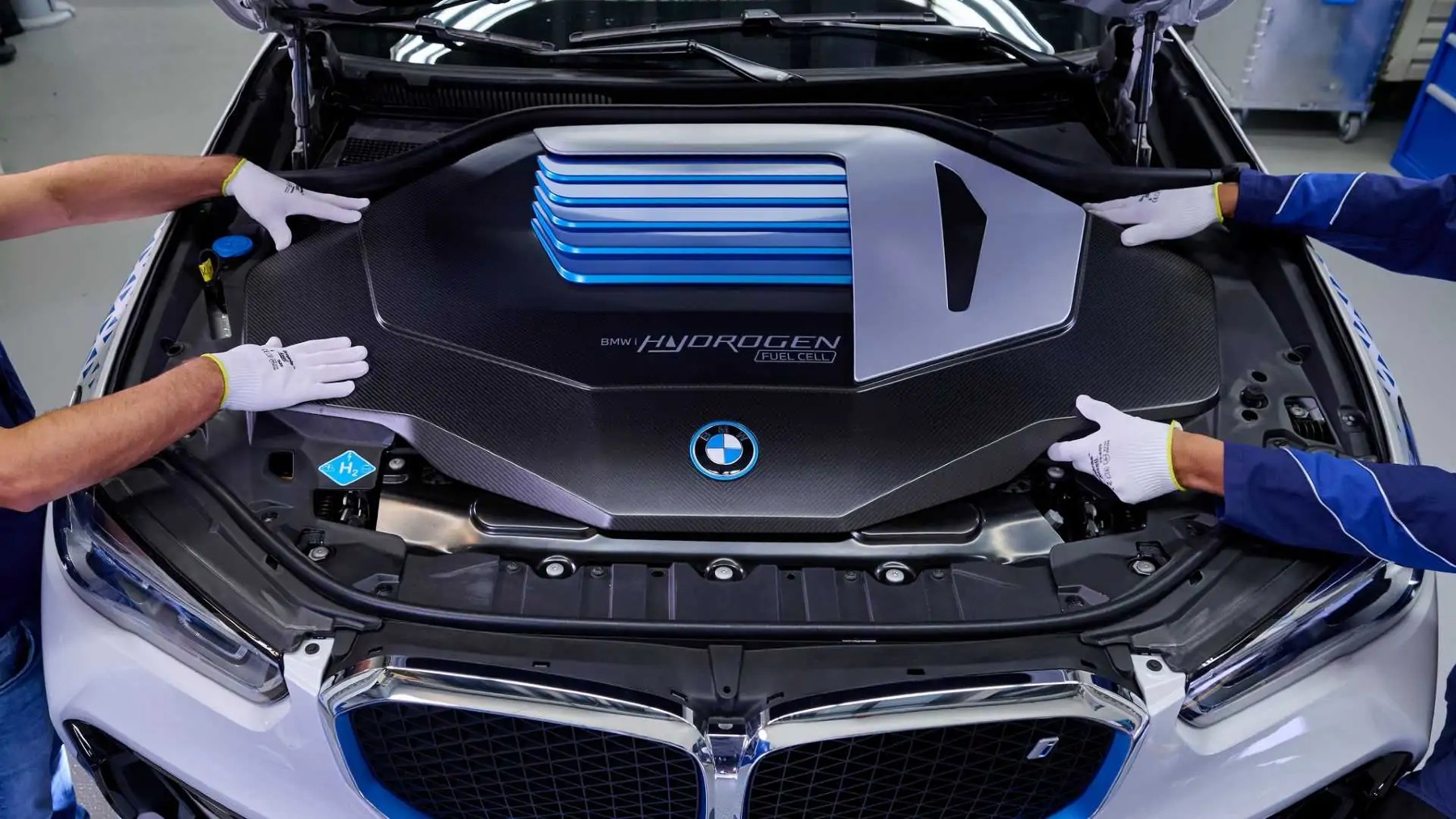
A very recent development is the shocking nature in which BMW has decided to change gears from the phenomenon of electric vehicles (EVs) to embrace hydrogen fuel cell technology. The latest steps, as exemplified by the BMW iX5 Hydrogen Concept, may well be a classic case of revolution in the automotive business. Ever-increasing awareness over global warming and fuel consumption makes hydrogen propulsion an excellent option away from the pure OS-combustion engine and the pure battery electric drive of BMW’s current EVs.
BMW’s Initiating Hydrogen Vision Modifies Motor Future
Hydrogen Technology is not new to BMW since the automobile giant considers the element a long-term fuel solution. It has researched this fuel source for tens of years, an aspiration that depicts a company looking forward to a future of environmentally friendly vehicles. Moreover, the iX5 Hydrogen concept vehicle results from years of work to develop BMW’s innovations.
This innovative vehicle fuses the German car manufacturer’s ingenuity of an X5 model with the power of a practical, efficient hydrogen engine, capable of providing considerable range refuel times and offering an environmentally sustainable bonus of emitting nothing whatsoever. Like using hydrogen as a vehicle energy carrier, BMW has put strategies to overcome some of the challenges of ICEs and BEVs. The iX5 Hydrogen is a perfect example of BMW’s progressive idea. At the same time, it opens the door to a promising future when hydrogen vehicles may become a perfect addition to the other types of vehicles powered by clean energy sources.
Advantages of Hydrogen Fuel Cell Technology: Turning the World Into Clean Mobility
The iX5 hydrogen power system, based on hydrogen fuel cell technology, has several features different from those of classical power trains. First, it contributes a constant band that does not change in correlation with weather and offers a rather gliding and noiseless ride quality on numerous terrains. Second, it only takes 3-4 minutes to refuel or gas up, which has nothing to do with charging; it is much faster than an EV.
Finally, water is the only byproduct in a hydrogen fuel cell vehicle, making the alternative very clean. Rewards such as these place hydrogen in a category of its own in terms of affordability for long-distance transport and uses in application areas where battery-electric vehicles may be deficient. Further, hydrogen fuel cells do not degrade, unlike batteries, which can do so, presenting possibilities for longer vehicle life. It also has implications for other bigger vehicles, such as trucks and buses, whereby the gross mass of large battery packs poses considerable challenges.
Challenges and Future Prospects: Hydrogen: On the Road to Sustainable Mobility
However, hydrogen technology has challenges that deny its use in societies. Hurdles are a definition of a challenge that is a barrier that hinders the use of technology in societies. One of the main drawbacks of hydrogen currently is the market infrastructure for refueling with hydrogen. Still, the investment that BMW has been putting into this technology, besides partnerships like that of Stellantis and Hyundai, may fast-track the development of needed infrastructure. Hydrogen fuel cell vehicles are bound to work as we consider production scale, cost, and consumer take rate.
In the future, hydrogen fuel cell technology might be paramount as it offers people clean energy options and a positively tipping the scale of the automotive industry. Furthermore, future research to improve the efficiency of hydrogen production, such as green hydrogen produced from renewable energy sources, can further extend the benefits of this technology. Regulatory frameworks and support schemes are also expected to assume a strategic position in the flow of investments in hydrogen vehicles and consumers’ uptake levels.
Hydrogen Fuel Cell Technology: Paving the Way for an Eco-Friendly Future
Last but not least, with the launch of the iX5 hydrogen concept vehicle, BMW is returning to providing society with hydrogen fuel cell technology, which is the most efficient and environmentally friendly way of using energy resources. Electric vehicles have been lauded as the future of environmentally friendly transportation technology; hydrogen has characteristics that can support and even surpass those of EVs in some segments.
While the automotive segment continues to strive towards meeting the international climate change accord and increasing energy efficiency, advancements such as the BMW hydrogen fuel cell convey a positive image of the future of vehicles. The upcoming years are expected to be critical in driving the sector forward to prove that hydrogen can revolutionize the automobile sector and gain a place beside other technologies like battery electric vehicles and conventional internal combustion engine vehicles.