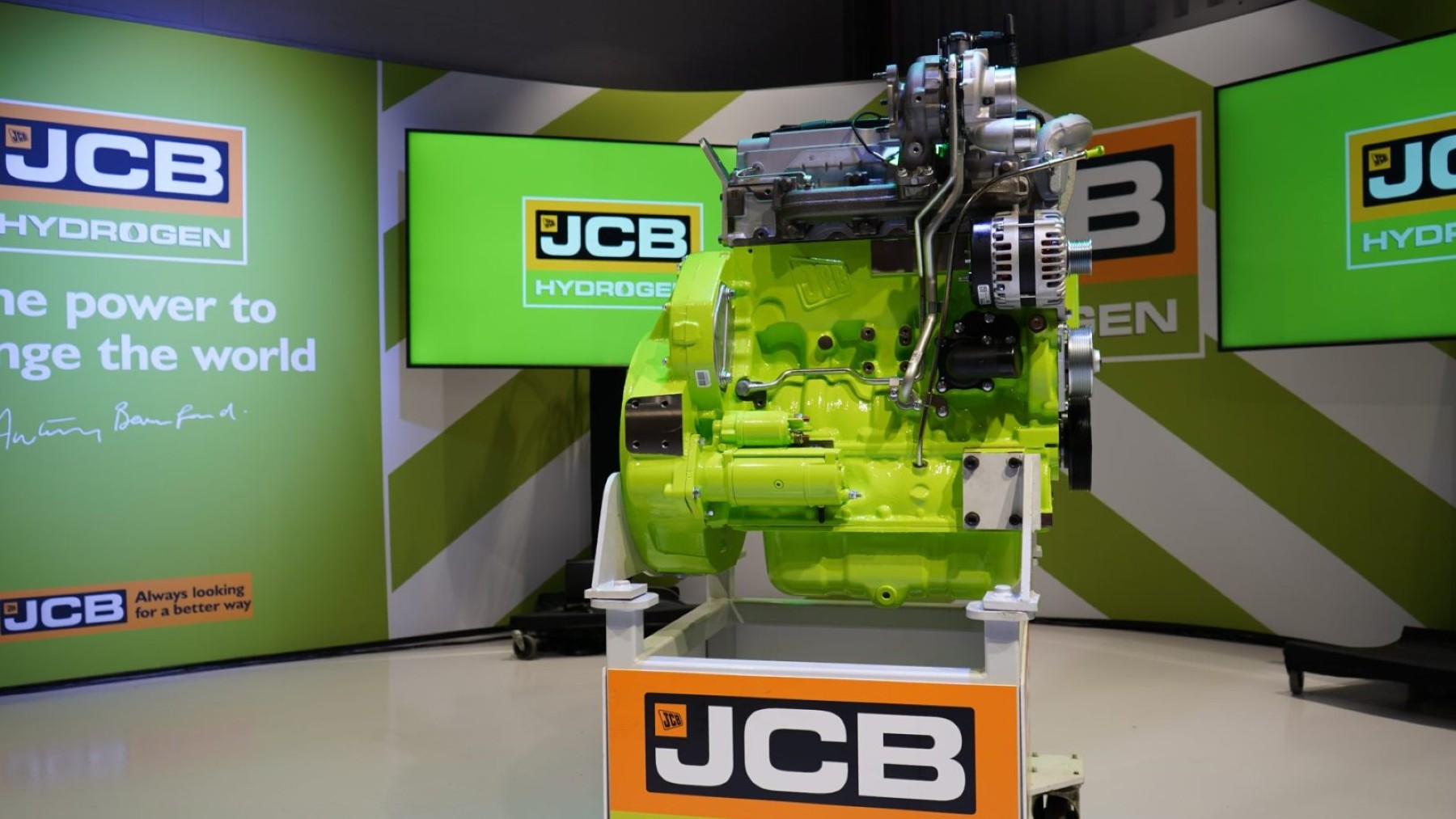
JCB can be awarded for inventing a new hydrogen combustion engine, especially for manufacturing nonpolluting industrial equipment. Demonstrated at ConExpo/Con-Agg 2023, the JCB hydrogen engine results from years of R&D and investments in improving the carbon footprint of the construction and agriculture industries.
At $120 million in total investment, this ambitious project was initially met with some degree of caution. Despite earlier research initiatives having been executed by other organizations with negative results, JCB has developed a prototype of a hydrogen engine that is set to alter the market.
Overcoming challenges: How JCB tackled skepticism and technical obstacles
JCB faced certain complications while building the hydrogen engine for the company’s excavators. Despite the optimistic tone of the announcement, when the project was launched, JCB’s chief innovation and growth officer, Tim Burnhope, admitted that many people were skeptical about the future of the technology.
Past experiments have not yielded workable hydrogen engines since many had used engines developed for spark ignition gasoline. This approach only created conditions for hydrogen’s high-pressure and temperature burning, which were highly ineffectual, culminating in low output. However, for JCB, these were not threats but more potentialities for change.
They studied the given research while working with Aachen University, finding that the failure in previous designs was due to 11 causes, including the dip in the fuel mixtures and the absence of modern technologies in turbocharging.
How JCB addressed key technological challenges for hydrogen engines
Creating the hydrogen engine needed JCB to address several significant technological concerns raised in prior efforts. One of the project drivers noted was the possibility of attaining low temperature and pressure combustion. Previous hydrogen engines typically worked at high temperatures, forming NOx, considered dangerous emissions. In this respect, JCB developed a lean fuel mixture that involved a small amount of hydrogen in the air, thus improving combustion.
Additionally, unavailable during earlier work carried out in the 1990s, the more effectively utilized turbochargers enabled JCB to increase air volume while at the same time keeping combustion temperatures lower. Another innovation was achieved with the help of spark ignition, which has never been used in JCB before, and incorporating spark plugs into the engine needed some help from automotive engineers.
These innovations let JCB create an engine satisfying contemporary standards of emissions without losing exceptional power, matching and even surpassing the torque levels of traditional DI diesel engines.
The future is hydrogen: Why this fuel is ideal for construction and agriculture
JCB’s new hydrogen engine has revolutionized net-zero emissions for construction and agriculture without using expensive metals, such as battery-electric equipment. In addition, Burnhope noted that the hydrogen engine technology was cost-friendly and could quickly be adopted in construction equipment since they work in extreme conditions.
These conditions are not fit for other fragile hydrogen-related technology such as fuel cell technology. However, the absence of a hydrogen fuel grant remains one of the essential worries that acts as a vital blockade to the extensive utilization of hydrogen-powered machinery. We can only speak of hydrogen stations’ formation at the initial stage of development.
However, there are significant investments in this sector, for instance, at the state level in the United States of America, where clean hydrogen hub plans are being implemented. Such advancements indicate that as the infrastructure of hydrogen increases, so will the uptake of hydrogen-fueled construction fleets.
Moreover, JCB is also focusing on developing robust material hydrogen engines for scale production; such machines are already operational here, showing the technological application readiness for market implementation. The company’s mobile hydrogen refueller innovation indicates the extent to which it affirms the idea that machinery run on hydrogen can be refueled at the job sites, decreasing the main challenge of refueling.
Thus, the hydrogen engine from JCB is an incredible invention that can pave the way to an entirely new visual for construction equipment. Describing details of initial skepticism and engineering issues, the work of JCB in creating a hydrogen combustion engine that promises to match the efficiency of diesel and emits no carbon whatsoever was presented.
Because of the application of advanced technologies and the company’s uncompromising search for practical solutions, JCB has designed an engine that can bring construction sites closer to achieving carbon neutrality faster. While hydrogen fuel is still a problem, enhancing the infrastructure for hydrogen fuel ensures that new, cleaner, and more sustainable technology will be supported.
While JCB keeps on proving and improving the effectiveness of its manufacturing hydrogen machines, it is placing itself strategically in the emerging eco-friendly market.