Sustainable mobility is not only for cars (although it is the one we pay most attention to for obvious reasons). What is the most polluting means of transport, in individual terms? It is precisely the one that is going to say goodbye to “gasoline” in 2024 with a new fuel that is carbon-based, but that will sweep away hydrogen. Can you imagine what it could be? We’ve already told you it’s not electric.
New fuel to change the industry in 2024, but not for cars: what´s the reason?
Currently, aviation industry is a major polluting sector that has been called upon to cut down on its emissions and reach net zero by mid-century. In this endeavor, Sustainable Aviation Fuel (SAF) has come out to be the effective remedy.
SAF is a liquid fuel that which can be derived from waste oil and fats, green and municipal wastes as well as the non-food crops. CO2 emissions are reduced by up to 80%, and is seen as a much more sustainable and environmentally-friendly source of energy compared to conventional fossil fuels.
Continuing, in this article we will uncover the reason why SAF is viewed as the next gen aviation, its attributes, and the ongoing projects at this time. The current transportation technology using aircraft relies on fossil fuel and hence is a major source of Green House Gases GH emissions.
Legendary brand is thinking about the next fuel: why a carbon-based one?
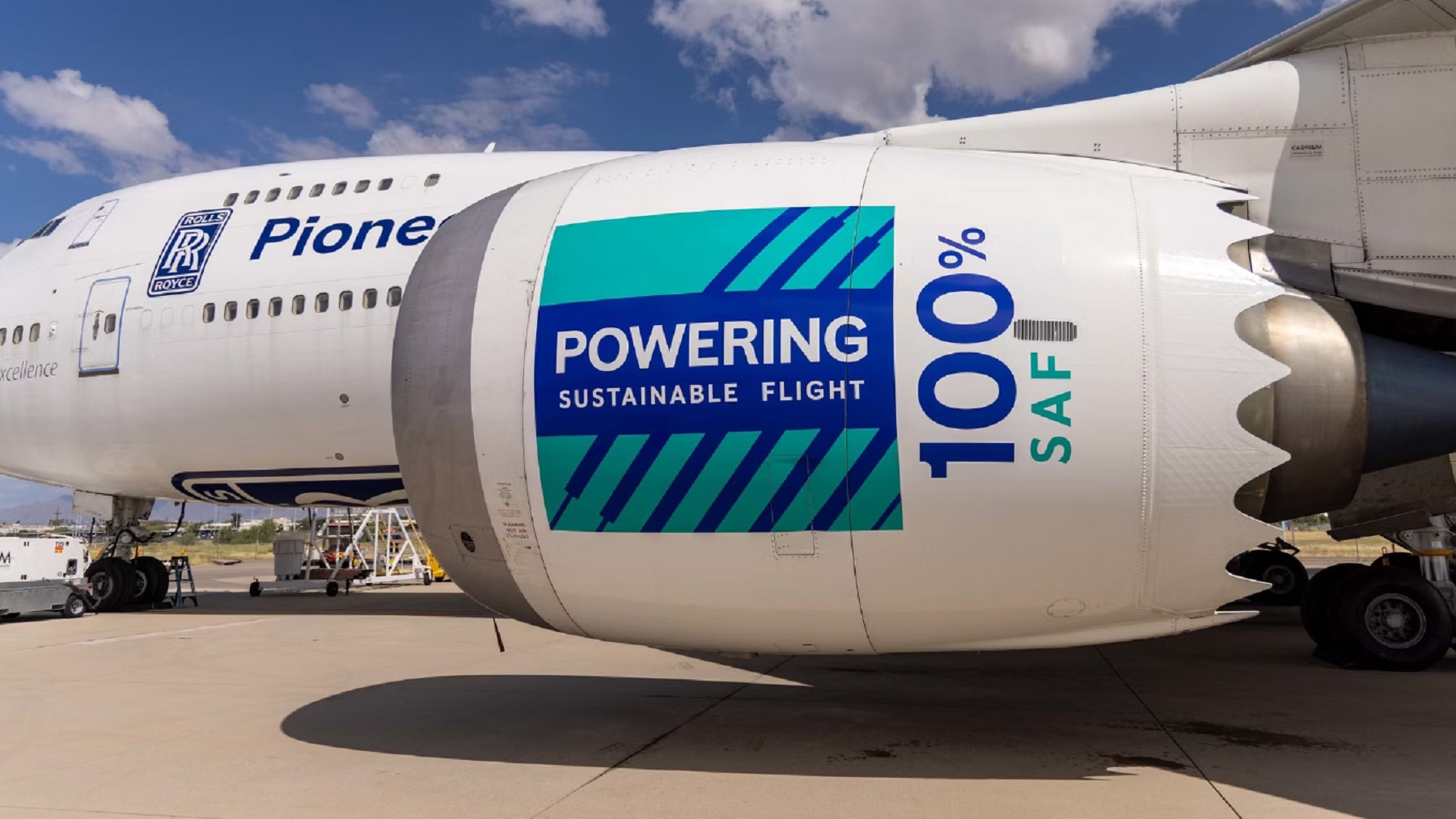
Rolls-Royce, a UK company, who recently made a move from electric planes to low carbon fuels because, according to the company, electric planes are not economically feasible. SAF could now help aviation reach the net-zero climate targets.
SAF is derived from liquid fuels, and can be made from different raw materials. It can be mixed with conventional jet fuel and used as existing aircrafts, and reduce green house emissions drastically. SAF has several key characteristics that make it an attractive solution for the aviation industry:
- Reduced CO2 Emissions: SAF has long been listed as a measure for the reduction of CO2 emission by up to 80% of the normal emission of fossil fuels.
- Drop-in Solution: Suspended animated film can be mixed with traditional kerosine and applied to existing airplanes without inapplicable improvement.
- Sustainable Feedstocks: SAF is sourced from sources that are renewable, and they do not pose competition in food, water or forests.
The air sector is already testing SAF fuel: these projects are under way
There are several ongoing work in progressing and marketing of SAF since it plays a vital role in aircraft industry. Companies that are currently at the forefront of the performance enhancement space include Rolls-Royce through its ACCEL project, which seeks to produce the fastest electric airplane in the world.
The project has already gone through ground testing and is now in the integration stage where it transform the propulsion system of the aircraft. This is for the reason that bodies such as the International Air Transport Association (IATA) is also have been actively involved in pushing for the creation and use of the SAF.
The organisation was able to point out that with the implementation of SAF, about 65 percent of the carbon reduction needed by aviation industry to achieve net zero by 2050 could be potentially achieved. Currently, IATA is engaging the governments and other industry players to establish the right enabling environment.
This new SAF fuel could be one more step towards the decarbonization of air transport, which seems to be getting closer and closer. However, many see it as a too distant goal, although brands such as Airbus are bringing its definitive implementation closer. Of course, not everything will be hydrogen from now on, although this new one will always be seen as an intermediate level.