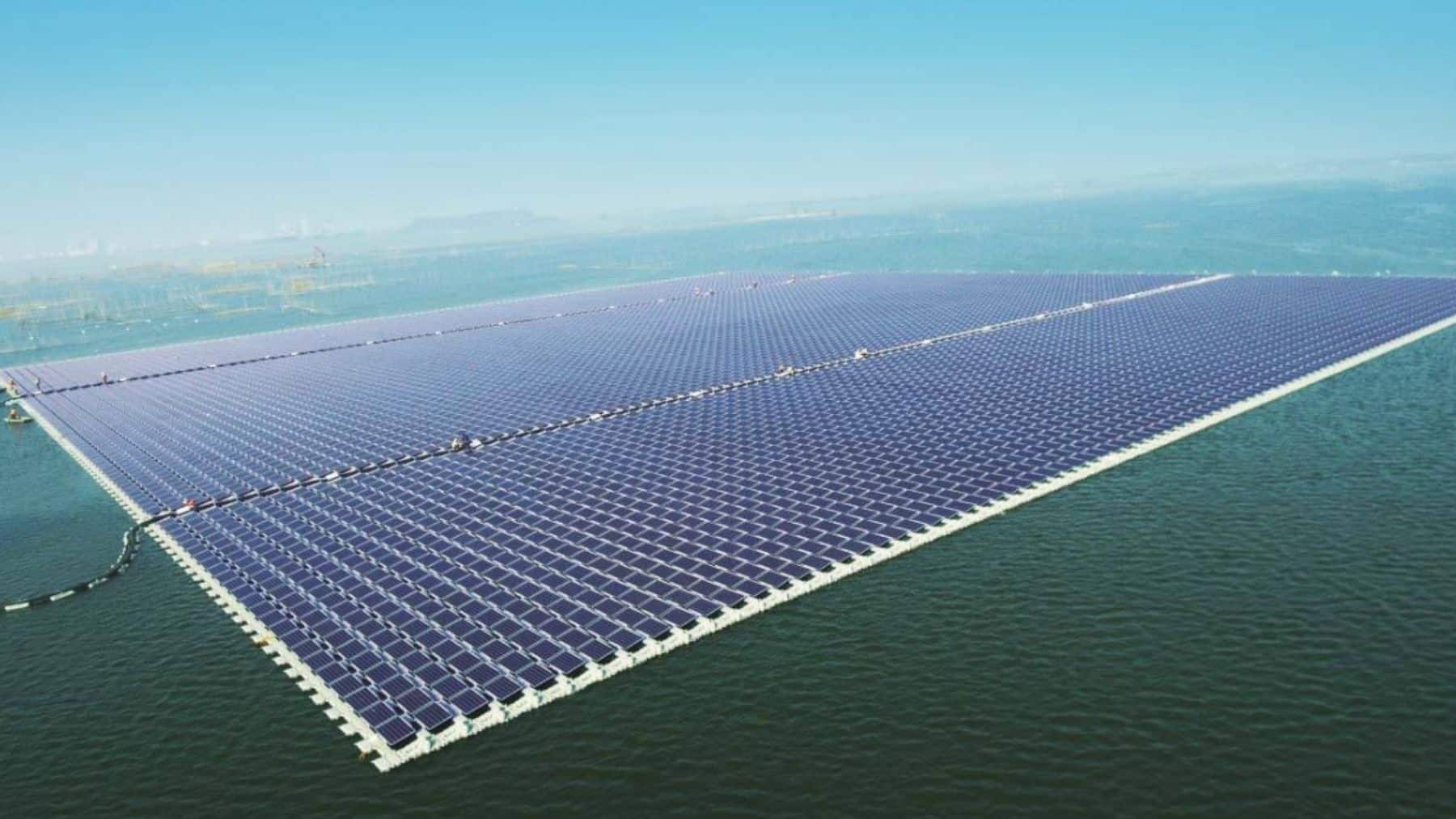
We have heard of photovoltaics as we move towards greener initiatives; however, floatovoltaics may be the reason why the solar game changes completely. India is testing a new energy source in the form of a floating solar panel system that may provoke the focus to shift from photovoltaics completely. Perhaps India can prove that the future of energy can be found in reservoirs and lakes rather than on rooftops or in residential areas.
Understanding Floatovoltaics as a clean energy solution
In keeping up with the concept that solar panels rank supreme as a clean energy solution, floatovoltaics look at solar panel systems that float on water surfaces. Drawing inspiration from traditional panels, these floating panels are on buoys and anchored in place. Floatovoltaics was initially an innovation of Switzerland back in 2008, and since then, many countries, including in Asia, have worked on this idea of floating solar panels.
The interest seemed to spike when a current study published in Nature Sustainability mentioned that if a mere 30% of the surface area of over 114,000 reservoirs worldwide were covered with floating solar panels approximately 9,000 terawatt-hours annually could be generated. Such an impressive figure surely makes floatovoltaics seem all the more interesting.
The beauty part is floatovoltaics is not only good at producing clean energy, but at conserving water. Covering the surface of reservoirs, such huge panels reduce evaporation, thus conserving approximately 106 cubic kilometers of water per year. It is no wonder that Asian countries like India are so taken aback by the floatovoltaics phenomenon, as in India, water scarcity is deemed a big problem.
Why else is India a lucrative option for floatovoltaics?
In the struggle to see if solar power is the way to go or if wind generators stand as a competitor to wipe solar panels away completely, we may have to say goodbye to wind power. With a floating solar plant mimicking island architecture, it’s no wonder why all the attention has shifted to proposals of floatovoltaics.
Since India already leads in the solar energy game, it makes more sense as to why the country is obsessed with testing solar panels that float on water surfaces too. Perhaps floatovoltaics can assist India in meeting its renewable energy targets far faster. India is also home to many canals as well as reservoirs, so it makes far more sense to implement floatovoltaics in these water surfaces leaving the land reserved for farming practices and for growing crops.
For India’s projects on state-owned reservoirs, the intention is to use the sun’s power whilst preserving water that can be utilized for drinking. The whole concept of floatovoltaics fits right in with India’s project. Floating panels will enable us to generate approximately 15% more electricity than land-based panels whilst reducing problems such as overheating in the process.
Unlike solar farms which India is also popular for, floatovoltaic systems are found closer to hydroelectric dams or water treatment facilities which have already been linked to the power grid. In the process, this eliminates the costs incurred when connecting new energy sources to the grid. India is already listed as one of the top five countries with the best floatovoltaic potential. Other countries that have incredible photovoltaic potential are Brazil, Canada, China, and the U.S.
Floatovoltaics are not without hurdles
It makes sense for countries like India to invest in floatovoltaic systems especially since the clean energy generation potential offered by such floating solar systems seems so lucrative. Already with an investment in 10, 000, 000 solar panels set to produce 2000 MW, India is stepping up their solar game, so it makes all the more sense to focus on floatovoltaics too.
However, despite the benefits offered by floatovoltaics, the technology does have to overcome some hurdles. One of the biggest hurdles is that of installation and maintenance costs which is far higher than that of installing and maintaining traditional solar panels. The issue of keeping these panels afloat on bodies of water cannot be overlooked either. However, all in all, should the cost factor be considered wisely, there is a future for floatovoltaics.