Hawaii, a land of idyllic beaches and otherworldly landscapes, is also a source of hope for 100% renewable energy generation in America. We saw it several weeks ago, but now they have surprised the whole country again. Such a promising project has just come to light, which could lead them to drill their sacred mountain (one of many). The idea is to dethrone hydrogen as the most powerful source, and they are very close to achieving it, in fact, they have already taken their first steps, at thousands of degrees of temperature.
Hawaii, ready to blow up its sacred mountain: The key is producing the most renewable energy ever
Largely comprising several islands, Hawaii has picturesque features that include different island structures that are mainly volcanic; this makes the region to consider geothermal energy as one of its sources of power. A recent project that has attracted much attention is the proposed geothermal exploration project on Maui, which has stirred a lot of controversy.
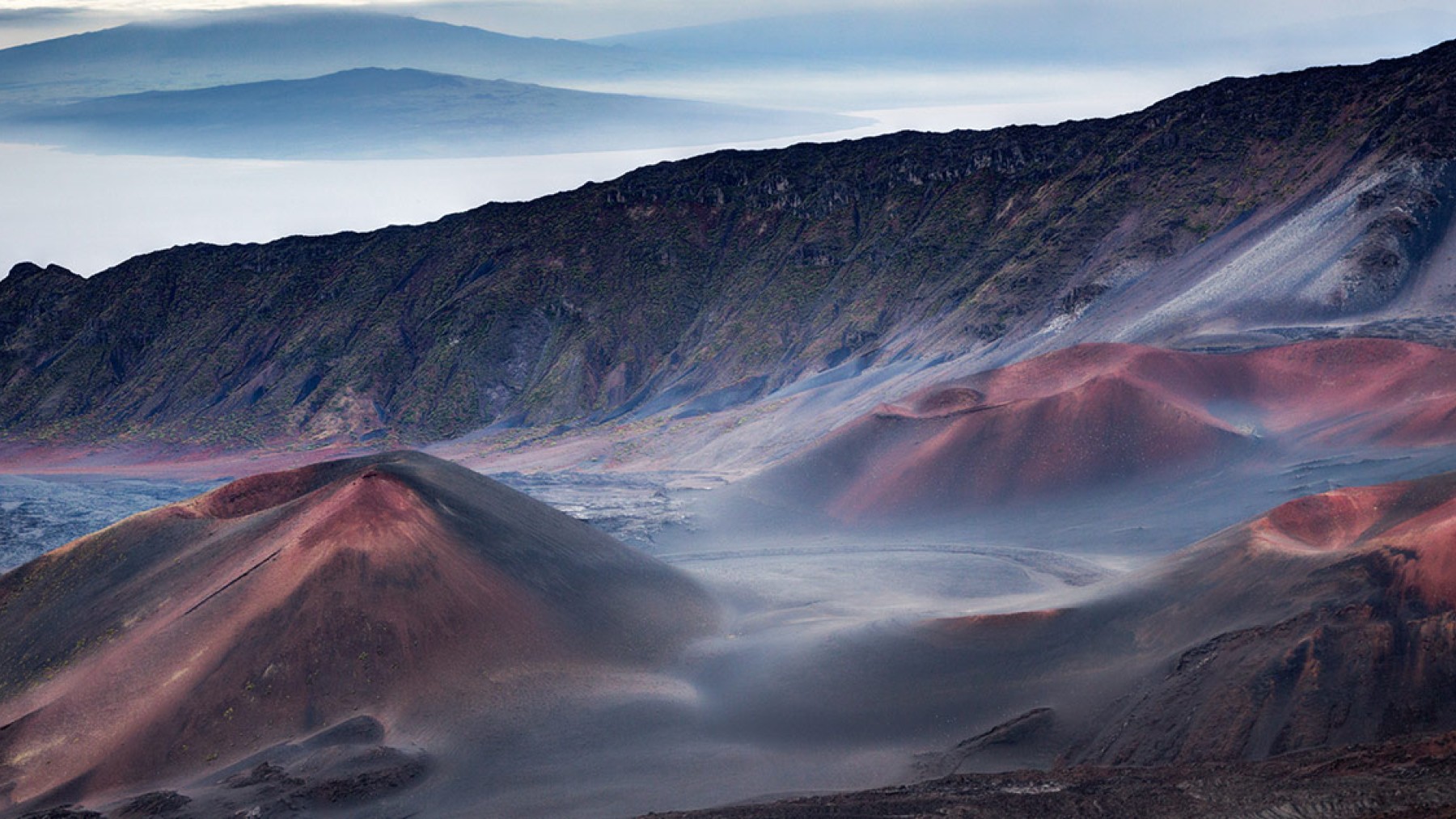
Currently, the Hawaii State Energy Office is interested in geothermal power on Maui, where one of the potential prospects is the Ulupalakua Ranch area in the southwestern footslope of Haleakala. This project is to evaluate the possibilities of geothermal energy within this area and create a brand-new renewable energy source for the island.
Ulupalakua Ranch, located on the leeward side of Haleakala, occupies a land area of about 18,000 acres. It’s due to its favorable geological conditions, which are attributed to Haleakala’s volcanic past, that make the area ideal for geothermal application. Subsurface heat in the form of geothermal ores may be available through the ranch’s position at the south-western slopes of the extinct volcano.
From geology, to geophysics and even “sky sciences”: How the geothermal energy in Maui could be produced
Using first estimate calculations with the help of several reliable sources, the specialists recommend that a geothermal plant on Maui can establish between five and 50 MW, depending on the resource quality and scale of the project. This range is due to the fact that prospecting for geothermal energy is quite a risky affair, and additional research needs to be carried out.
The Maui geothermal project is still in its early stages, with several key steps planned for the near future:
- Geological Surveys: A comprehensive survey of the site to develop the Ultra and Palakua Ranch areas in order to locate others potential geothermal reservoirs.
- Temperature Gradient Drilling: Some geothermal wells that are also referred to as shallow wells will be drilled to take temperature measurements of the ground and estimate heat flow.
- Geophysical Studies: Geophysical methods, which include magnetotellurics and seismic surveys, will be used to map structures below the surface of the earth.
Hawaiians on edge with this volcano: It won’t erupt, but it is in extreme danger of “disappearing”
Remember when NASA had to give up its plans in Hawaii because it wanted to install its telescope on a sacred mountain? It was something similar to what is happening now, but with geothermal energy extraction. The problem is that the government is willing to go ahead, despite the criticism it is raising among the population, who want to keep their natural spaces preserved.
The proposed geothermal project is uniquely placed to meet Hawaii’s vision to source all its energy from renewable sources by the year 2045. Geothermal can provide stable base load power complementing intermittent sources such as solar and wind, thus providing grid balancing on Maui.
The Maui project could benefit from recent innovations in geothermal technology, including:
- Enhanced Geothermal Systems (EGS): Methods of resource engineering to form reservoirs within a hot, dry rock structures that could extend the exploitable geothermal resource.
- Closed-loop Systems: Superior designs of processes that are often used in industry that can use less water, and designs that will not cause the problems associated with induced seismicity.
- Smart Drilling Technologies: Effective techniques utilized in well construction ensure that a well is sited accurately and with minimal effects on the environment.
The generation of geothermal energy in Maui, Hawaii, is much more than a sign of how renewable sources are diversifying in the country. It is a very positive trend reversal: remember when hoaxes were spreading accusing solar panels of causing the devastating fire that ravaged the island? Now that it is not only clear that it was a lie, we are also willing to produce clean electricity in natural ecosystems, always with preservation policies.