Hydrogen power has gathered much excitement on its potential in the last ten years. With its potential to significantly reduce greenhouse gas emissions, hydrogen fuel offers a versatile energy source that can power vehicles, generate electricity, and even heat homes. Recently, Alstom, experts in delivering sustainable transport solutions, have been making waves across Europe for their role in implementing hydrogen powered trains in the region for the first time.
Germany and Italy see new hydrogen transportation
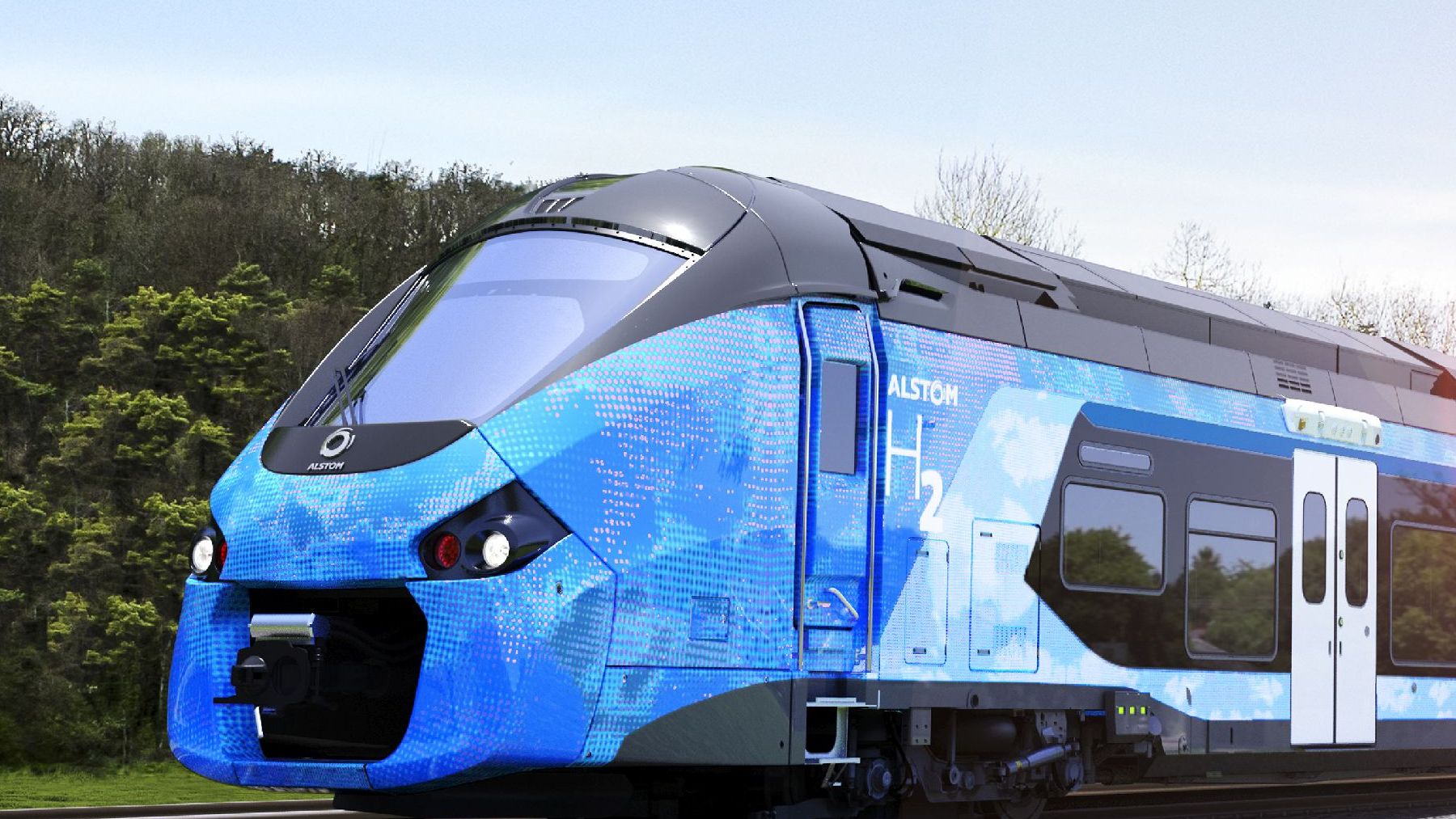
In 2016, Alsom announced their plans to implement and develop a regional train system in Germany fueled by hydrogen. The system would produce zero-emissions and be a valuable asset to the extensive public transport system in Germany. In 2018, the Coradia iLint™ was introduced to the world. In 2022, the trains were set to start replacing other train systems throughout Germany as the country commits to sustainability.
By the end of this year, the trains will also be operating in Valcamonica, Italy along the non-electrified Brescia-Iseo-Edolo line of FERROVIENORD. The project forms part of Italy’s developments in creating their first Hydrogen Valley in the area of Brescia. The EU has current targets to reduce emissions by transport to 0% by 2050. These trains are set to play a valuable role in achieving such a goal. They has also recently been implemented in Quebec, Canada.
Comfort and sustainability achieved in the Italian project
The Italian trains are modeled after Alstom’s single-deck Coradia Stream regional train, which is targeted at the European market. The hydrogen-powered Coradia Stream will uphold the high comfort standards that passengers have come to appreciate in its electric counterpart while delivering operational performance equivalent to that of diesel trains, including range. This innovative train can run on non-electrified lines, serving as a sustainable alternative to fossil fuel-powered trains. It offers the same level of comfort and quietness as other electric Coradia models, with a remarkable range of over 600 km.
Alstom trains have also been implanted across other parts of Europe. The trains are manufactured in Germany which makes the process of getting the trains across to other European countries much more simplified. The trains have been developed in Sweden as well as Denmark.
China’s hydrogen-powered train recently passes testing phase
Germany is not the only country developing hydrogen powered trains. China recently this year announced that state-owned train manufacturer CRRC has completed tests of the country’s first passenger train run on hydrogen fuel cells. The train is intended to operate among non-electrified sections of the city railways with a maximum speed of 160 km/hr and a cruising range of 1,000km. These statistics are similar to Alstom’s model’s capabilities.
Meanwhile, Japan continues to be a leader in hydrogen-power engine technology for automobiles. The Japanese government has invested heavily in hydrogen infrastructure, aiming to create a “hydrogen society” where hydrogen is integrated into various sectors, including transportation, power generation, and industry. With initiatives like the development of hydrogen fuel cell vehicles, extensive refueling networks, and advancements in hydrogen production methods—particularly from renewable sources—Japan is actively promoting hydrogen as a sustainable alternative to fossil fuels.
The commitment to hydrogen technology not only aims to reduce greenhouse gas emissions but also to enhance energy security and stimulate economic growth, showcasing Europe, China, and Japan’s dedication to innovation and environmental responsibility in the face of climate change. Even electric-car manufacturer giant Tesla has announced plans to release a hydrogen powered vehicle prototype as early as 2025.
While electric vehicles and electric technology has had the most attention over the past two decades, hydrogen is fast becoming an additional alternative which challenges electric’s green dominance. The addition of viable renewable energy sources is a great step towards having multiple options for a green future.