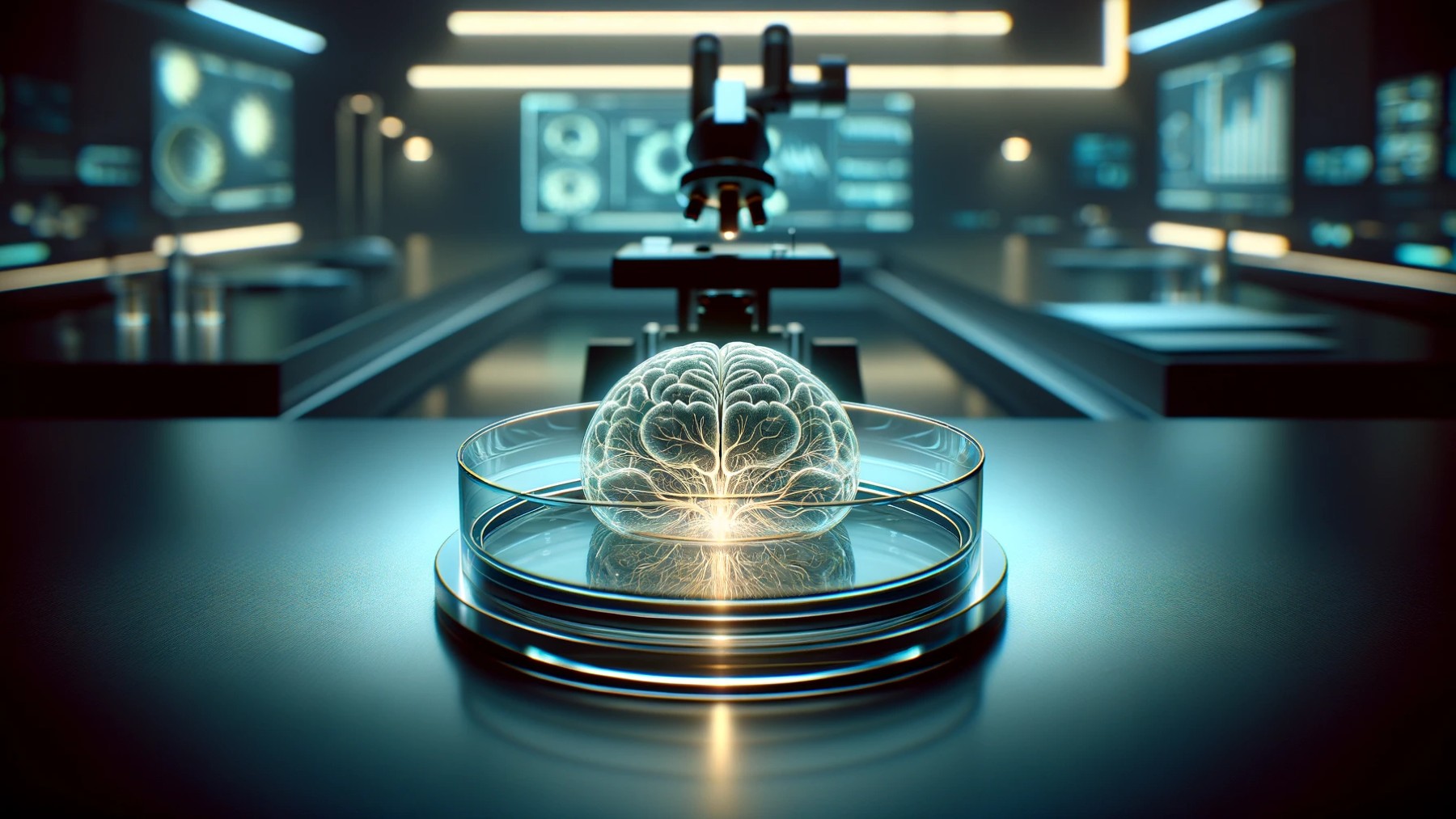
The human brain has been referred to as one of the most complex and poorly investigated organs in the human body because its grey matter comprises about a hundred billion neurons, trillions of synapses, and countless connections. A brilliant group of scientists from the prestigious Harvard University, in cooperation with Google, has reached the apex of their work and produced the most detailed map of human brain connections ever.
Acting as a highly detailed neural map, this has garnered researchers a total of 300 million images based on just one single cubic millimetre of the human brain and thus supplies data universally significant and helpful in understanding the functions and structure of the human brain.
The formation of the neural map involved complex technologies and a tiny brain sample
The neural map was created from a small area of brain tissue, the size of a pinhead, obtained from a woman who was undergoing surgery for epilepsy, touching 1 cm3 of the tissue; this sample had 57 thousand cells, 230 mm of blood vessels, and 150 million synapses. To build the map, tissue samples were sectioned into thin slices, which were only 30 nanometers thin, and those thin slices were imaged using an electron microscope.
The members of Google’s team relied on machine-learning algorithms to reorient and assemble the arrays of 4 petabytes of data and design the model in 3-D. Currently, this model, the most complex wiring diagram of the human brain ever built, is open to the public; everybody can find and examine this model through the Internet.
Technological advancements made it possible to achieve unprecedented brain mapping success
The formation of such a neural map was made possible with the help of several technologies. First, as mentioned earlier, the employment of electron microscopy enabled the researchers to obtain images of the brain tissue at a scale that could capture details of synapses. Such papers provided the necessary level of detail to reveal how neurons are connected and can communicate with other neurons. Second, the massive volume of data produced by the imaging process needed high computing capability and machine learning to parse and analyze.
It was also claimed that the company’s experience in AI and data processing was helpful in the correct positioning of the 2D images into a 3D one and in the proper segmentation of many of the parts of the brain tissue. Last of all, the decision to share the neural map as an open-access database has extended the potential for future research and cooperation in the sphere of neuroscience.
Implications of this neural map could change the future of neuroscience and beyond
The development of this neural map has excellent potential for neuroscience and other disciplines. In neuropharmacology, the map offers an opportunity to gain a substantial amount of information about how neurons are wired within the brain and how certain diseases, such as schizophrenia or autism, occur.
The map being available to the public also allows researchers from different parts of the world to analyze it according to their hypotheses, which might contribute to discoveries in mapping the brain and its function, as well as help in improving the treatment for neurological disorders. Neurosurgery is not the only area that could use the techniques and technologies introduced in this project. As said earlier, artificial intelligence can also benefit from the principles of the human brain and try to replicate its wiring diagram to create better neural networks.
This groundbreaking map may reveal answers to brain mysteries we cannot solve yet
Therefore, the generation of the most detailed map of human brain connections ever produced can be regarded as a significant achievement in neuroscience. Using new methods of reconstructing cellular images and computational capabilities, scientists from Harvard and Google have given an incredibly detailed look at how neurons and synaptic connections are arranged.
This neural map not only offers unprecedented prospects for new reasons for neuroscience and neurological disorders but also can impact other areas, including artificial intelligence. While more researchers work on interpreting this map, they could discover something that eludes existing science and reveal solutions to problems that scientists have not been able to solve as of now, thereby benefitting future scientific studies of the human brain.