Electric mobility has taken a back seat, leaving hybrids far behind. If it has, it is because it has found an even more efficient fuel that reduces emissions to a minimum, so much so that it only expels water vapor. Do you know which one we are talking about? Of course, the one that allows this new hydrogen engine to work, which is surprising for one reason: it is neither American nor German.
This hydrogen engine has record efficiency: who has fabricated it?
Fuel cells with energy of the hydrogen have attracted a great attention as the zero-emission technology for transport. Hydrogen fuel cells also have shorter filling time and driving range comparable with gasoline vehicle, while differing from battery electric vehicles.
Nevertheless, hydrogen cars producing electricity with the aid of fuel cells are the most used nowadays, working as an electricity generator for the electric motor. Another approach is to build a network of hydrogen refueling stations to provide hydrogen fuel to motor vehicles as gasoline fuel to ordinary ICE vehicles is.
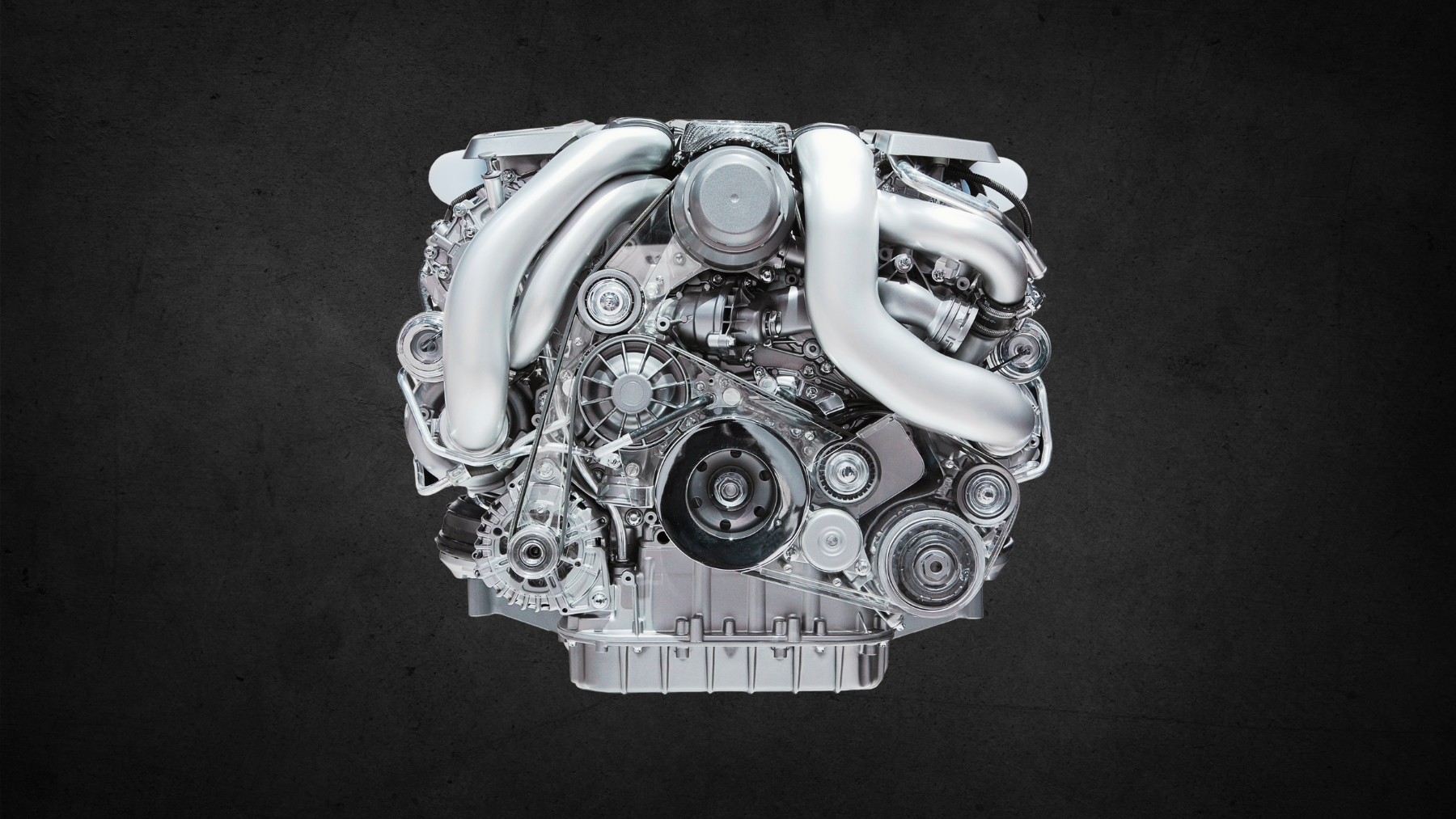
A while ago, well, scientists in South Korea made a prototype engine that achieved new records of efficiency in hydrogen combustion. The team of engineers from Korea Institute of Machinery and Materials (KIMM) doing the 2 liter engine research and development.
The first run of the thermal engine demonstrated it had more than 50 % efficiency. This was well above previously achieved levels using a hydrogen engine. This proof of concept is in fact simply providing a hint of what lies ahead of us in hydrogen internal combustion technology.
Neither American, nor German: where was this hydrogen engine produced?
This hydrogen engine, developed through the cooperation of researchers in the Korea Institute of Machinery & Materials (KIMM), is a great improvement and great contribution to the modern combustion engine technology. A 2-litter direct injection hydrogen engine has broken all records with a thermal efficiency of over 38%.
There is not any additional elements in its combustion chamber, the engine only directly injects the pure hydrogen gas into the combustion chamber, boosting its effectiveness and allowing the gas to be completely burned. Instead of the old gasoline engines, the carbon emissions in this reaction do not exist.
The engine’s unique mode of capturing the properties of hydrogen is behind its peak efficiency tracker. Because the range of the flammability of hydrogen is wider than gasolines and its flame speed is higher it is possible to burn hydrogen in the motor much more efficiently than gasoline.
Investigators studied different types of chambers, fuel injection systems, and tuned compression ratios to enhance performance. The hydrogen prototype with the thermal efficiency of around 38% compared to typical gas engine that extracts less power usually from its combustion having the thermal efficiency around 25-30%.
More efficiency, less energy loss, and this unseen detail you won´t believe
The hydrogen engine prototype has gone through all testing phases, and as carried out by the research team at KIMM, Korea Institute of Machinery, and Materials. The early experiments were attempting to determine the power, efficiency, emissions, and resilience among the conventional gasoline engines and this engine itself.
The initial product materializes a 2-liter 4-cylinder direct injection engine converted to function on a hydrogen powered fuel. Through dynamometer testing, the engine registered an efficiency index of over 38% which is a strong step above the 29.5% record posted by the hydrogen combustion engine owned by Toyota.
The engine was also tested in the actual cars and in the racing cars and by a professional driver. The engineers assembled the working electrical equipment in the car and tested-drove it on the streets around. The hydrogen powerplant did not give any particular problems, which performance was identical to the normal fuel cell.
As you can see, this hydrogen engine exceeds the power threshold to which we are accustomed to this fuel, and also shoots up the autonomy. The injection system is the most novel, as well as its manufacturing process. Will it perhaps be the first to be truly mass-produced? We don’t know yet, but the industry is very optimistic, and so are we by seeing the innovation in the industry.