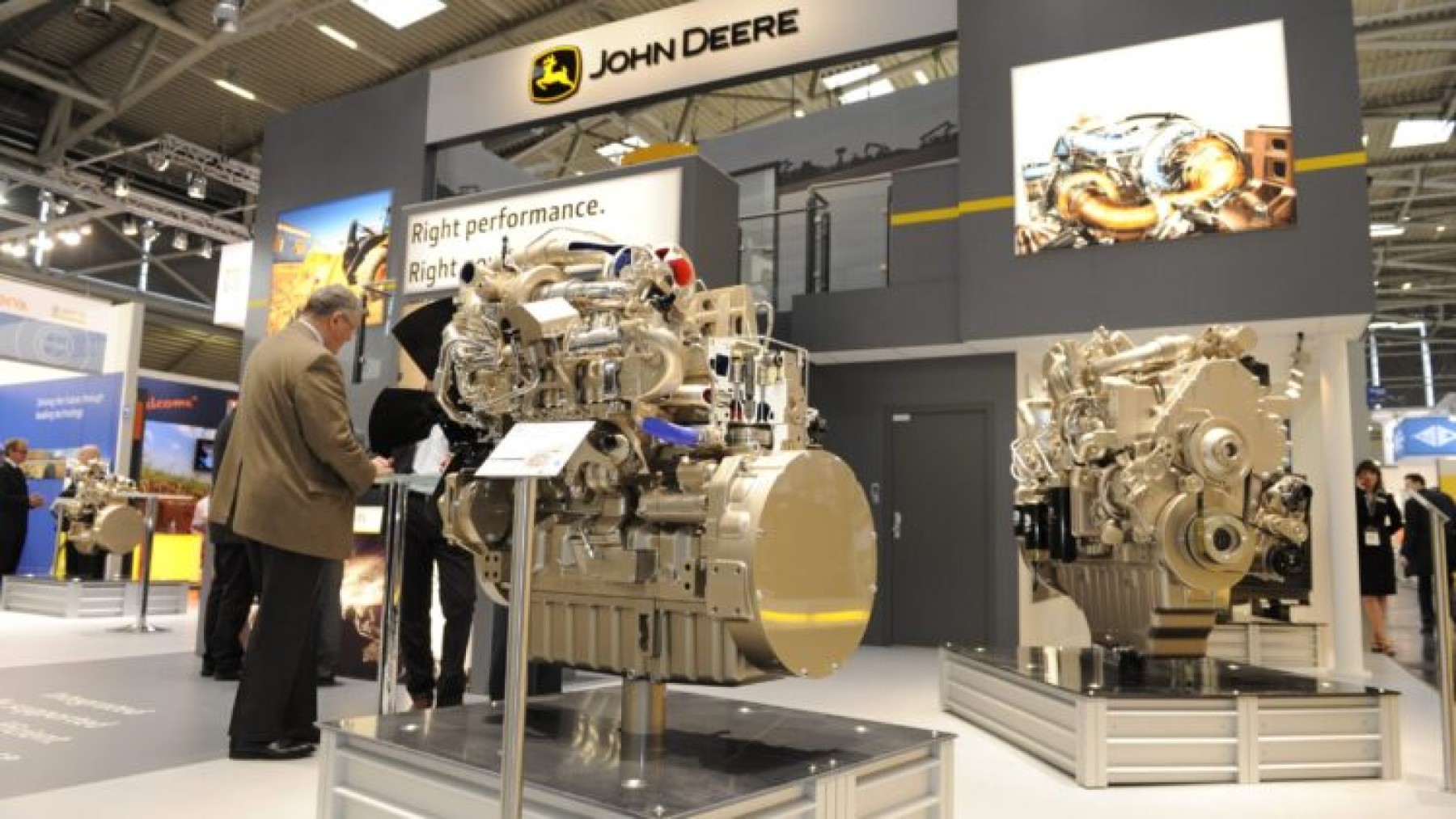
Ethanol is making headlines for being the new hope of renewable energy sources and a new contender to hydrogen fuel. One prime example of an industry at the tipping point of this transformation is John Deere’s company, which produces agricultural equipment. The company has thus recently presented a 9.0-litre concept ethanol engine at Agritechnica, a global machinery fair for the agricultural industry by the side of Hannover, Germany.
That is why the ethanol engine from John Deere is revolutionizing the market
Product and technology were potentially revealed at Agritechnica: the new 9.0-litre ethanol engine would apparently underline a farming industry’s concern with renewable power sources. This concept engine is ethanol compatible as ethanol is an alcohol-based renewable fuel that comes from feedstocks such as corn, wheat and sugars. In spark ignition engines, ethanol has a higher anti-knock quality; thus, it is more appropriate in high-power density engines.
This engine comes at the right time with John Deere’s “Leap Ambitions” strategy, focusing on achieving either net or zero carbon emissions by 2026. With the adoption of ethanol as a source of energy, John Deere is expanding its energy menu to cater for various power requirements in different capacity and usage tractors.
Ethanol vs. hydrogen: which sort of fuelling really drives the world ahead?
In fact, the following are some of the benefits of ethanol compared to hydrogen as a renewable energy source. It is currently produced and freely available in most parts of the world, making it both feasible and easily adaptable. Hydrogen infrastructure, on the other hand, is not yet developed to fill the demand required for the overall use, thus being a challenge for its application.
Also, relative to other fuels, ethanol can be easily incorporated into internal combustion engines with minor enhancements. Such compatibility will enable a relative transition from fossil fuel consumption to renewable energy consumption in the agricultural sector. The ethanol engine by John Deere represents such integration, which gives a sustainable solution without redesigning all machines anew.
Here’s why this ethanol could fundamentally alter agriculture & renewable energy
This is so because the development of ethanol-powered engines has massive key effects on the agricultural industry. It has also been noticed that through the use of machinery that uses renewable fuels, farmers can lower their carbon footprint. In addition, ethanol is duly beneficial for agriculture since this fuel ingredient is derived from crops grown by farmers, benefiting the production circle commercially.
John Deere’s action can also influence other manufacturers to consider ethanol as a feasible fuel type. It could enlighten ethanol producers and investors to compel the construction of proper production and distribution networks, thus reinforcing its part in sustainable agriculture.
Future prospects: This paper examines ethanol as a player in the race to environmentally friendly energy.
The development of John Deere’s ethanol engine is among the most critical events in the renewable energy industry. Since industries are inclined to look for energy sources other than fossil fuels, ethanol holds an advantage over its rivals because of its feasibility to current machinery. Its adoption could help to advance the utilization of renewable power, especially in industries such as agriculture, where the production demands machines’ durability and effectiveness.
Although it is widely known that hydrogen is slated to be the energy source of the future since it is an abundant element and highly flammable, challenges to using hydrogen include storage, transportation and the development of an effective framework to support such a fuel. Also, ethanol production technologies and their availability are easier to use than cellulosic ethanol. This avenue is made obvious by John Deere’s latest ethanol-powered engine, which puts ethanol at the forefront of fuel in the search for greener energy.
Lastly, John Deere’s introduction of the 9.0-liter ethanol engine at Agritechnica is still a symbol of improvement in the renewable energy field. This, of course, makes ethanol a fuel source that is good and noble for the company as it breaks the way for the actualization of better agricultural methods and other industries’ uptake of renewable energy.