The ‘owner’ of the Internet sees the possibility of drilling into the ground as viable. It is a controversial project that could lead to a global blackout. Sending letters, going to expert talks or visiting a local library are activities that we used to do in person. Information required time and mobility resources, but now it is a matter of knowing what to put in the search engine and ‘click’, and everything is related to energy.
Without leaving home, it is possible to have a work meeting, teach a class, study or access research done years ago. The benefit is more than obvious. We save time and money. However, behind this seemingly perfect solution lies an environmental footprint that is difficult to track and calculate.
Every search we do on the Internet releases about 0.2 grams of CO2 into the environment. According to Google, this means that the greenhouse effect generated by 1,000 searches is equivalent to driving a car for one kilometer. In this context, a controversial project is ready to change this devastating but useful reality.
The Internet can change like never before with this system
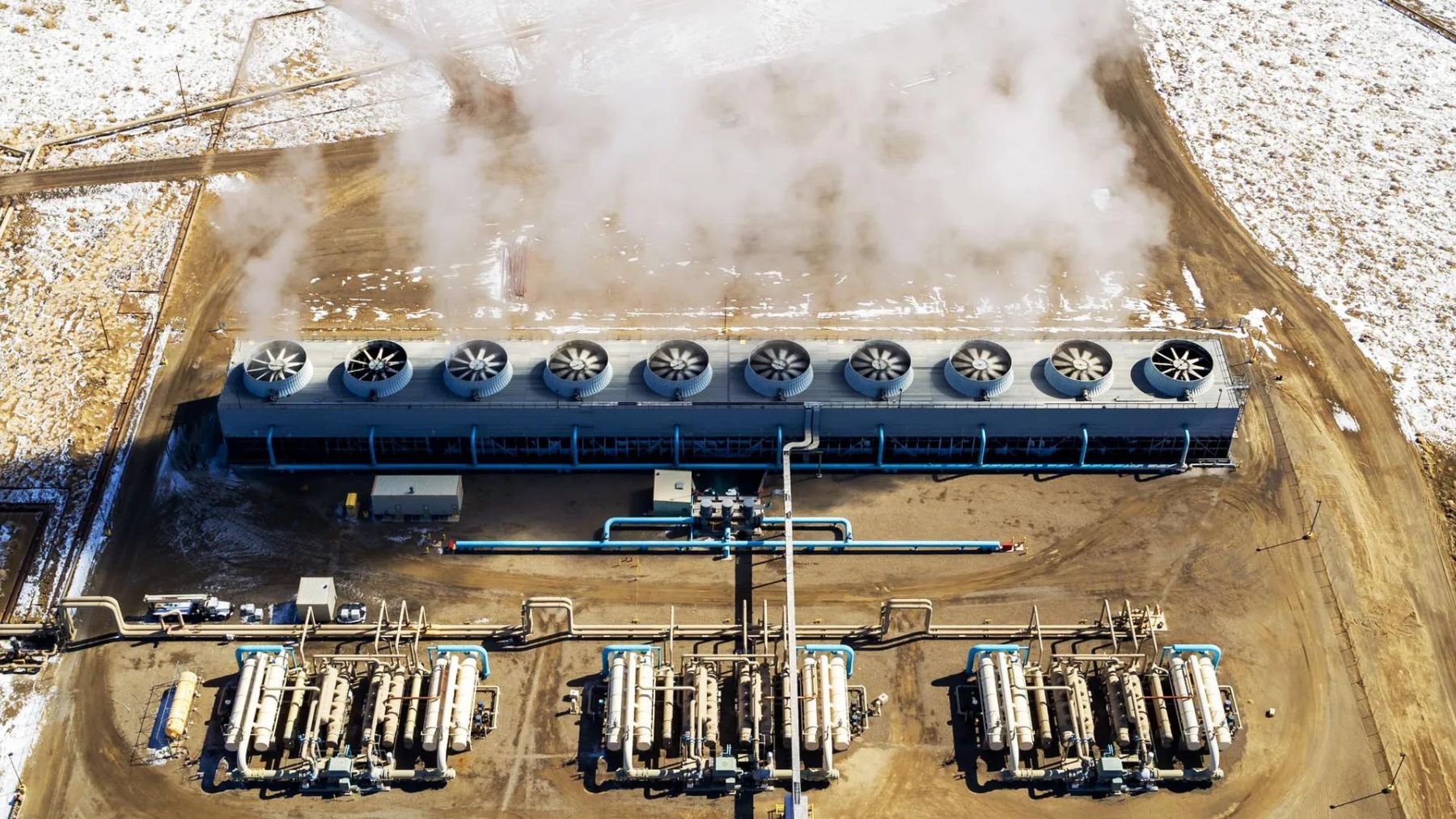
In November of last year, an Internet space was dyed green through a pioneering geothermal operation in the northern Nevada desert. It was developed by the company Fervo and called Project Red. Its action consists of injecting electrons into a local network that includes data centers managed by Google.
The search corporation made an investment in the project two years ago, part of its efforts to run all of its data centers on green energy 24 hours a day. Project Grid is small, generating between 2 and 3 megawatts of power, or enough to supply a few thousand homes.
But it is a crucial demonstration of a new approach to geothermal energy that would make it possible to harness the Earth’s natural heat anywhere in the world.
The Internet achieves a new form of sourcing
Hot rock is everywhere, with temperatures rising hundreds of degrees Fahrenheit in the first few kilometers from the surface. Yet geothermal plants provide only a small fraction of the world’s electricity supply.
This is because they are built especially in places where naturally heated water is readily available, such as hot springs and geysers. The heated water is pumped to the surface, where it generates steam that supplies the turbines.
Nevada’s ‘enhanced’ geothermal system (EGS) works differently. Fervo does not drill into a natural hydrothermal system. Instead, it dug into completely dry rock and formed an artificial hot spring by pumping water that returns to the surface much hotter. Its strategy relies on hydraulic fracturing (fracking) techniques.
Fervo drilled two wells that each extended its activity to depths of more than 2,000 meters before becoming completely horizontal. It then connected them through hydraulic fracturing, generating cracks in the rock connecting the two wells. Water enters cold in one well and exits the other at a high temperature, just enough for the turbines to operate and produce power.
Result of the experiment of the ‘owner’ of the Internet
The result of Fervo’s experiment was a success. It only took a month of testing during which the temperatures at the bottom of the wells reached 375 degrees Fahrenheit (191 degrees Celsius). It circulated enough water to generate about 3.5 megawatts of electricity.
According to the testimony of Fervo CEO Tim Letimer, these numbers have remained relatively stable since then, a fact that suggests that we could be looking at a project ready to be connected to the grid in the long term.
In short, the ‘owner’ of the Internet would achieve a more sustainable way of running its business. This news has attracted as much attention as Google’s latest decision to avoid the global collapse of the Internet.