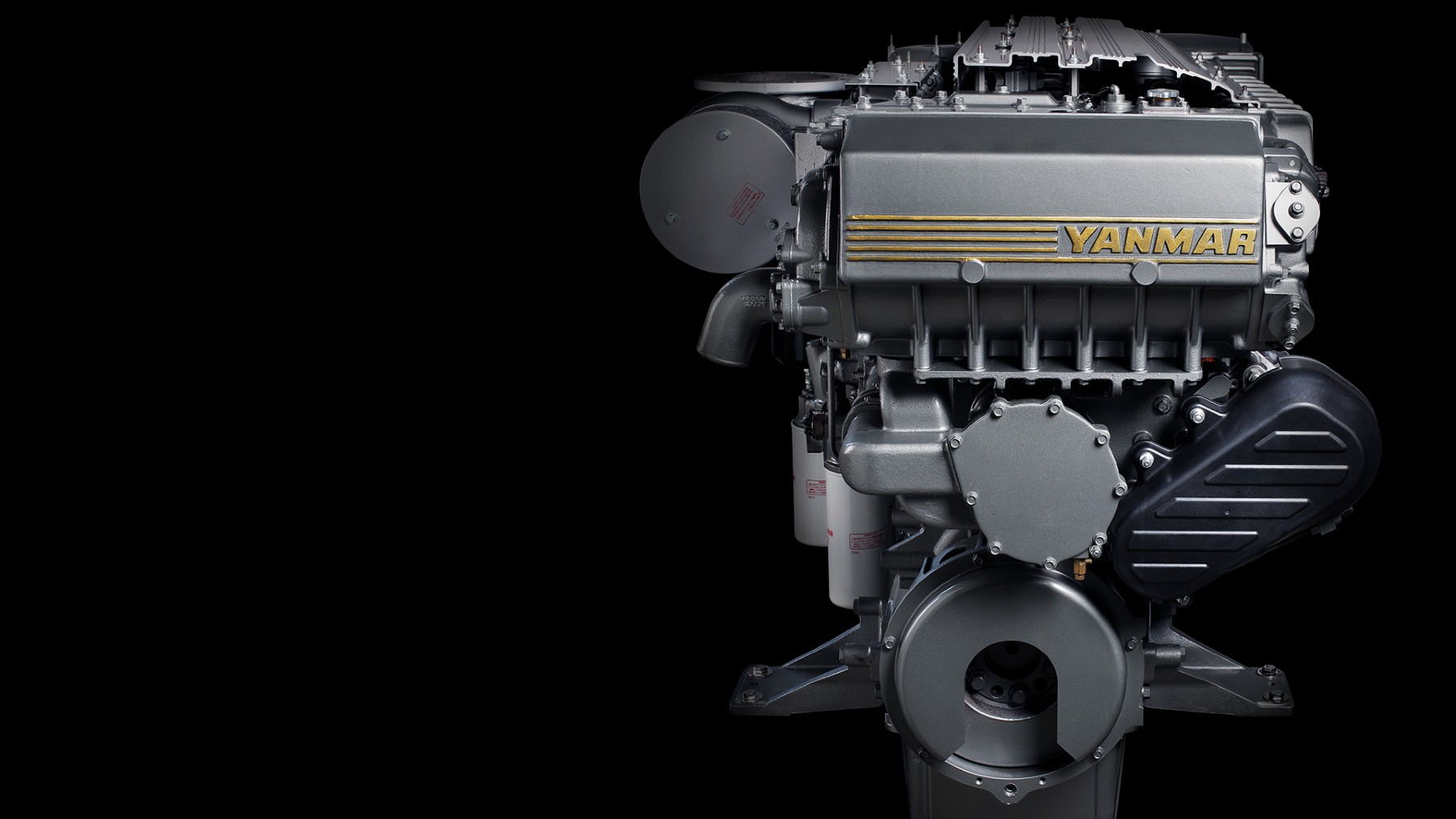
This move presents a historic opportunity in the maritime field as Japan’s Yanmar Power Technology (YPT) has undertaken a pioneering initiative to develop a hydrogen-fired 4-stroke High-speed Japanese engine for coastal shipping. As a flagship project within the demonstration experiment of the Nippon Foundation for decarbonizing the maritime industry, this initiative marks a bold advance toward realizing a zero-emissions operation.
Given the current situation with the shipping industry desperately searching for ways to mitigate the sector’s environmental impact, Yanmar’s hydrogen engine project could be a step towards a realistic perspective for changing the marine propulsion landscape.
Here’s how Yanmar’s hydrogen engine could revolutionize marine propulsion
Yanmar manufactured a hydrogen-fueled engine that utilizes hydrogen as a primary fuel, the complete combustion of which produces no CO2 emissions. The company is developing two versions of the engine: a pilot-ignition engine of a limited proportion of pilot biofuel with hydrogen co-combustion and a spark-ignition single hydrogen engine.
YPT has unveiled the plan to conduct onshore verification tests starting in 2024 for a 6-cylinder hydrogen engine with pilot ignition, which aims to conduct verification operations by 2026. The company will also conduct onshore verification tests the same year utilizing a spark ignition hydrogen-only engine. These efforts are part of Yanmar’s work to obtain society’s goal of no CO2 emissions for coastal vessels, specifically pushing hydrogen energy-based propulsion systems around by approximately 2030.
Why hybrid electric propulsion is key to Yanmar’s ambitious vision
The company established Yanmar Power Technology to develop a hydrogen engine-compatible hybrid electric propulsion vessel alongside the hydrogen engine development. Here, the best practice store positions Herhof’s innovative concept of using hydrogen engine generators in parallel with batteries as an excellent example of integrated sustainable maritime-powering solutions.
An example of technology convergence with hydrogen will be a container unit type of hydrogen power generation on the vessel’s upper deck. The vessel under prototyping and construction is under Uyeno TransTech, a shipping company under the Uyeno Group, a factor that underlines the compartmentalized and integrated structure of the project.
Collaboration is essential: How Yanmar is partnering to advance hydrogen technology
Indeed, this is not Yanmar’s only project in hydrogen technology. Collaboration with other companies is needed to develop and advance the use of hydrogen fuel in marine engines. Last year, Yanmar collaborated with Kawasaki Heavy Industries and Japan Engine Corporation to actively set up a hydrogen engine collaboration for ocean and coastal ships. Yanmar recently inked a Memorandum of Understanding (MOU) with Amogy – a Brooklyn-based firm focusing on ammonia cracking.
This partnership plans to incorporate the ammonia cracking technology into Yanmar’s hydrogen internal combustion engine vehicle (H2ICE) and possibly offer an economical method for hydrogen fuel generation in the market. The collaboration also aims to investigate the prospects of creating maritime hydrogen fuel cell systems, increasing the range of hydrogen-based solutions within the shipping sphere.
Yanmar’s commitment to zero emissions: Transforming the shipping industry
Last but not least, the project of such an innovative engine running on hydrogen also showcases Yanmar as an organization that is actively working to make a change in the field of sustainable marine propulsion. From the use of the hydrogen power generator, this new technology assures the eradication of CO2 emission from the ship engines. This factor has been cited as among the most significant challenges affecting the shipping business.
The ‘system’ approach, which includes the creation of both hydrogen engines and hybrid electric propulsion systems, shows the company’s sincere intentions to offer a flexible solution for the marine industry. Yanmar adheres to its strategy of engaging with industrial partners and developing more advancements in hydrogen technology; the concept of a zero-emission shipping industry becomes more apparent.
Through new improvements, research, and development, along with testing of Yanmar’s hydrogen-fueled engines, the company is positioned to be at the forefront of changing the maritime industry and helping reduce the global maritime industry’s carbon footprint.