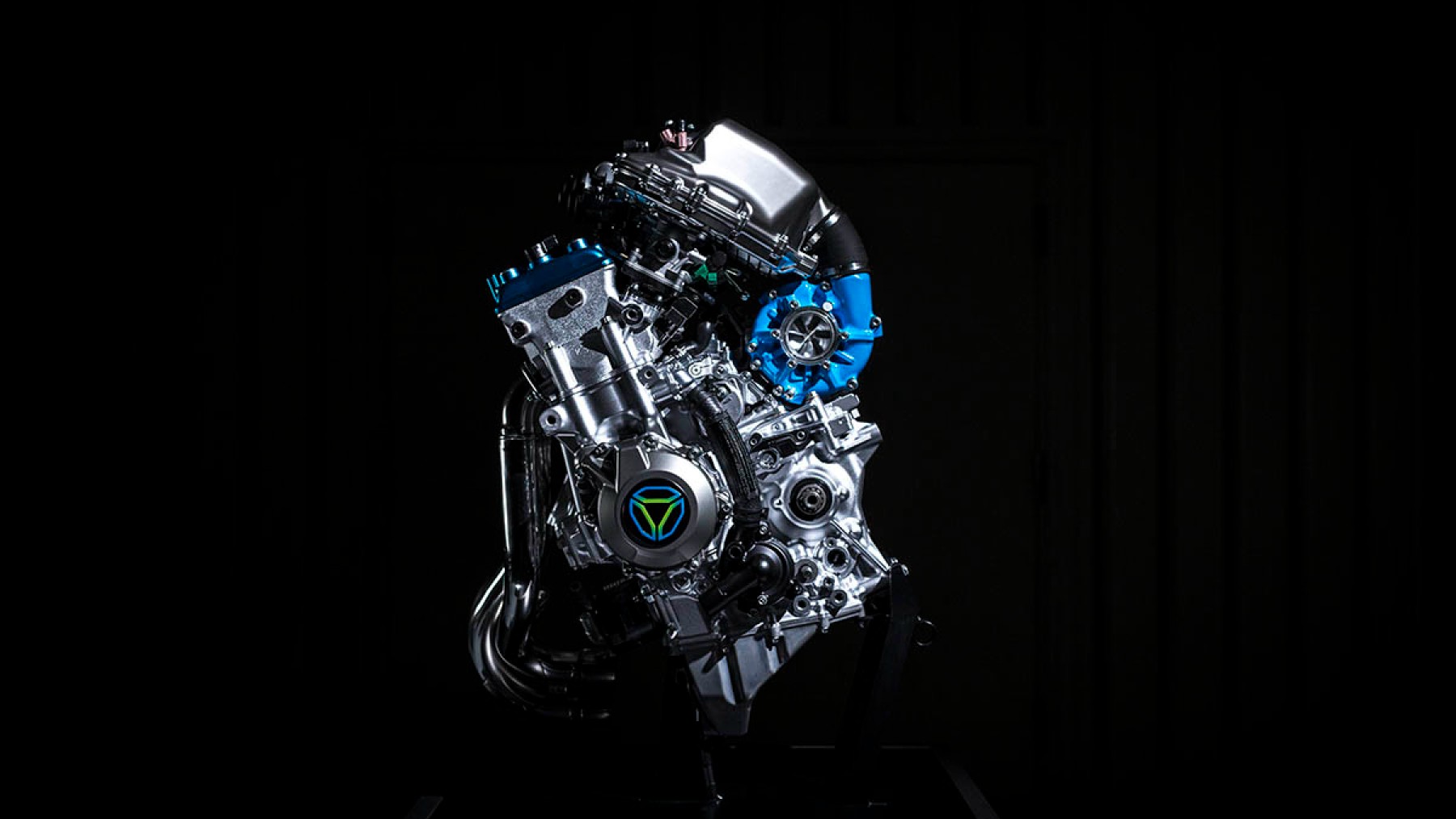
New technology is constantly emerging in the world of motorcycles, and Kawasaki has again set a new benchmark for this invention with the Ninja H2 HySE model. It is a breakthrough motorcycle displayed at World Smart Energy Week 2024, undeniably marking a progression in e-commerce. Unlike traditional gas-operated bicycles or conventional electric bikes, the Ninja H2 HySE is run by a new hydrogen running system.
This continued development demonstrates Kawasaki’s dedication to providing sustainable means of transport and relates to Japan’s aim to encourage a hydrogen society. In the deep analysis of this wondrous contraption, we’ll look into the specifics that will change the motorcycle market and the possibilities this innovation opens up for a feasible future with clean energy vehicles.
The ninja H2 HySE: Breaking new ground with hydrogen power
What Sets This Motorcycle Apart As the concept’s core, the Ninja H2 HySE has an innovative 998cm inline-four hydrogen engine. This powerplant is not a run-of-mill internal combustion engine capable of generating electricity; it uses hydrogen as its fuel. The engine is capable of high-performance output and simultaneously has ‘Zero Harmful Emissions,’ the only emission being water vapor.
This new concept in motorcycle propulsion reconnects the rider to the traditional pistol-grip shifter and rear brake, along with delivering the efficiency and sustainable energy of modern clean technology concepts. Kawasaki’s engineers were able to accomplish this; the creation of this engine entails a myriad of complications, such as modifying fuel injection systems and fine-tuning combustion processes for hydrogen utilization. From these finishes, a motorcycle is meant to provide the best handling and performance but simultaneously with the consciousness of the environment.
Industry-wide impact: How Kawasaki’s innovation benefits the Japanese motorcycle sector
This model of the Ninja series is not only a Kawasaki product but holds a lot of meaning for the Japanese motorcycle industry in general. The companies involved in this hydrogen-powered technology formed in 2008 included Yamaha, Suzuki, Honda, and Kawasaki, who were grouped under the Hydrogen Small Mobility & Engine Technology Hydrogen Small Mobility & Engine Technology (HySE) alliance. This partnership embodies the Japanese automotive industry that has actively incorporated hydrogen technology in the shift towards green mobility solutions.
Each company brings expertise: Honda researches the hydrogen engine, Suzuki perfects the car’s use and endurance, Yamaha examines the process of hydrogen refueling, and Kawasaki studies the distribution method. This leads to the application of technology innovation and establishes new paradigms for the corporate benchmark of cooperation in addressing global environmental challenges.
Overcoming hydrogen fuel challenges: Delays and future prospects in motorcycle technology
Hydrogen Fuel Delays and Opportunities for Growth That is quite a technological advancement, but these problems must be solved before hydrogen motorcycles take over the streets. Even though hydrogen is a clean fuel, the technological challenge inherent in creating hydrogen fuelling stations is one of the important problems that will have to be faced in the future. However, the current number of hydrogen refueling points does not appear as commonplace as gasoline stations, which may affect the usage of hydrogen cars.
However, there are disadvantages, including the difficulty of hydrogen fuel storage and its management due to the element’s properties. They are working on all those issues, such as onboard hydrogen storage, creating necessary solutions, and supplying hydrogen with energy providers. Still, the possibility of developing hydrogen technology in motorcycles is very promising for the following reasons. Beyond the current level of work and development, there is potential to foster the development of hydrogen two-wheelers, which will lead to an increased supply of models in the market within a short period.
The future of motorcycle innovation: What lies ahead for hydrogen-powered vehicles
Thus, the appearance of Kawasaki Ninja H2 HySE is one of the key points in the evolution of the motorcycle industry towards the search for sustainable forms of mobility. Kawasaki has used the technology of producing hydrogen, making this chopper among the most powerful and friendly to the human environment. Some HySE alliance projects show that the industry is willing to delete its eye and start creating value by developing new and sustainable solutions.
The allegation is not completely true, as evidenced by the Ninja H2 HySE, whereby the issues that remain are the advancement of infrastructure and technology regarding the use of clean energy in transportation. This futuristic motorcycle illuminates the next frontier of smart technology and a new paradigm for envisioning personal mobility. As for the further utilization of hydrogen as the fuel for motorcycles, the specific trajectory has remained unwritten. Nevertheless, the future seems promising and full of potential for further advancements as industry actors propel innovation and development boosted by technology.