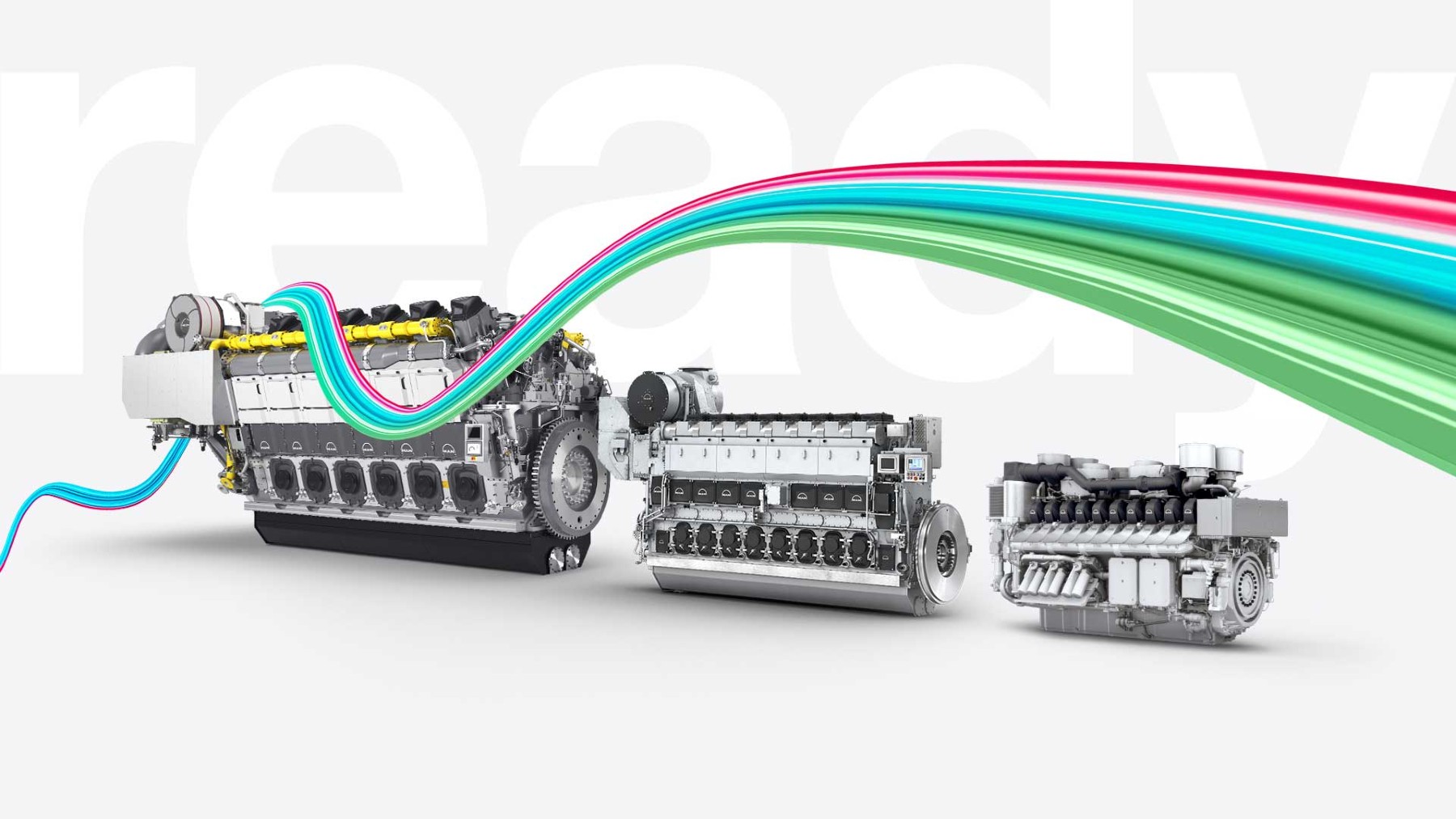
The towage and marine service company, Svitzer, has partnered with the German engine manufacturer, MAN Energy Solutions (MAN ES), to launch a methanol-fueled dual-fuel engine onboard a newly designed tugboat.
This has been a giant step towards finding a solution to emissions in the Harbour Towage operations in line with the Eastman company’s vision of pushing for low-carbon fuels and other related engine technologies. In March 2024, the two Danish companies will sign an MOU to build and trial a methanol-fueled MAN 175DF-M engine.
This engine will be used in one of the Svitzer newbuild tugs as the two companies are ironing out the final details of the trial which will include the fuel supply system, layout of the engine room, exhaust after treatment as well as the optimization of the overall performance of the engine.
Reducing Emissions with Methanol-Powered Tugs
It is, therefore, impeccable that methanol, a low-carbon content fuel, is slowly finding its way into the maritime sector as a fuel that has great potential in reducing emissions of greenhouse gases. This partnership seeks to establish the practicability of methanol in the harbor towage service for which tugs provide the main effort.
Recognizing that methanol and diesel power Svitzer and MAN ES’s vessels are on the same engine, principals hope to demonstrate operational elasticity based on fuel type while working on sustainable practices.
COO of Svitzer, Kasper Karlsen went on record to explain that the organization continues to work to eliminate carbon in its vessels. “Thus, we lowered the CO2 intensity by 24% of our global fleet in 2023, and we will continue our progress both through the use of low-carbon fuels – methanol, new engines, and the constant change of behaviour,” added Karlsen.
The MoU with MAN ES is an important chance to obtain rich field experience in the application of methanol as the fuel for marine engines, and further expand the potential of sustainable marine operations.
A New Era of Tugboat Design: The Transverse Tug
Svitzer has worked with MAN ES in the past, and the two firms have now furthered their cooperation on methanol-sufficient engines.
For the new generation tugboats, Svitzer decided on the MAN 175D engines for its transverse tug design, which is in collaboration with the Canadian naval architect Robert Allan Ltd.
The new generation of tugboats aims at increasing operational adaptability, improving maneuverability, and reducing emission levels. The first of the Transverse tugs is to be launched in 2024 while two methanol-ready tugs are to be delivered in 2025 for service at an Australian port.
The transverse tugs that were developed by MAN come fitted with dual-fuel engines that work on methanol whenever the fuel is available and diesel in other areas of the world.
Svitzer’s tug operation is ideal for field testing for the MAN 175DF-M engine according to Alexander Knafl the Senior Vice President of MAN Energy Solutions since it allows the operator to switch between fuels depending on the performance and availability to minimize emissions.
Dual-Fuel Methanol Engines: A Flexible and Sustainable Solution
The MAN 175DF-M engine is in line with MAN’s long-term vision to design and build flexible dual-fuel homogenous marine engines. It enables vessels to be powered by either methanol or diesel to have flexibility in whichever region the fuel is available.
This approach allows for the vessels to transition to low-carbon fuels such as methanol while at the same time having the ability to use conventional fuels in case this becomes necessary.
The above-discussed growth of methanol-fueled engines corresponds with IMO’s vision to reduce emissions of greenhouse gases from shipping by at least 50% by 2050. Thus, by implementing dual-fuel engines, these performance targets can also be met with acceptable operating efficiency and reliability of vessels such as those operated by Svitzer.
Looking Ahead: Future Field Testing and Deployment
As Svitzer and MAN ES decide on the conditions of the field test, the first trial of the methanol-powered engine is expected to reveal the fuel consumption, emissions, and operational characteristics. This data will then be used in making future designs and possibly any expansion of methanol-powered tugs within Svitzer’s fleet.
Svitzer has entered into an agreement with MAN ES for cooperation, which only proves the increasing number of initiatives made by actors within the shipping industry to transition to cleaner sources of energy and promote low-emission technologies.
The trials could bring about the increasing integration of methanol as a marine fuel engine that could transform the industry’s shift toward a decarbonized economy.