The death of a star can sometimes be among the most spectacular occurrences in the universe. Everyone has heard of supernovae-these are great events in the death of a massive star that blast amounts of energy comparable to that of billions of transfusions. Yet even this has an even more extreme counterpart-the hypernova. What exactly is a hypernova instead of a supernova? And can one even hope to be able to witness these devastating cosmic phenomena?
Hypernovae: One hundred-fold more strong stellar explosions compared to supernovae
Hypernovae are merely extreme supernovae-outshine even more. In stellar explosions, perhaps one hundred times more energetic than an average such event. The star is so primordial that it is well over 100 times the mass of our sun before aging into this phase.
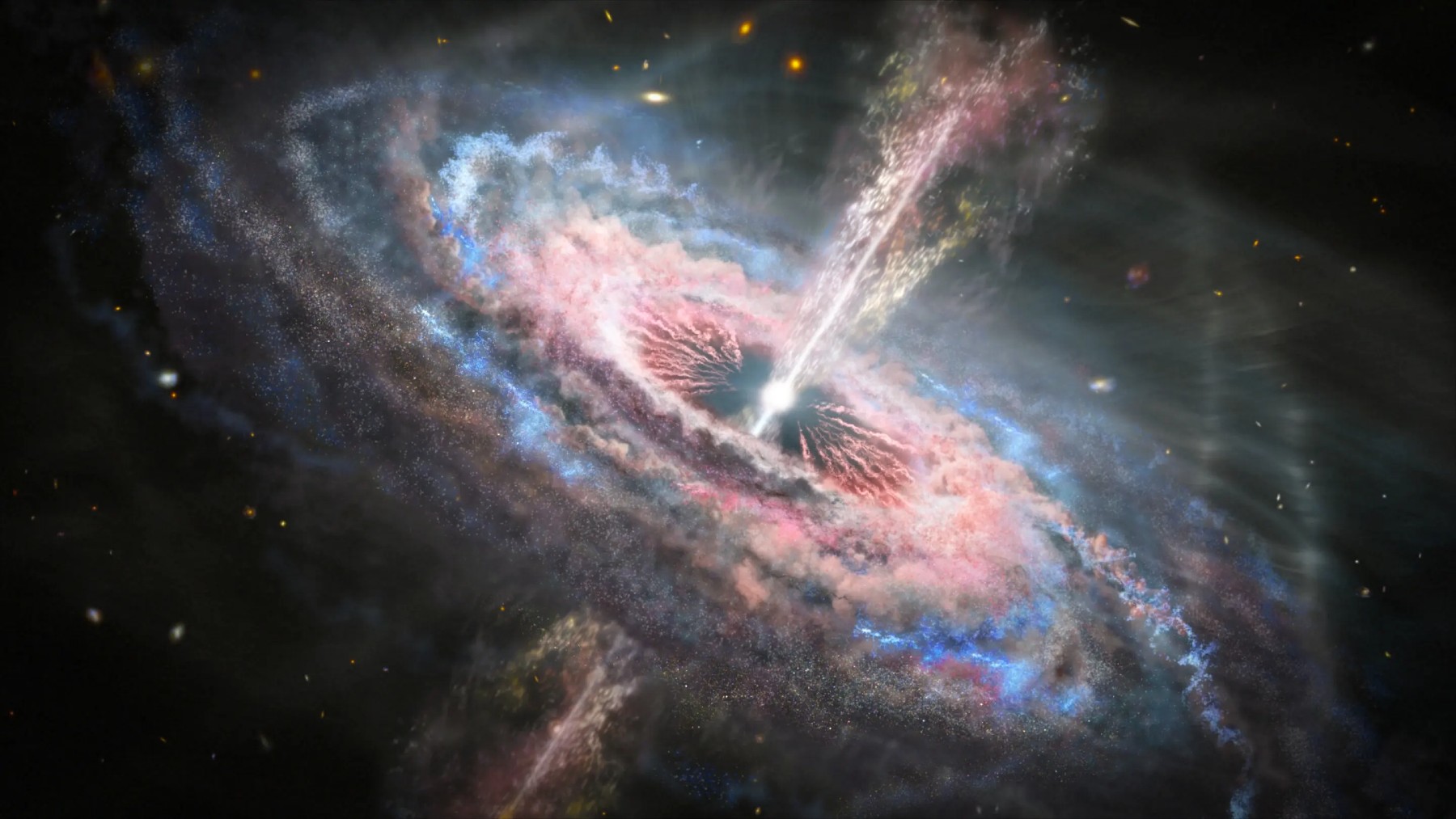
Gigantic stars in dimension-25 times the sun and more-engender hypernovae, usually during collapse into black holes or neutron stars, followed by tremendous explosive violence, intense fusion, and rapid energy radiation. For a while, flares from such explosions can be brighter than the entire galaxy. Hypernovae are associated with gamma-ray bursts (GRBs)-the most energetic explosions in the universe.
The first hypernova was, in fact, identified just a few months after the announcement of a GRB, in 1998. The explosion releases huge amounts of energy, in the form of gamma rays and sometimes also hypernova events, which might be tens of times brighter than a normal supernova. The biggest difference between hypernova and supernova is the energy involved: supernovae might have an energy release of about 10^51 ergs; hypernovae release much more, up to 10^53 ergs.
Novel uncovering: Found ‘cocoon’ in hypernova event shines light on gamma ray bursts
A recent paper written by the Institute of Astrophysics belonging to Andalusia reports that scientists discovered new parts in the aftermath of a hypernova event, which closely attaches and makes the two. The study has been about one hypernova event called GRB 171205A, detected from an approximately 500 million light-years away galaxy.
The researchers found this “cocoon” surrounding the jet, which is an explosion-associated component: when the jet moves through the outer layers of the star, it creates that cocoon. According to this study, this cocoon is an essential ingredient for understanding gamma-ray bursts related to hypernovae.
It should also be clarified that this cocoon component provides energy to the gamma-ray burst as the jet propagates through the star’s outer layers, but not all hypernovae do gamma-ray bursts. In some cases, the jets do not pierce through the star’s outer layers and may even have a hypernova without a related gamma-ray burst.
That has prompted the consideration of different models in explaining why supernovae tend to be so. This means that perhaps a lot more important should be thought of in future models regarding the role of the jet and cocoon in such massive stellar explosions (such as this one filling up a country).
The detection of a hypernova: Early sightings unveil the elusive ‘cocoon’ component
Observing a hypernova event is a difficult to impossible endeavor. The explosion is sometimes so extraordinarily energetic that it can outshine everything else in the galaxy, yet it strictly requires precise timing to detect a hypernova at just the right moment.
As for GRB 171205A, astronomers happened to capture it well within a day of its occurrence, just at the close of the star’s life. This very early observation told scientists much about how the hypernova behaved, enabling the team to discover the cocoon component, never witnessed in any hypernova event.
Expected velocities of expansion for the material around the cocoon were greater than predicted, with concordance of elemental or chemical species different from that seen in analogous events. This was vital information regarding the insides of the star and the conditions that lead to such extreme explosions.
The cocoon discovery is thus a milestone in the understanding of the true mechanics of hypernovae and GRB. Hypernovae erupt are extreme cosmic events, which are more energetic (like this star-eating killer) than supernovae and frequently associated with gamma-ray bursts.
With the discovery of a cocoon that shrouds a hypernova jet, even new views have been opened on existing models related to stellar explosions. Unraveling and revealing the deepest mysteries of the universe, research moves on learning more about these powerful phenomena.