Picture an environment with almost inexhaustible and renewable energy sources: no emissions, no hazardous dumps. This vision may not be far from reality, as NASA sets its sights on an extraordinary fuel source located on the Moon: helium-3.
It was once considered only as a theory, but now helium-3 nuclear fusion is fueling global aspirations as scientists and space agencies, including NASA, look to harness this lunar asset.
Understanding the significance of helium-3 for clean energy solutions
Helium-3 is an isotope of helium that is rare but has specific potential for a type of nuclear fusion. The helium-3 fusion reaction does not produce the same type of radioactive waste as a conventional uranium or plutonium nuclear reactor, nor does it produce long-lived residue.
This non-radioactive fuel is well sought after in fusion energy because it provides a cleaner and safer means of generating a lot of energy. However, there’s a catch: helium-3 is rare on Earth, though it has been found on the surface of the Moon, accumulated over billions of years by the solar wind.
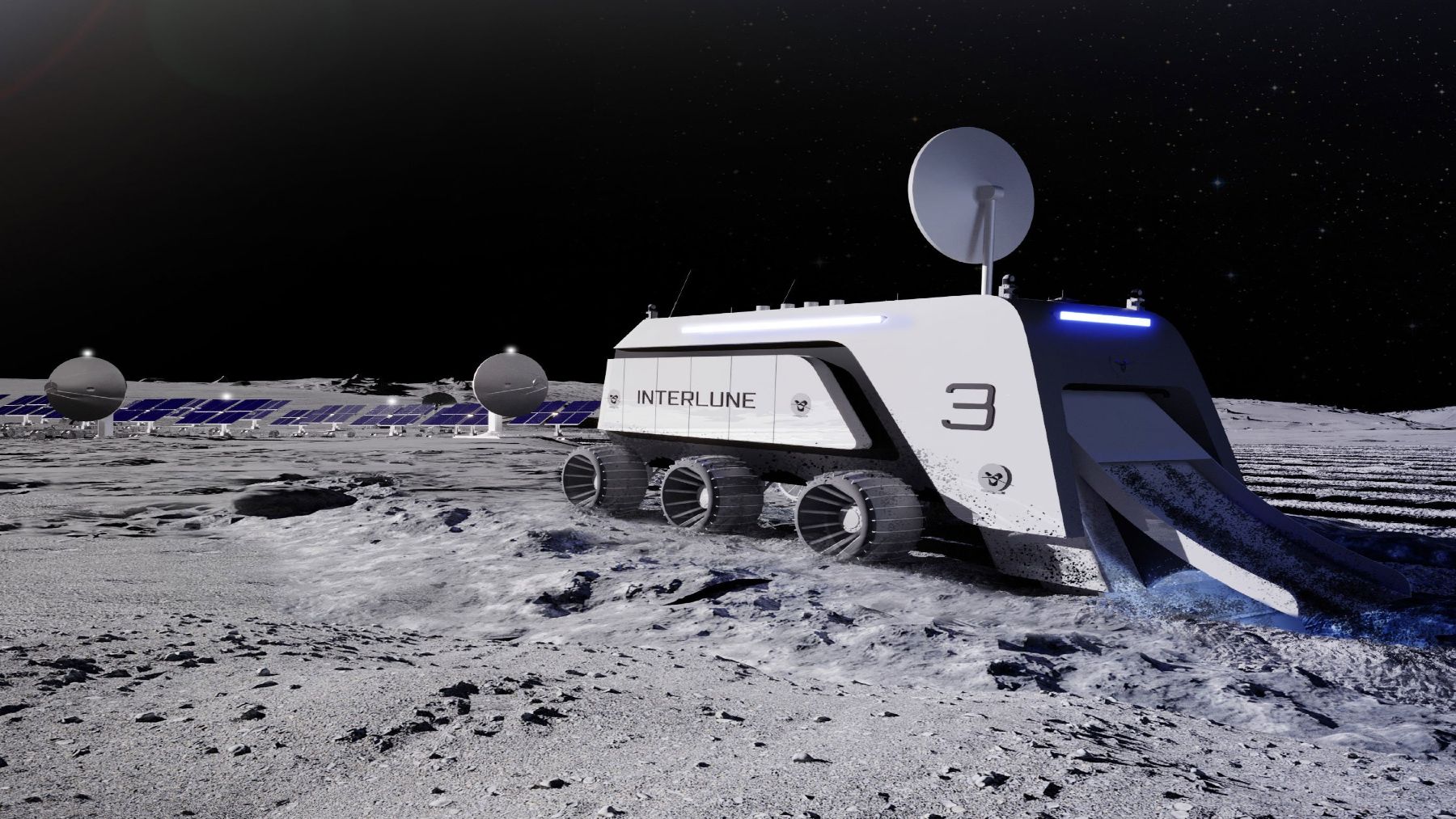
Extraction of helium-3 from the lunar surface is not an easy task, and it is expensive. According to the lunar rock samples, helium-3 is present in the lunar soil, or regolith, in an amount of only 10 ppb. To obtain usable quantities would mean having to mine large swaths of the lunar surface and inventing exotic equipment to extract the isotope from the moon dust.
Nevertheless, there are some difficulties, but scientists hope that modern technologies, robotics, remote sensing, and magnetic containment will allow the extraction and transportation of helium-3 back to Earth.
The role of NASA’s Artemis program in lunar mining endeavors
NASA’s Artemis program of sending humans to the Moon is a step towards these possibilities. Artemis’ end vision is to create a permanent human presence on the Moon, thus preparing for future mining and potentially bringing helium-3 to Earth. Artemis is not just a trip to the Moon but a new race tied to the value of resources that can be mined on the lunar surface.
Similar goals are being prepared by countries such as the United States, China, and Russia. For instance, China has already carried out experiments with lunar helium-3 in its Chang’e missions and plans to continue the experiment. Cooperation with countries such as Japan or Australia provides evidence of collaboration in this new epoch of space activity.
Artemis’s goal is to put in place the elements necessary to build a human base, including habitat construction and robotics for mining. Currently, one of the most promising breaches of the traditional approach is the creation of lunar structures using 3D printing, which overcomes the delivery of construction materials from Earth orbit.
Once initial permanent facilities are established, the moon base can serve as a starting point for continued exploration of the satellite and potentially start a lunar mining industry.
Emerging technologies bringing helium-3 fusion closer to reality
Helium-3 fusion is still far from commercialization; however, recent developments show that it may be here. According to stakeholders’ reports, Commonwealth Fusion Systems, a US company, produced a 20-Tesla magnetic field with a superconducting electromagnet that used a high-temperature superconductor in 2021.
This development may bring the dream of sustainable nuclear fusion one step closer to reality. Magnetic containment is particularly important for helium-3 fusion because it allows maintaining the reaction in stable conditions while preventing the discharge of the additional energy that could destroy the reactor.
Helium-3 fusion could deliver energy yield capabilities that are way beyond traditional nuclear fission. As it turns out, only 25 tons of helium-3 is enough to fuel the United States for a year. If optimally exploited, this lunar resource has the potential to revolutionize energy generation globally by shifting away from fossil fuels to clean sources of energy.
The journey of bringing helium-3 to Earth is not only scientifically complex but also costly to achieve. Building the infrastructure and starting extraction on the Moon is going to take billions of dollars, and even the profits are unpredictable. While the idea of lunar mining may thrill science fiction enthusiasts, others point out that, in the short term, Earth’s renewable resources could still be cheaper to exploit.
Another layer of complication involved in lunar mining is legal. Current United Nations international legal instruments, such as the Outer Space Treaty of 1967, refer to the Moon as a ‘space’. With the increasing interest in lunar resources, these regulations might require updates to address the issue of responsible extra-terrestrial mining. One idea proposed by some advocacy groups is that the area should be reserved for scientific uses only, similar to Antarctica.
The promising future of lunar energy in shaping global energy needs
Helium-3 mining on the Moon and its transfer to Earth is both a scientific achievement and a global aspiration. As nations and private companies continue pushing their stakes in lunar exploration, the dream of having virtually limitless clean energy gets closer.
While NASA’s Artemis program is spearheading the charge, other international actors are also joining in. The Moon could soon be humanity’s next source of great energy.
However, challenges remain to be faced. The prospect for helium-3 fusion is limitless. This new frontier could very well provide the answer to continuing global energy requirements and revolutionize the way we light up our world and fuel our civilization in the process, taking us into a brighter and cleaner era.