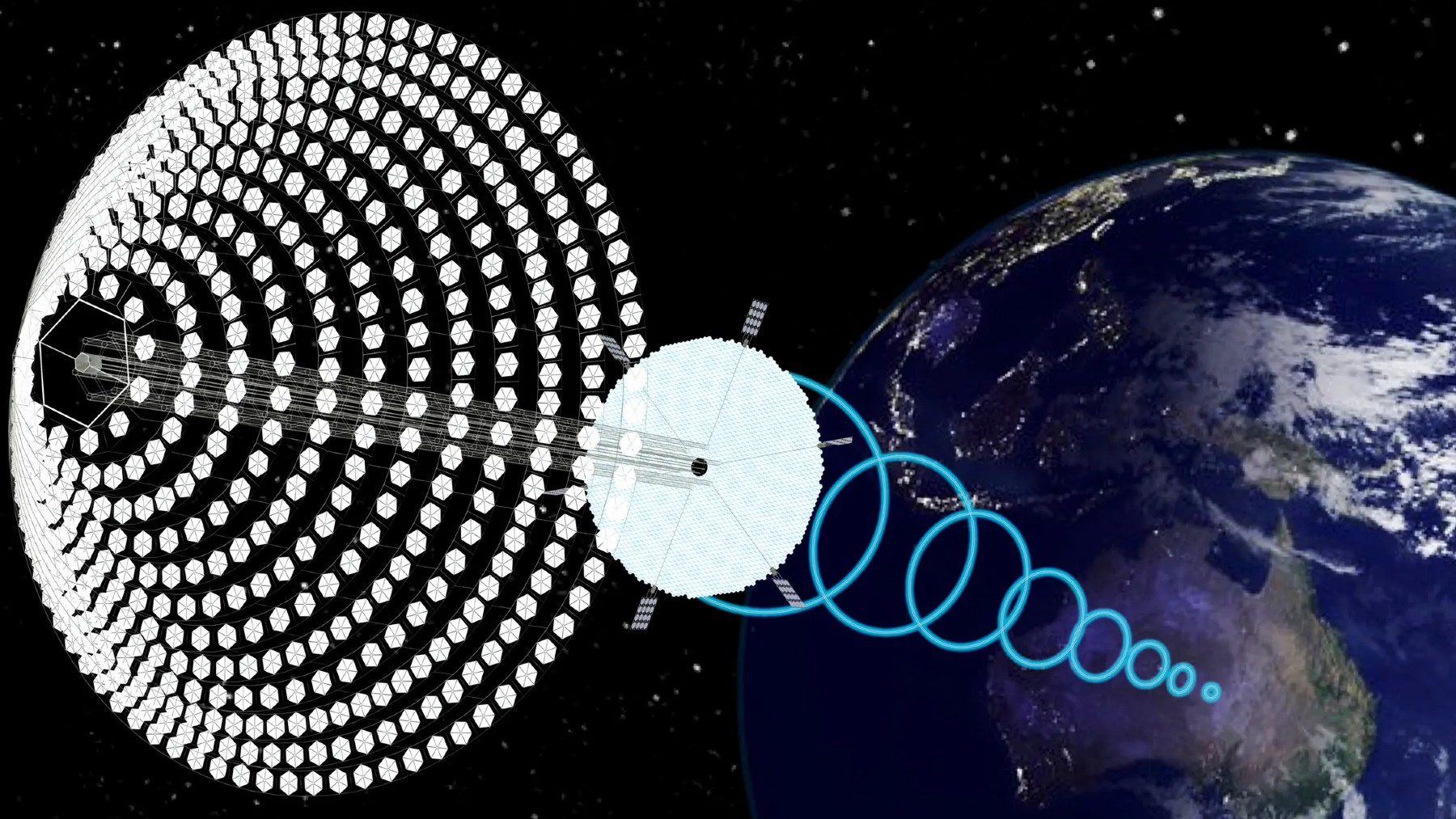
With the worldwide demand for alternative clean and plentiful energy rising tremendously day by day, innovation is a must; such is the case with Space-Based Solar Power (SBSP), one of the most promising yet controversial concepts; that is, obtaining solar power in space and beaming it wirelessly down to the Earth would change energy transmission forever.
Orbiting panels produce 24/7 solar power: Outrunning terrene systems
The persistent energy collection characteristic distinguishes them from terrestrial solar surrounded systems. Because the sunlight incidence is without interruption for clear and cloudy weather or nighttime illumination, an orbiting solar panel collects up to 13 times the energy that generates in its land counterpart.
SBSP may be a reliable form of baseload energy, complementing the volatility experienced with other traditional renewables like wind and solar. Such reliability enables a move away from fossil-dependent “peaker” plants and less reliance on resource-heavy terrestrial solutions.
In addition, SBSP affords scalability. It would mean that using microwaves to export energy will not require bulky infrastructure but still be able to send energy across the globe. A study from Imperial College London found that just by including 8 GW of SBSP into the UK’s energy mix, the country would save over £4 billion in annual costs.
According to proponents such as Martin Soltau, they find SBSP aligning well with the whole-energy-system argument and hence a less mineral-dominated, cleaner, and safer future energy system (just like this one which works with the moonlight).
From idea to reality: Confronting the technical challenges of SBSP
Notwithstanding its sweet promise, SBSP has several difficulties that have kept it from making genuine progress as a program. The costs of launching and orbiting large systems in geostationary orbits are still prohibitively expensive.
The Office of Technology, Policy, and Strategy (OTPS) within NASA recently brought forth these concerns by claiming that SBSP would have been more expensive than terrestrial options in its early conception phases. Supporters, however, would have it that such assumptions were overly conservative, pointing to expected launch cost reductions driven by advancements such as SpaceX’s Starship, which could lower costs to $100/kg by 2040.
Technical challenges are yet another hurdle to be surmounted. Breakthroughs in autonomous operations as well as in-orbit assembly and, not least, efficient power-beaming technologies must be realized in any effort to build and maintain huge structures in space.
Moreover, the thermal swings involved and the durability of the system over decades pose complex engineering challenges. However, proof-of-concept power-beaming and scalable satellite designs have seen their first commercial success through companies like Space Solar, signaling that important progress is being made toward solving such technology hurdles.
From impractical to the standard purely peculiar: The process of SBSP evolution
Though SBSP is often called impractical by skeptics, the history of technology suggests otherwise. From reusable rockets to cubesats, both inventions were once deemed unpractical, but are now standards in the industry. In the same way, SBSP might become common with continued investment, cooperation, and innovative strides.
Governments, international organizations, and private enterprises need to collaborate in policy initiatives to close any remaining capability gaps. Indeed, NASA’s studies on autonomous systems in space manufacture and wireless power transfer have laced the foundations of SBSP development.
Proposals to further assess the lunar applications of SBSP seethe in evidence of its potential as a multifunctional technology. Visionary Leadership. The UK, for instance, has become a leader in SBSP, as embodied in Space Solar’s CASSIOPEIA satellite, which has a good chance to prove its commercial viability by 2029.
This will show how bold investment in SBSP can motivate new generations to take an interest in engineering and science while bringing untapped energy markets around the globe into existence. Clean, continuous energy from anywhere around the globe (just like this one which has impossible material) is what space-based solar power promises.
It poses challenges but for its promised potential benefits, it becomes a key investment in energy transition. As evolving technology keeps making costs fall, SBSP could rapidly move to become a pillar for sustainability innovation.