Scientists in the fusion energy field demonstrate intense interest in using negative triangularity in tokamaks to transform the technology. The SMART tokamak has experimentally proven this creative method, showing great promise in boosting plasma stability and confinement for more powerful miniaturized fusion reactors. An analysis of this disruptive technology follows below.
Shape effects in fusion energy are paramount, as demonstrated by the SMART tokamak.
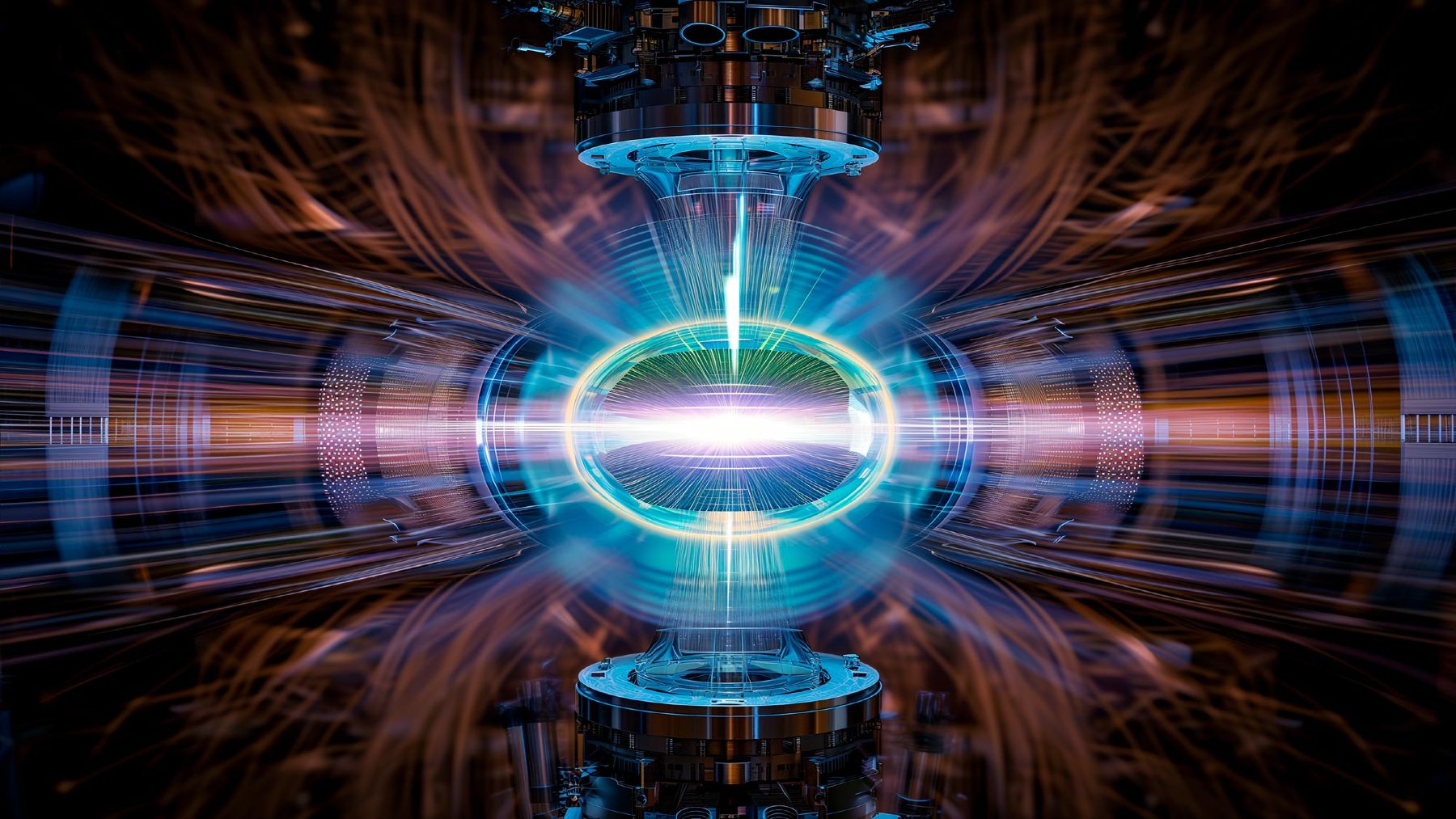
The University of Seville-led SMART (Small Aspect Ratio Tokamak) project succeeded in its initial plasma generation. This experimental plasma device stands out because it can manipulate plasma shape, especially by producing negative triangular plasmas. The plasma configuration’s curved section toward the tokamak centre demonstrates improved operational efficiency by blocking the standard plasma disposals of particles and energy.
The principal investigator for the SMART project, Professor Manuel García Muñoz, highlighted this achievement as marking the start of the operational phase for SMART. The research will achieve the smallest possible fusion reactor design by merging spherical tokamaks and negative triangularity with high magnetic fields.
Negative triangularity refers to the shape of the plasma within the tokamak. The traditional capital D shape of plasma cross-sections used in tokamaks features a straight portion that points toward the centre, which is known as positive triangularity. Negative triangularity yields a shaped plasma with rounded sections oriented inward to minimize instability effects on the tokamak wall structures.
The collaborative effort among organizations worldwide has accelerated the pace of tokamak advancement.
The revolutionary shape represents a major opportunity to reshape the future of fusion reactors. The design exhibits powerful fusion operation alongside high energy capacity, making it an advantageous concept for developing compact fusion reactors. The SMART tokamak serves as the first spherical tokamak for comprehensive negative triangularity investigation, setting new standards.
Fusion research benefits from worldwide collaboration through the implementation of the SMART project. The University of Seville collaborates with the Princeton Plasma Physics Laboratory (PPPL) to access their specialized knowledge about magnetics sensor systems and simulation software knowledge bases. The partnership contributes to SMART tokamak development by guaranteeing its performance excellence alongside operational security standards.
Manuel Garcia-Munoz, together with Eleonora Viezzer, served as co-project leaders of SMART. They recognized that universities require designs within their financial reach while creating distinctive additions to fusion research dynamics. Spherical tokamaks linked with negative triangularity have proven to be extraordinary because they revolutionize possible fusion energy boundaries.
A step closer to compact and efficient fusion power
Multiple innovative concepts in the SMART tokamak design work together to improve plasma confinement effects and stability performance. The spherical shape of SMART proves vital in plasma confinement because it minimizes unstable fluctuations while promoting standardized heat distribution. This new design strengthens the tokamak’s operational efficiency and performance, making it realistic for development as a future fusion reactor.
The team at PPPL has operated as a fundamental force in SMART’s development process by supplying diagnostic expertise and developing simulation software. Through their partnership, the team created two important diagnostic tools and a Thomson scattering diagnostic system for plasma electron temperature and density evaluation. The SMART tokamak requires such advancements to guarantee its future long-term operational success and reliability.
The scientific community received a substantial breakthrough toward fusion energy development.
The SMART tokamak reached a major scientific achievement through its plasma generation milestone. Negative triangularity transforms fusion energy by presenting researchers with an innovative method to design more efficient and compressed fusion reactors. The future development of the SMART project will generate important technological innovations along with crucial insights which will establish the direction of future fusion energy.
Negative triangularity in tokamaks is an instructive advancement in fusion energy research. The SMART tokamaks demonstrate this concept, which has achieved what experts labelled shocking while establishing new energy possibilities for the future. Because of ongoing efforts between scientists and innovators, the pursuit of fusion energy as a dependable sustainable power system draws nearer.