As the world grapples with the uncertain future of climate change effects, the transportation industry is facing these challenges head-on. With new alternative engine solutions being advanced each year, we are one step closer to discarding the internal combustion engine in favor of more renewable solutions. While electric vehicles have been the favored engine solution, hydrogen engines are fast becoming a popular alternative, showing potential in particular for long-haul vehicles.
Hydrogen grows in popularity.
The hydrogen engine has continued to grow in popularity over the past decade. Efforts by Japanese automobile companies, in particular, like Toyota and Hyundai, have advanced hydrogen fuel-cell technology, putting vehicles on the road that are pushing automobile technology into the future and diversifying the renewable energy solutions available to consumers.
Toyota has long been seen as a leader in hydrogen fuel-cell technology, working towards a goal of zero emissions from all its vehicle models by 2050. Hydrogen fuel-cell vehicles are expected to play a major role in this, as well as their lineup of electric vehicle solutions. However, the company faces challenges with regard to convincing its consumer base to embrace hydrogen technology, with its star hydrogen model, the Mirai’s sales falling worldwide. Last year, the Mirai had fewer than 2,000 sales worldwide, which is a low number indeed.
New innovation by SwRI sees hydrogen in the spotlight
While hydrogen fuel-cell solutions in automobiles have been criticized by some members of the scientific community, they do hold significant potential for heavy-duty trucks as opposed to regular passenger vehicles. The trade-off between weight and range is one of the main reasons for this. Long-distance trucks require very large and heavy batteries to achieve the necessary range, which would reduce cargo capacity and efficiency. However, hydrogen has a far higher energy density, allowing for greater range at lower weight, making it perfect for long-distance transportation of big loads.
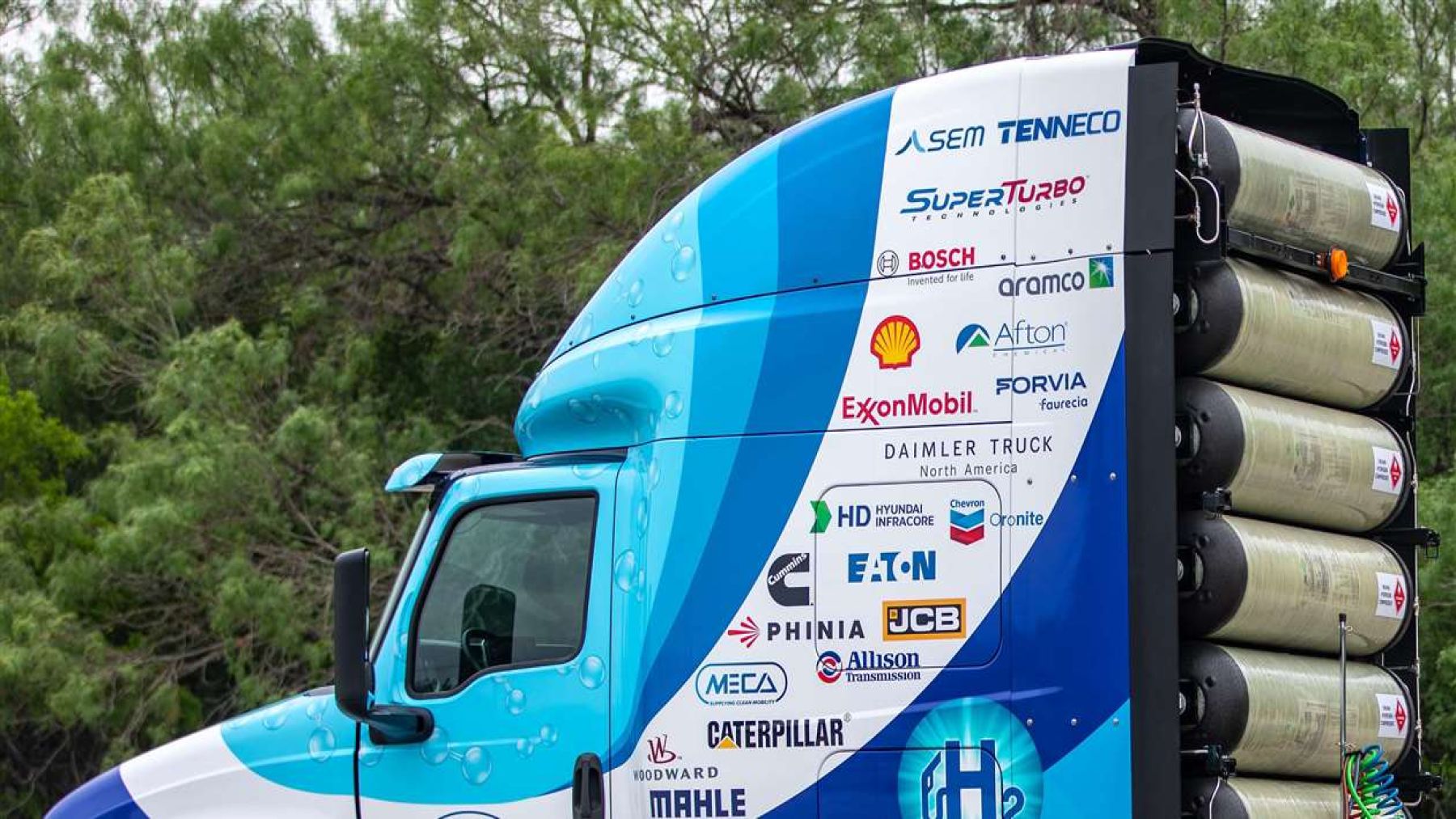
The Southwest Texas Research Institute (SwRI) is one innovator following this logic. The company recently completed a successful build of its hydrogen internal combustion engine. The engine can power a commercial truck carbon-free, a game-changer for the heavy-duty trucking industry across the globe.
The company has now moved into phase two of their hydrogen internal combustion engine, which involves testing and improving the vehicle’s performance in real-world conditions. The idea is to show that this hydrogen truck isn’t just a cool prototype, but a practical, reliable, and zero-emission solution that could be used in today’s trucking industry.
“We’re always trying to anticipate where problems are going to arise in the future, and develop solutions for those arising problems, whether they be in the government sector or the commercial sector,” said Adam Hamilton, president and CEO of SwRI.
How do hydrogen ICE engines work?
The H2-ICE vehicle boasts 2,025 Newton-meters (nm) of torque with the 370-horsepower engine. Engine efficiency peaks at 43% and is above 40%. Only trace levels of carbon emissions, or roughly 1.5 grammes of CO2 per horsepower-hour (g/hp-hr), have been detected in the exhaust. The engine is powered by a combination of hydrogen, electricity, and water.
The fuel cells use a process of electrolysis to split H2O (water) atoms into hydrogen and oxygen. The hydrogen is then used to power the vehicle’s electric motor while producing water as the only byproduct instead of harmful carbon emissions. The engine essentially operates through the chemical reaction of hydrogen and oxygen to generate electricity, which then powers the vehicle’s engine. Hydrogen engines have shown increasing promise over the past decade, highlighting the importance of diverse engine solutions to decarbonize the planet and providing solutions to move away from the internal combustion engine and harmful fossil fuels.