Hydrogen-powered engines are quickly gaining attention not only in passenger vehicles and trucks but also in the motorcycle industry, offering a promising alternative to traditional internal combustion engines. As automakers and transportation companies explore sustainable fuel options to reduce carbon emissions, hydrogen technology is emerging as a viable solution for a range of vehicles, including motorcycles. With their ability to provide high energy efficiency and zero-emission operation, hydrogen-powered motorcycles are being developed to offer a cleaner, more environmentally friendly option for riders, opening up new possibilities in the world of green transportation.
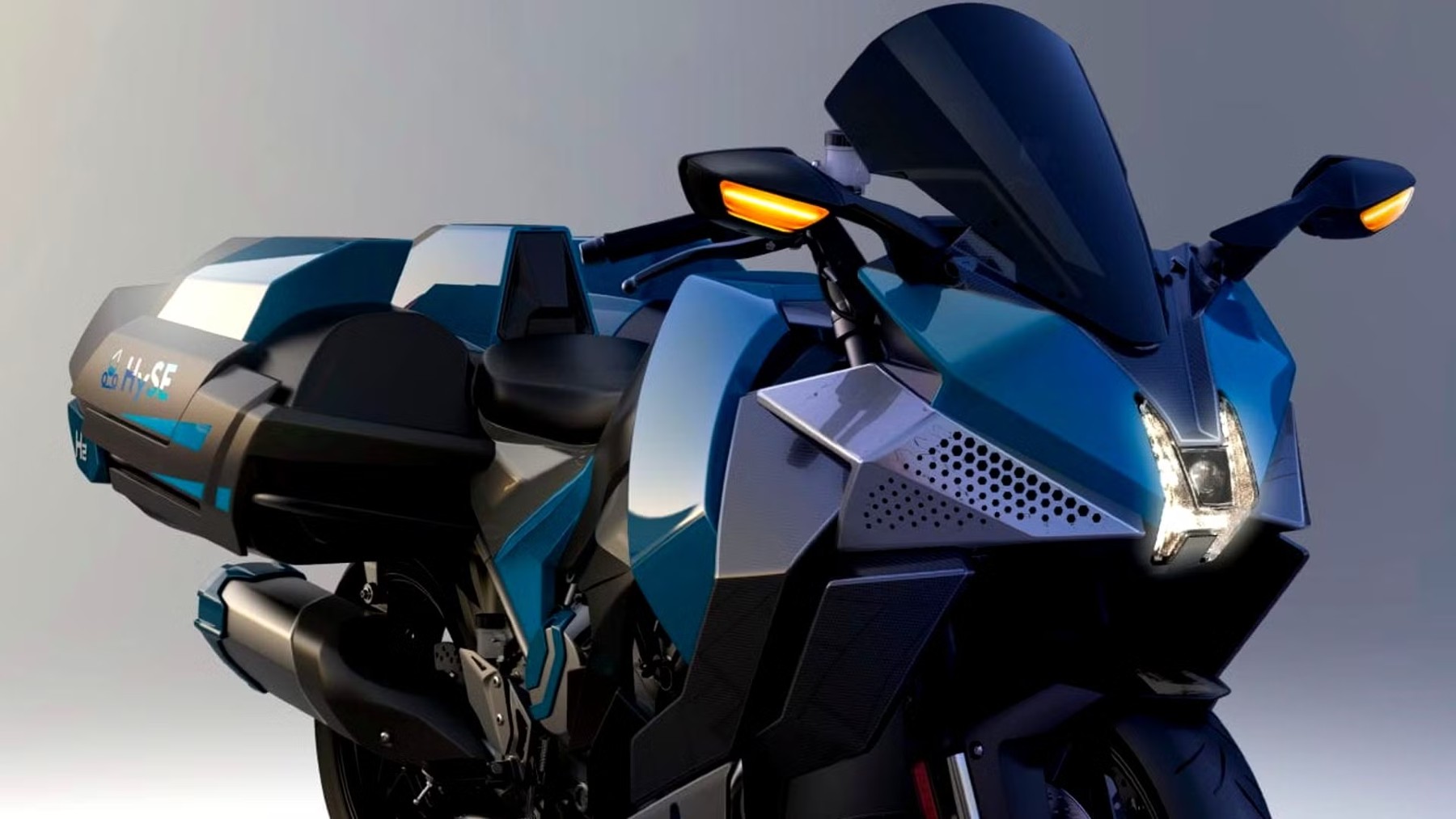
New hydrogen-powered motorcycle by Kawasaki
Kawasaki is a multinational corporation that manufactures a wide range of products, including motorcycles, ATVs, and watercraft. Earlier this year, the company presented a motorcycle which runs on hydrogen fuel. However, in a surprising turn of events, the bike does not run on hydrogen in the traditional sense. Generally, hydrogen engines operate through the use of fuel-cell technology. However, in this innovative twist, Kawasaki’s motorcycle has an adapted internal combustion engine which uses hydrogen as fuel instead of gasoline.
The hydrogen-powered motorcycle was showcased during the 8-hour endurance race at the Coca-Cola Suzuka event in July of this year. It features a hydrogen fuel supply system, with components positioned at the rear to resemble rigid saddlebags, ensuring the vehicle’s design remains largely unaffected by these additions. As the combustion of hydrogen produces only water vapor, the motorcycle eliminates all harmful emissions, contributing to a cleaner, greener form of transportation.
While the model was received well, it was only a prototype. However, Kawasaki has confirmed that they plan on making the model available for purchase by 2030. Kawasaki notes however that the release will depend on the availability of charging points and hydrogen itself within the next five years. One of the largest problems the automobile industry is facing with regards to widespread adoption of hydrogen is availability of refueling stations.
Hydrogen innovation is seen across the automobile industry
Hydrogen technological innovation in the automobile world is being seen across different major automobile brands, private industry, and even government initiatives. Kawasaki is not the first company to consider the potential of adapting already existing internal combustion engines to run off of hydrogen instead of fuel. One of the major advantages of going down this route instead of using fuel cells is that is becomes more cost effective than developing a new fuel cell vehicle from the ground up.
Major automobile companies like Toyota, Hyundai, Honda, Volkswagen, Mercedes-Benz, and Volvo have already developed, or are in the process of developing their own passenger vehicles to run on hydrogen, however these engines operate using fuel cell technology. While fuel cells offer high efficiency and zero emissions, they require complex and costly components such as electrolysis systems and hydrogen storage tanks.
These technological complexities have led to challenges in scaling up widespread production and reducing costs. In contrast, adapting traditional internal combustion engines to run on hydrogen could offer a more cost-effective solution, utilizing existing infrastructure and technology, and providing a potentially faster route to hydrogen-powered vehicles for the mass market.