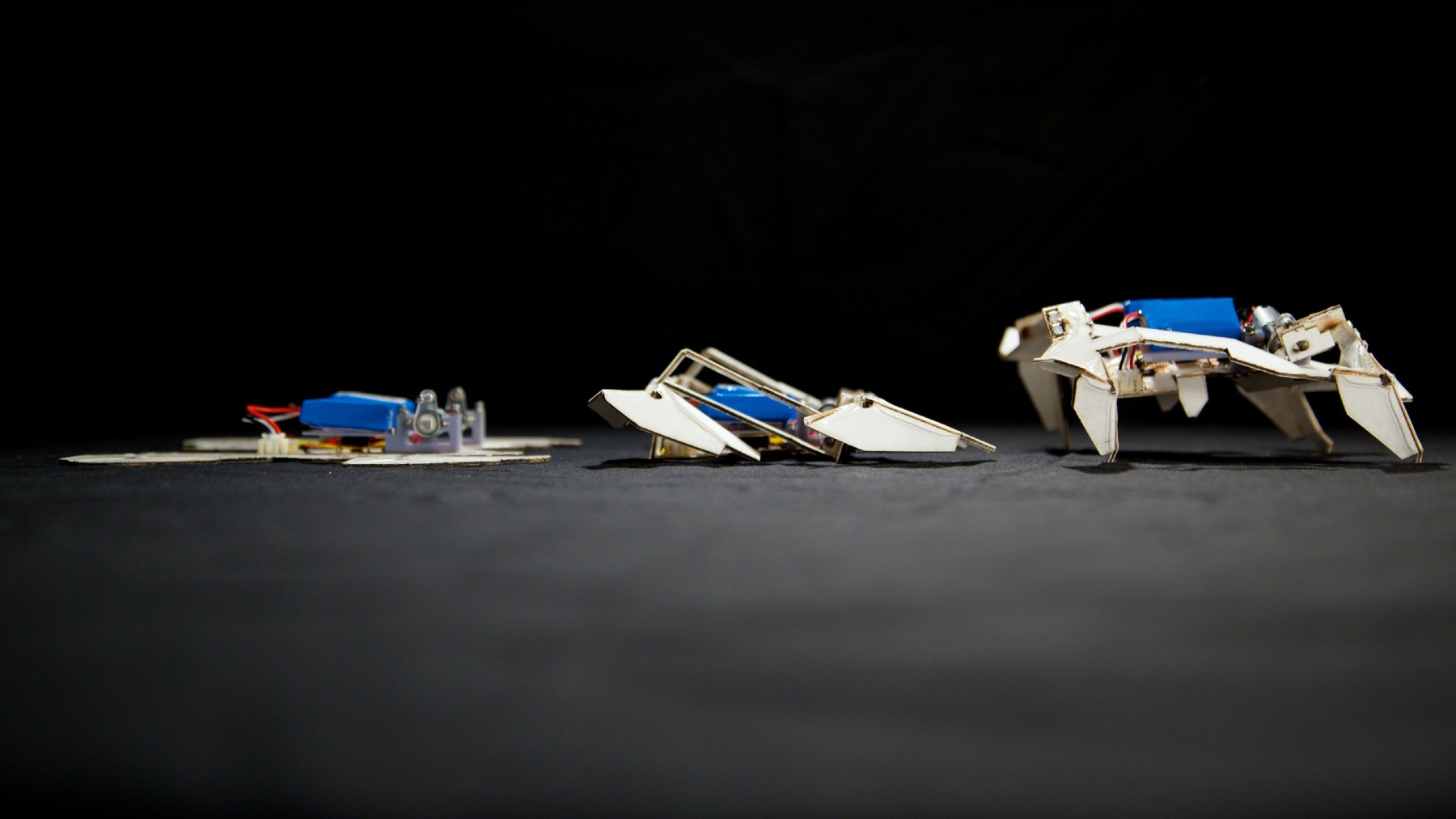
Scientists have made a breakthrough in science fiction, which has become a reality, by creating the world’s first semi-human robot in a fusion of art from the Stone Age and advanced technology in today’s society. This new creation that includes precision and can be intricate can change medical procedures for the better, bringing tremendous improvements to surgery and other aspects of healthcare. This is a semi-human origami-inspired robot for surgical operations, and this is just the start of a new epoch in medicine, introducing topics once in science fiction stories.
Precision technology meets ancient art: how origami principles are shaping robotics
It is hard to think of any art form that could be removed from robotics more than origami, the classic Japanese art of paper folding. Harvard Wyss Institute for Biologically Inspired Engineering and the John A. Paulson School of Engineering and Applied Sciences have developed a robotic arm containing joints and actuators activated and controlled by the magnetic field.
This semi-human robot employs the principles of folding, as used in origami, to make the robotic figure bend in precise manners that are similar to human structures. Surprisingly, its simplicity is the key to its functionality. The folding motion described here is not only precise and reproducible.
Still, it can also be adjusted to produce more complex movements, which suggests that robots might become an essential tool in the future of medicine. Due to their freedom from battery or wired connections, the robot can be operated through an external coil power source. This innovation surmounts the problems that are characteristic of traditional medical robots and introduces origami into the sphere of high-tech surgery.
These groundbreaking semi-human robots could soon change the way surgeries are done
Let alone, the possibilities for the semi-human robot in healthcare are literally out of this world. Conventional therapy equipment is generally physically large and requires energy supplies that restrict use. However, the new generation of robots released from such constraints can do previously inconceivable surgeries.
Since robotic operations are based on the external magnetic field, the arm can be used in operations such as retinal microsurgery or even cellular manipulation in laboratories due to its delicate movements. Through its origami-style methodology, this semi-human robot boasts flexibility and speed of work.
This robotic system is different from other robotics platforms constrained by size and weight; lightweight materials and a complex folding design allow this robot to shrink to millimetres in length. Such developments are opening the door to micro-surgeries and other operations that require far higher skill than even the human hand or existing classes of robots.
Minimally invasive surgery is getting a boost from these tiny origami-based robots
Perhaps the most alluring aspect of the evolving field of medicine for the past several decades has been the ability to perform surgery with as little intrusion as possible, and this origami-inspired robot is the closest we’ve gotten to this dream yet. This is a semi-humanoid robot with remote-controlled delicate motions.
Therefore, it can significantly decrease the trauma of invasive operations, increase the efficiency of surgeons through precision, and reduce the time patients take to recover. Furthermore, this technology could be helpful outside the operating room, where it was developed.
In the future, semi-human robots may control patients’ internal situations in real-time, help diagnose diseases or even be therapeutic tools. This particular flexibility, together with the option to have it supplied and charged externally and without a wire, represents a wide array of choices in healthcare.
However, utilising these robots in medical ways is just the tip of the iceberg of what can be achieved with semi-human robots. The design is functional, practical, and flexible in industrial applications, specifically where accuracy and speed are paramount. Whether building small electronics or handling fragile materials, the new semi-human robot has origami-based mechanics for responders to several industries seeking higher precision and speed.
The robot operates at millimetre scales with high frequency and high precision, making it suitable for micromanipulation applications, such as picking and placing applications. Its small size enables it to work in areas where large amounts of machinery can barely be reached. Moreover, since the robot relies on the external magnetic field source to power it, it could work in areas where humans are at risk or cannot access, such as manufacturing lines, space, etc.
What’s next for semi-human robots: The future holds more groundbreaking innovations
Reminiscing some of the accomplishments of art and science, this semi-human origami-like robot is the newest example of a semi-human robot inspired by origami. While researchers continue to perfect the science of this technology, we may soon witness even more sophisticated versions of these robots, which are not only able to serve mankind but indeed to co-function with man in a hitherto unimaginable way.
This is not just progress in robotics, which the origami-inspired robot exemplifies, but a leap for mankind. This creation takes medicine 100 years forward and looking into the future of healthcare and robotics, we will witness a great deal of invention, ingenuity and human resourcefulness. It may sound surreal, but this is now becoming reality, one fold at a time.